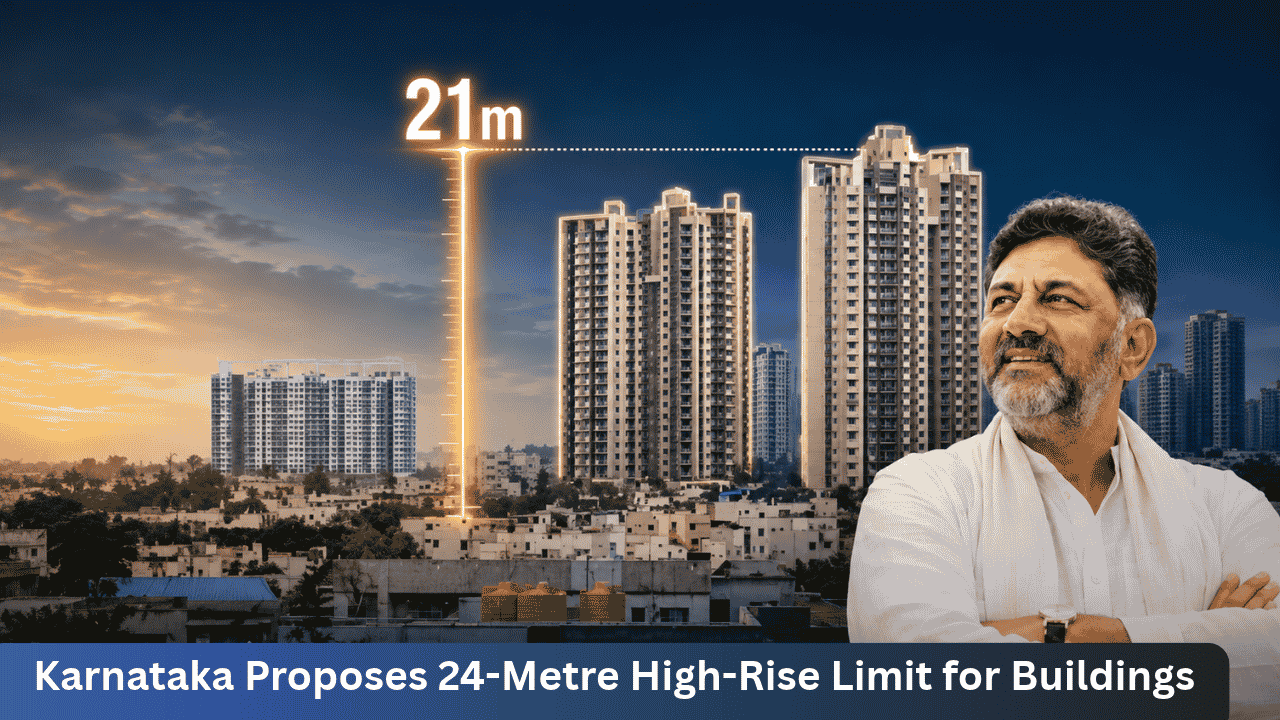
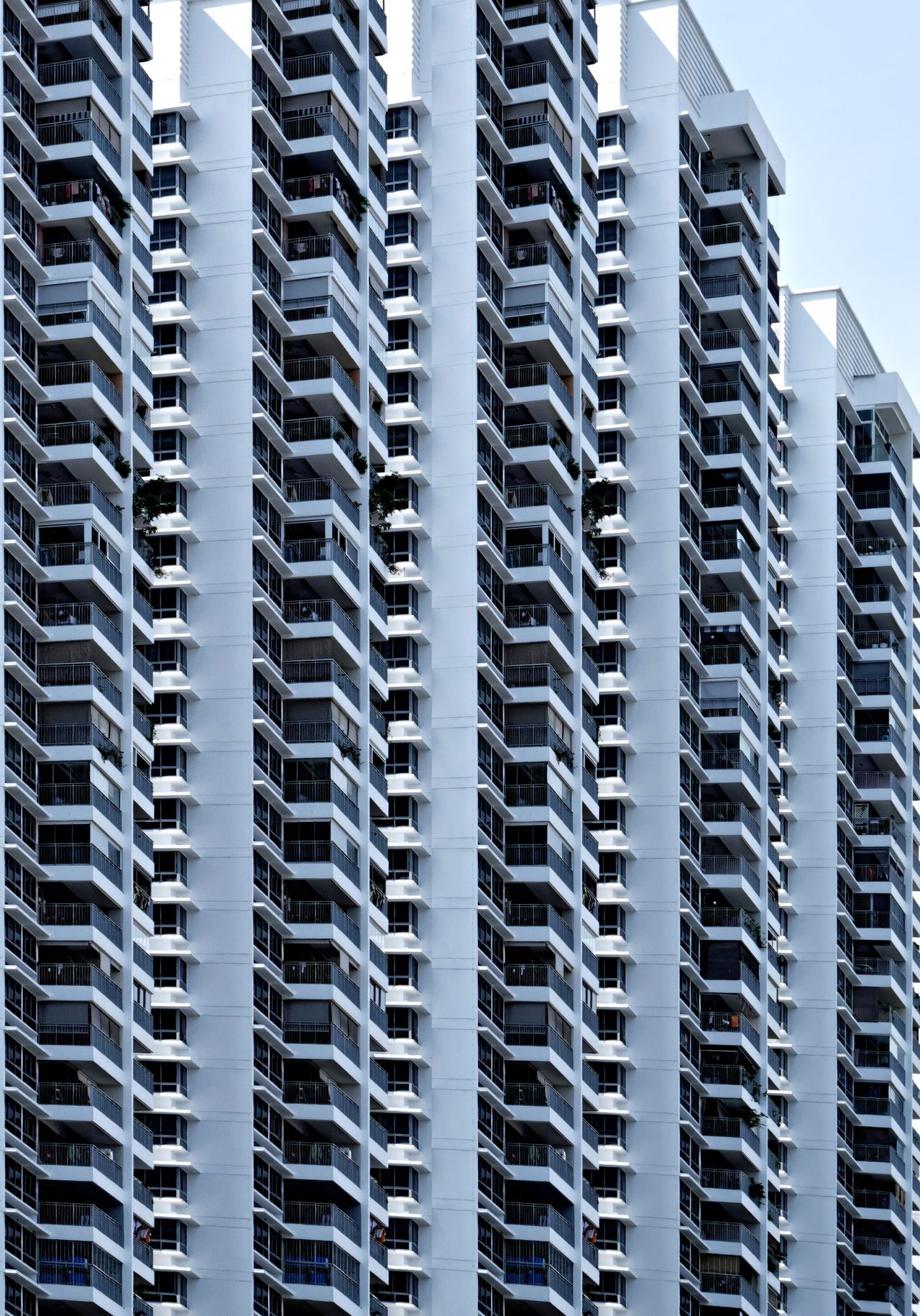
Karnataka has proposed increasing the height threshold for classifying high-rise buildings from 21 metres to 24 metres under the state's Zonal Regulations. The proposed change could give developers greater flexibility in using the permissible Floor Area Ratio (FAR), particularly in Bengaluru.
The proposal forms part of amendments to the state's Zonal Regulations and follows a recommendation by the Karnataka State Fire and Emergency Services Department. A draft notification was published in the Karnataka Government Gazette on November 4, 2026. The notification is still not active and will become effective upon its final publication.
Draft Proposes New Definition for High-Rise Buildings
The earlier 21-metre height reference is proposed to be replaced by a 24-metre threshold under the draft amendment.
A notification, issued by the Urban Development Department under the Karnataka Town and Country Planning Act, 1961, mentions that Fire and Emergency Services Department has recommended increasing the height reference from 21 to 24 meters.
The government has invited objections and suggestions from people who have the chance to be affected by the proposed amendment.These will be considered after 30 days from the date of publication of the draft notification. The revised definition will come into force only when the amendment is finally published in the Official Gazette.
Change Could Help Developers Use Premium FAR
The proposed revision could affect developers who purchase premium FAR but are unable to use the full permitted development potential of their plots because of building-height restrictions.
FAR determines the total floor area that can be constructed on a plot in relation to the size of the land. Premium FAR allows developers to build additional floor space by paying the prescribed charges, subject to planning and building regulations.
The revised threshold could mean that some buildings with seven or eight floors may fall below the high-rise classification, depending on their actual height and design. Under the earlier 21-metre threshold, buildings with around six or seven floors could qualify as high-rises. This can bring additional requirements into the approval process.
Raising the threshold to 24 metres could allow certain buildings to remain outside the high-rise classification while using more of their permissible floor area. This is the reason the proposal is being viewed as potentially beneficial for developers seeking to use premium FAR more efficiently.
However, the actual impact will depend on the height and design of each building, the applicable master plan and other development-control requirements. The revised threshold would not automatically allow every project to add floors or increase its built-up area.
Fire Safety Rules Will Remain Applicable
This amendment is related to the review of regulations and fire safety norms for high-rise buildings in the state. As per the recommendations of the Centre's Compliance Reduction and Deregulation Phase-II, the purpose is to streamline the regulatory requirements and follow best practices being adopted in other jurisdictions.
The requirement of fire safety norms shall be determined by the Karnataka State Fire and Emergency Services Department from time to time.
If anyone intends to construct a high rise building, they shall obtain the No Objection Certificate from the Karnataka State Fire and Emergency Services Department under the Karnataka Fire Force (Amendment) Act, 2023. Under the proposed amendments, there has been a change in the heights under the Zonal Regulation. However, it is still mandatory to abide by the fire safety norms.
Government Invites Objections Before Final Notification
The Government will take into account any objections or suggestions during the 30 day period. Until the new regulations are notified the current definition of a building over 21 metres will apply.
If it is approved, the 24 metre threshold may alter how some buildings are classified. It will give developers more flexibility to fit schemes into the allowable FAR. However, the final outcome for each project will depend on what the exact wording of the amendment is and other building regulations that still apply.