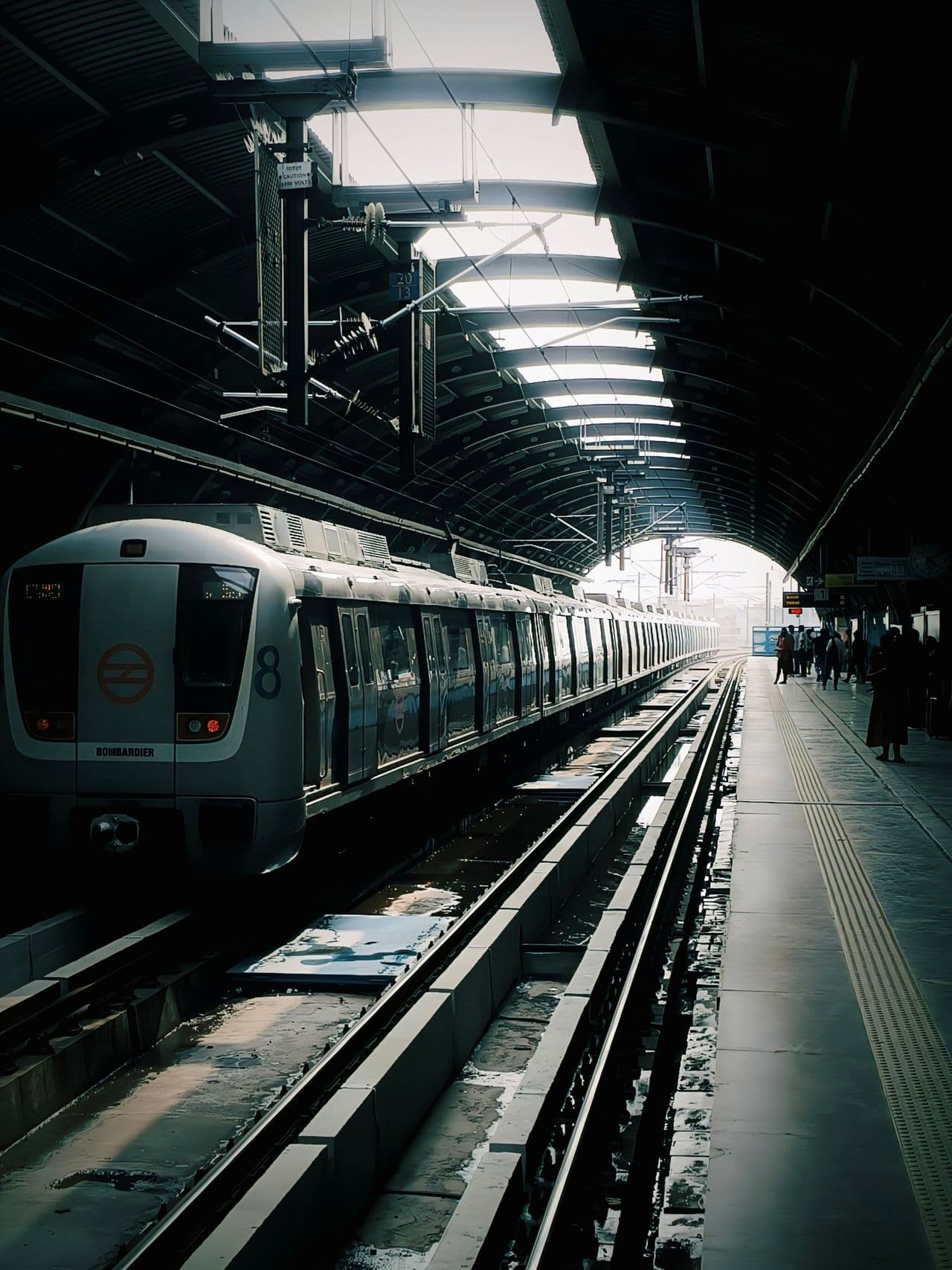
The Delhi–Panipat–Karnal Namo Bharat (RRTS) corridor, which will provide fast, seamless connectivity between Delhi and major cities in Haryana, has now received approval from the National Highways Authority of India (NHAI), following clearances from the Centre and the Haryana government. The 136.3-km corridor, to be developed by the National Capital Region Transport Corporation (NCRTC) at a cost of about ₹33,051 crore, is targeted for completion by 2030. Running parallel to the Delhi–Ambala highway (NH-44), the corridor has received land-use permission from NHAI for pier construction, station development and the shifting of high-tension power lines along the route. Preliminary work has already begun on a roughly 22-km stretch between Narela and Murthal. Namo Bharat trains on this route, with a maximum design speed of 180 km/h and an operating speed of 160 km/h, will run every 5 to 10 minutes. Haryana will be directly linked to the Namo Bharat network, and through the Delhi–Meerut corridor, to Uttar Pradesh as well.
A total of 22 stations are proposed along the route, and most will be elevated, except for Kashmere Gate in Delhi and the stations in Panipat. Delhi will have six stations: Sarai Kale Khan, Kashmere Gate, Jharoda Majra, Burari Crossing, Bhalswa and Mukarba Chowk.
Sarai Kale Khan will be developed as the largest interchange hub, connecting to the Delhi–Meerut corridor, Hazrat Nizamuddin railway station, the ISBT and the Metro's Pink and Blue (Indraprastha) lines. Kashmere Gate will offer connections to the Red, Yellow and Violet lines, and the other stations to the Pink and Magenta lines. Beyond Alipur and the Narela border, stations will come up in Haryana's Sonipat district at Kundli (with a link to the proposed Rithala–Kundli Metro line), the KMP Expressway interchange (connecting to the Orbital Rail network), Bahalgarh Chowk, Rajiv Gandhi Education City, Murthal, Bari Industrial and Ganaur (connecting to the international fruit and vegetable market). Panipat will have four stations: Samalkha, Panipat ISBT (Siwah bus stand), Panipat City (Gohana Crossing) and Sector-18. Karnal will have five modern stations: Ganjbar-Badauli-Kohand, Gharaunda, Karnal Bypass (Madhuban), Sector-7 and the New Bus Stand (ISBT).

Abhay Kumar Mishra, President and CEO of Jindal Realty, said: “The Delhi–Panipat–Karnal Namo Bharat corridor will give a new dimension to connectivity between the NCR and Haryana. It will shorten the distance between Delhi and cities such as Sonipat, Panipat and Karnal, and help these areas connect better with major economic centres. With fast, convenient public transport, the potential for residential, commercial and mixed-use development in these cities will grow. Growth could pick up especially in areas that have so far been unable to realise their full potential for lack of good connectivity. The corridor can play an important role in balanced urban development in Haryana and in the emergence of new real estate hubs.”

Vinod Kumar, Director & Founder, Sky Byte Developers said, “The Namo Bharat project will bring a significant transformation to this belt. Under the visionary leadership of Hon’ble Prime Minister Narendra Modi ji, India is witnessing rapid infrastructure development, with a strong focus on strengthening connectivity and building future-ready urban centres. This corridor is another important step in that direction. With faster connectivity to Delhi, people can explore residential opportunities in emerging locations such as Sonipat and Panipat. Stations at Kundli, Bahalgarh Chowk and Rajiv Gandhi Education City will make daily commuting more convenient for residents in surrounding areas. Working professionals will be able to enjoy a better work-life balance by living in these emerging locations while remaining connected to their workplaces in Delhi. As a developer, we expect improved connectivity to drive demand for both residential and commercial real estate along this belt. With the project targeted for completion by 2030, it has the potential to bring lasting changes to the region’s real estate landscape.”
The mega project will cut travel times sharply. The journey from Delhi to Panipat, which currently takes two to two and a half hours by road or regular train, will come down to one hour, and the three-and-a-half to four-hour trip to Karnal will be reduced to an hour and a half. Daily commuters, including salaried professionals, business owners and students, will get significant relief, and urban and economic growth in areas such as Sonipat, Panipat, Karnal, Murthal and Samalkha will receive a fresh boost. With the Haryana government including the corridor in its Transit-Oriented Development (TOD) policy, high-rise residential buildings, offices, retail space and commercial complexes are expected to expand rapidly around the stations. This will give people the option of living close to where they work, with modern conveniences such as 'walk-to-work' living, and will help these cities play a key role in the growth network of Delhi-NCR.