The construction industry is inherently complex, marked by a wide array of risks across every stage of a project, from design and procurement to execution and handover. These risks, if left unmanaged, can derail timelines, inflate costs, and compromise safety. Traditional methods of risk assessment, largely based on static models and human experience, often fall short in anticipating and mitigating these challenges in real time. In recent years, artificial intelligence (AI) has emerged as a powerful tool to enhance risk prediction and decision-making in construction, offering data-driven insights that traditional models struggle to provide.
Understanding Risk in Construction Projects
- Construction projects are exposed to multiple types of risks:
- Financial risks, such as budget overruns or cash flow disruptions.
- Schedule risks, often caused by labor shortages, supply delays, or adverse weather.
- Design risks, resulting from errors, changes, or coordination failures.
- Operational risks, including equipment failure or poor site management.
- Regulatory risks, tied to permits, legal compliance, and environmental concerns.
- Safety risks, involving worker injuries or unsafe site conditions.
Historically, these risks have been managed using subjective evaluations or static tools like risk matrices. AI now brings a dynamic and intelligent approach, capable of forecasting and even preempting risks before they escalate.

How AI Enhances Risk Prediction?
1. Predictive Analytics and Machine Learning
AI systems, when combined with machine learning (ML) algorithms, can process massive volumes of historical and real-time construction data to identify patterns that would be difficult for humans to detect. These models analyze variables such as resource allocation, task dependencies, procurement cycles, and past project delays to forecast potential issues before they arise. For example, if previous data reveals that delays in procurement often result in foundation work being stalled, the AI system can flag similar procurement trends in an ongoing project as a high-risk indicator. This proactive alerting enables project managers to address vulnerabilities early—before they lead to costly rework or missed deadlines.
2. Real-Time Monitoring with IoT and Drones
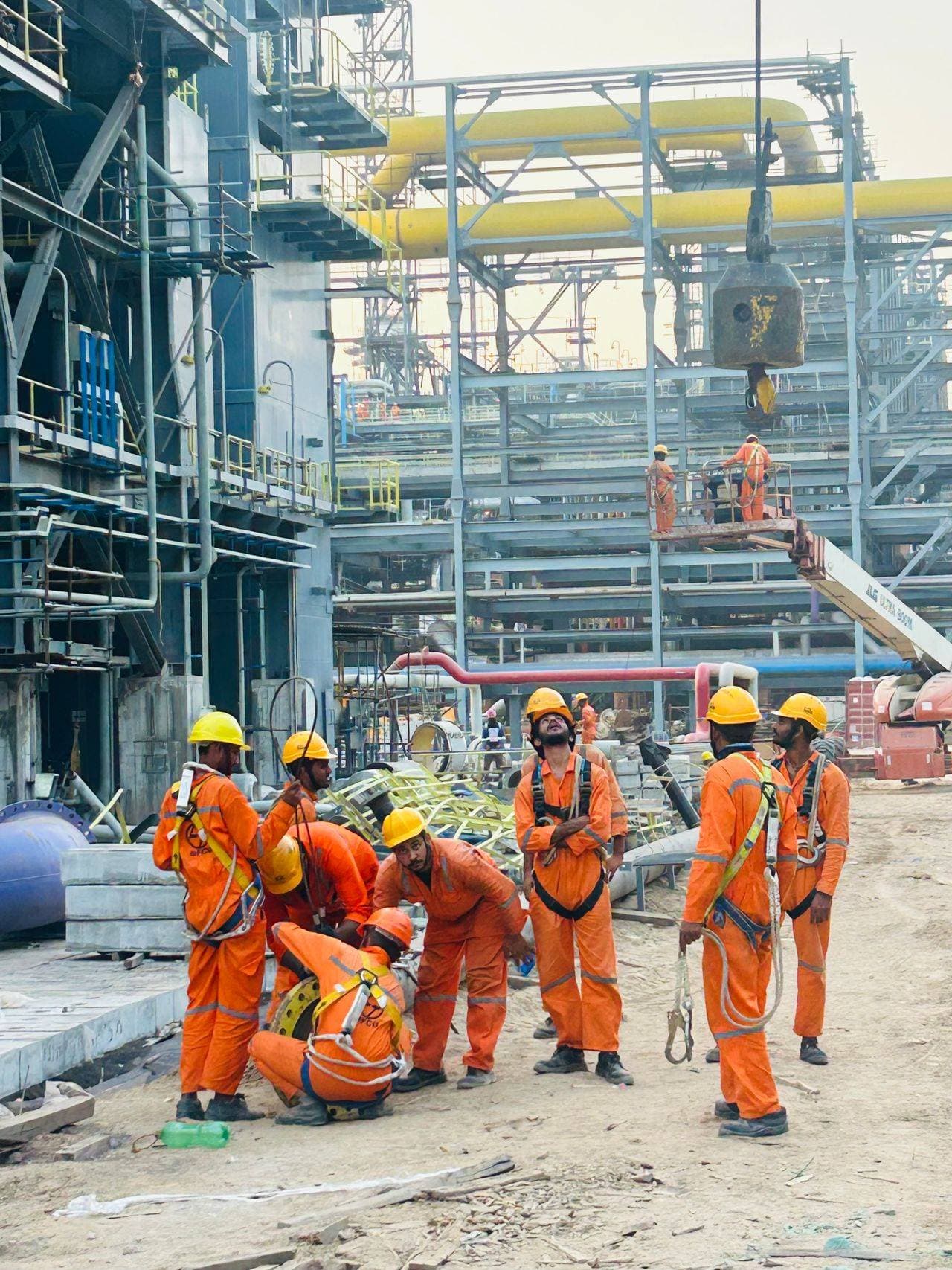
The integration of IoT devices and drones on construction sites provides a continuous stream of data about environmental conditions, material flow, machinery usage, and workforce movement. AI algorithms analyze this real-time data to detect deviations or emerging risks. For instance, if equipment is operating at abnormal vibration levels or if weather sensors detect conditions that could compromise structural work, AI can immediately raise alerts. Additionally, drones equipped with computer vision monitor site activities—identifying unsafe behaviors such as workers without helmets or safety harnesses. These systems not only improve safety compliance but also reduce the likelihood of on-site accidents, helping to mitigate associated project risks and liabilities.
3. Insights from Natural Language Processing (NLP)
Construction projects generate extensive unstructured documentation—ranging from daily progress logs and inspection notes to RFIs (Requests for Information), contracts, and change orders. AI-driven Natural Language Processing tools are designed to extract meaning from these documents and uncover hidden risks. For example, NLP can identify problematic or non-standard clauses in contracts that might expose stakeholders to legal or financial vulnerabilities. It can also highlight patterns in inspection reports that suggest recurring quality issues or unresolved change orders that could escalate into disputes. By turning narrative data into structured, actionable insights, NLP helps project teams maintain control over both technical and contractual risks.
4. Scenario Analysis and Digital Twins
Digital twins—virtual replicas of physical construction assets and processes—are increasingly used to simulate real-world scenarios and evaluate risk. Powered by AI, these models allow project managers to test the outcomes of various hypothetical situations, such as delays in material delivery, sudden labor shortages, or design changes mid-construction. These simulations provide a safe environment to explore alternatives, assess impacts on project timelines and budgets, and develop contingency strategies. For example, if a digital twin reveals that a delay in a critical component’s delivery would push back structural completion by two weeks, managers can preemptively adjust the sequence of tasks or source materials elsewhere. This proactive foresight reduces uncertainty and supports smarter, data-informed decision-making across the project lifecycle.
Key Benefits of AI-Driven Risk Assessment in Construction
- Enables timely, informed decision-making through early risk detection.
- Minimizes delays, cost overruns, and disputes by reducing rework.
- Enhances site safety with real-time monitoring and alerts.
- Improves accuracy by eliminating human bias in assessments.
- Accelerates issue resolution with faster insight generation.
- Prioritizes risks dynamically based on evolving project data.
- Benchmarks risk exposure against industry-wide standards.
- Delivers tailored alerts and risk scores for specific project profiles.
- Enhances efficiency through predictive resource planning.
- Ensures compliance by tracking regulatory and code changes.

Applications Across the Project Lifecycle
Pre-Construction
AI supports feasibility studies, cost estimation, and bid evaluations. It can identify sites with high regulatory or geotechnical risks, flag design inconsistencies, and help select vendors with strong performance histories under similar risk profiles.
Construction Execution
During project execution, AI tools monitor progress against plans using real-time images and data. They assess productivity, detect deviations, and optimize logistics. AI also aids in assigning resources more effectively by predicting shortages or bottlenecks in advance.
Post-Construction and Operations
After handover, AI helps in predictive maintenance and warranty management. By analyzing construction quality and usage patterns, it can forecast future repair needs and reduce lifecycle costs. In dispute resolution, AI can organize project data to reconstruct event timelines and provide evidence.
Famous AI Tools for Construction Risk Assessment: Indian and Global Market
With rising complexity in construction projects, AI is being actively adopted to reduce uncertainties and manage risks more effectively. From anticipating safety hazards to detecting scheduling conflicts and cost escalations, these tools enable data-driven decisions across the lifecycle of a project.
AI Tools in India for Construction Risk Assessment
- TappetBox AI – Predicts cost overruns and schedule delays using project data analytics.
- Wobot Intelligence – Uses computer vision to detect on-site safety violations in real time.
- QodeNext Vision AI – Monitors site operations to flag material, logistics, and workforce inefficiencies.
- SirionLabs – Identifies contractual risks and compliance gaps using AI-powered contract analysis.
- LegalMind.ai – Scans legal documents to highlight construction-related legal and regulatory risks.
- L&T Digital Twin Platform – Simulates project scenarios to assess risks from delays, labor, or supply issues.
Global AI Tools for Construction Risk Assessment
- nPlan – Forecasts schedule delays using historical planning data.
- Alice Technologies – Generates risk-based scheduling simulations.
- Newmetrix – Predicts safety incidents using jobsite data and historical trends.
- Smartvid.io – Uses AI to analyze visual data for safety violations.
- Everguard.ai – Provides real-time safety alerts using wearables and computer vision.
- Buildots – Tracks project progress and flags deviations using imagery and documents.
- DocuSign Insight – Identifies risk-laden clauses in legal and commercial documents.
- Kira Systems – Extracts data from contracts to analyze risk profiles.
- Procore – AI engine detects inefficiencies in scheduling and resource usage.
- Oracle Aconex – Flags coordination issues and delays using AI-based collaboration tools.
- Bentley SYNCHRO – AI-integrated 4D BIM for construction planning and risk simulation.
- Dassault Systèmes – 3DEXPERIENCE – Scenario testing with real-time data modeling.
- Autodesk Construction Cloud – Provides AI-based insights for facility lifecycle management.
- Hexagon PPM – Supports predictive maintenance and asset reliability analytics.
Future Outlook: What Lies Ahead?
As digital transformation accelerates across the construction sector, the role of AI in risk prediction is set to deepen. Future advancements are likely to include AI-driven risk dashboards integrated with Building Information Modeling (BIM) and Enterprise Resource Planning (ERP) systems, offering unified views of project risk in real time. Generative AI will support the creation of automated risk reports and suggest mitigation plans based on past resolutions.
Moreover, AI tools can evolve into autonomous decision-support systems—providing real-time recommendations, adjusting schedules, or rerouting logistics autonomously as project variables change. These capabilities will enable construction teams to respond faster to evolving site conditions and external disruptions.
AI’s long-term impact will lie in its ability to create resilient construction ecosystems. By continuously learning from project data and adapting to new challenges, AI will shift risk management from a siloed activity to a core, ongoing strategic process.
Challenges to AI Adoption
Despite its potential, AI adoption in construction faces multiple challenges. One of the most significant is data quality. Construction firms often operate with fragmented, inconsistent, or incomplete data—making it difficult for AI systems to generate reliable insights. Without robust data governance and integration, AI models risk becoming ineffective or misleading.
There is also a cultural hurdle to overcome. Many construction professionals remain skeptical about AI's relevance to fieldwork or fear that it may replace human judgment. Convincing teams to adopt AI tools requires demonstrable value, user-friendly interfaces, and ongoing training.
Financial constraints pose another barrier, particularly for small and mid-sized contractors. High upfront investment costs in hardware, software, and skilled personnel can be prohibitive. Additionally, concerns over cybersecurity, data privacy, and the ethical use of surveillance technologies must be addressed, especially when monitoring worker behavior.
To overcome these obstacles, firms should begin with pilot projects that target high-impact areas. Building internal expertise, collaborating with technology partners, and focusing on incremental integration will pave the way for scalable, long-term AI adoption.
Conclusion
AI is transforming construction risk management from a reactive task to a proactive strategy. By leveraging machine learning, real-time monitoring, NLP, and simulations, it empowers project stakeholders to foresee challenges and respond more effectively. While barriers to adoption remain, the long-term benefits—enhanced predictability, safety, and efficiency—make a compelling case for embracing AI in risk assessment. As the industry evolves, those who invest in AI today will be better equipped to handle the uncertainties of tomorrow, driving performance not just through innovation, but through intelligent, adaptive planning.