India’s top seven housing markets sold 214,562 homes in the first nine months of 2026. That is 6% more than a year ago. The value of those sales rose 15%.
The gap between the two numbers is the story. A 15% rise in value against a 6% rise in units implies the average ticket grew by about 8–9%. Growth is coming from price and mix, not from a surge in buyers. Buyers are not just buying more. They are buying bigger and paying more per home.
Chennai and Bengaluru lead on growth
Chennai posted the strongest sales growth at 22%. Bengaluru came next at 18%, then Hyderabad at 16%. Delhi NCR rose 8%. Kolkata was flat.
Mumbai and Pune were the only two markets to fall. Mumbai slipped 1% and Pune dropped 13%. Still, Bengaluru, Mumbai and Pune together make up most of national sales, and each crossed 35,000 units.
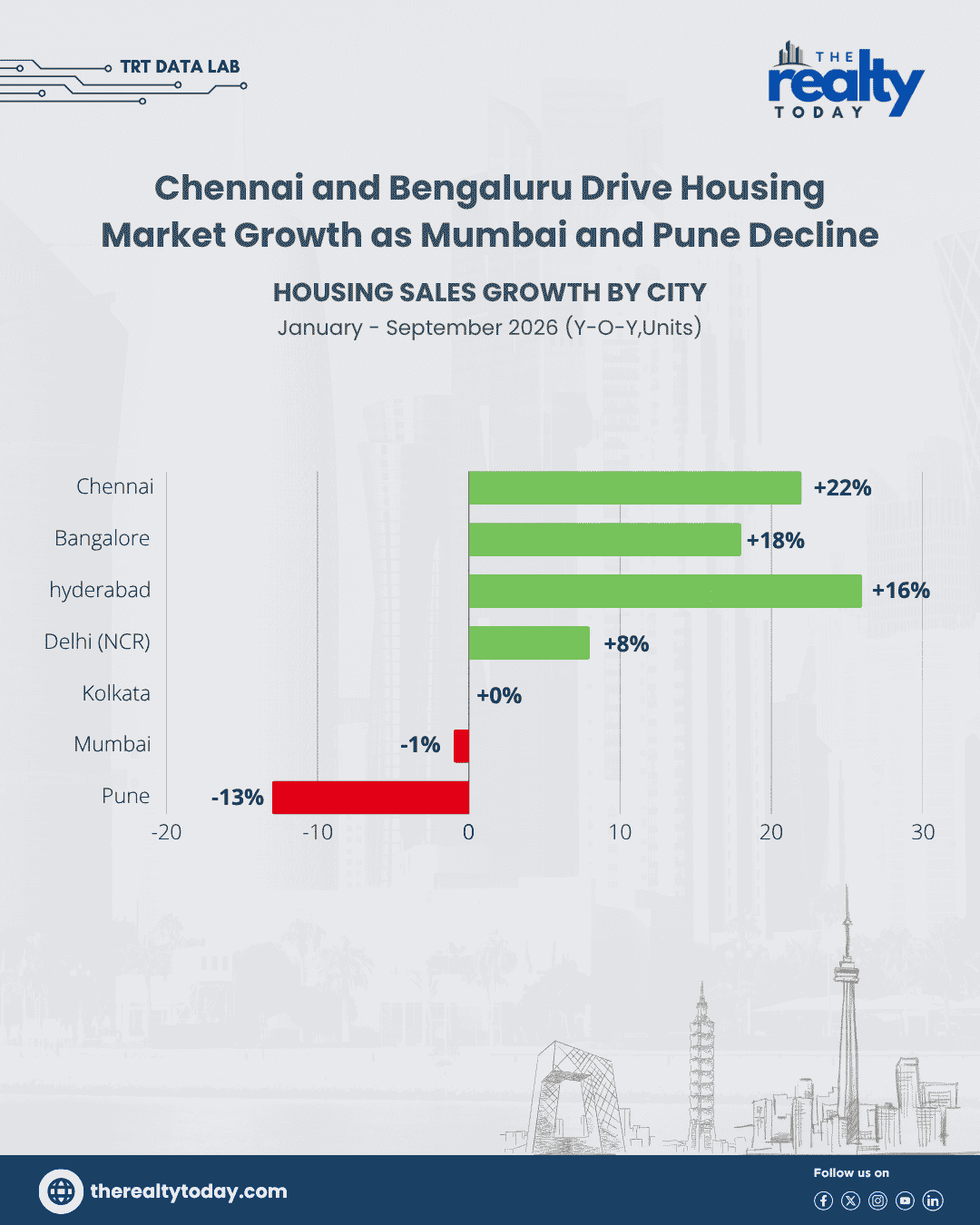
Growth rates and market size are different things. Chennai grows fastest, but the three big markets still set the national volume. Pune’s 13% fall is large enough to drag the national average down.
Premium homes now take 72% of sales
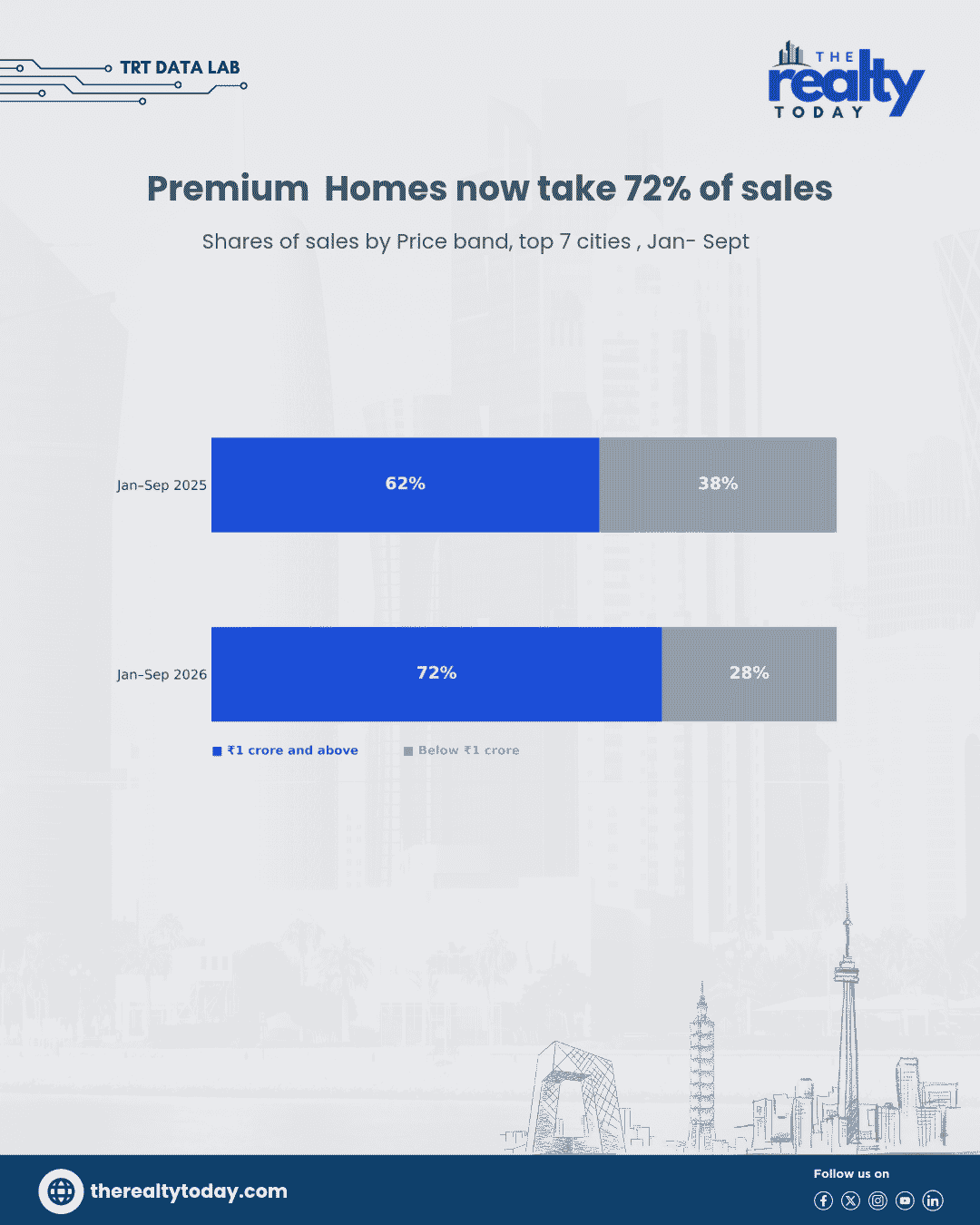
Homes priced at ₹1 crore and above grew 23% year on year. They made up 72% of all sales, up from 62% a year earlier.
The ₹1.5 to ₹3 crore band was the standout, with demand up 54%. Homes below ₹1 crore fell 23%. JLL links the shift to urban migration, better infrastructure and changing lifestyle choices. It also points to affordability pressure at the lower end.
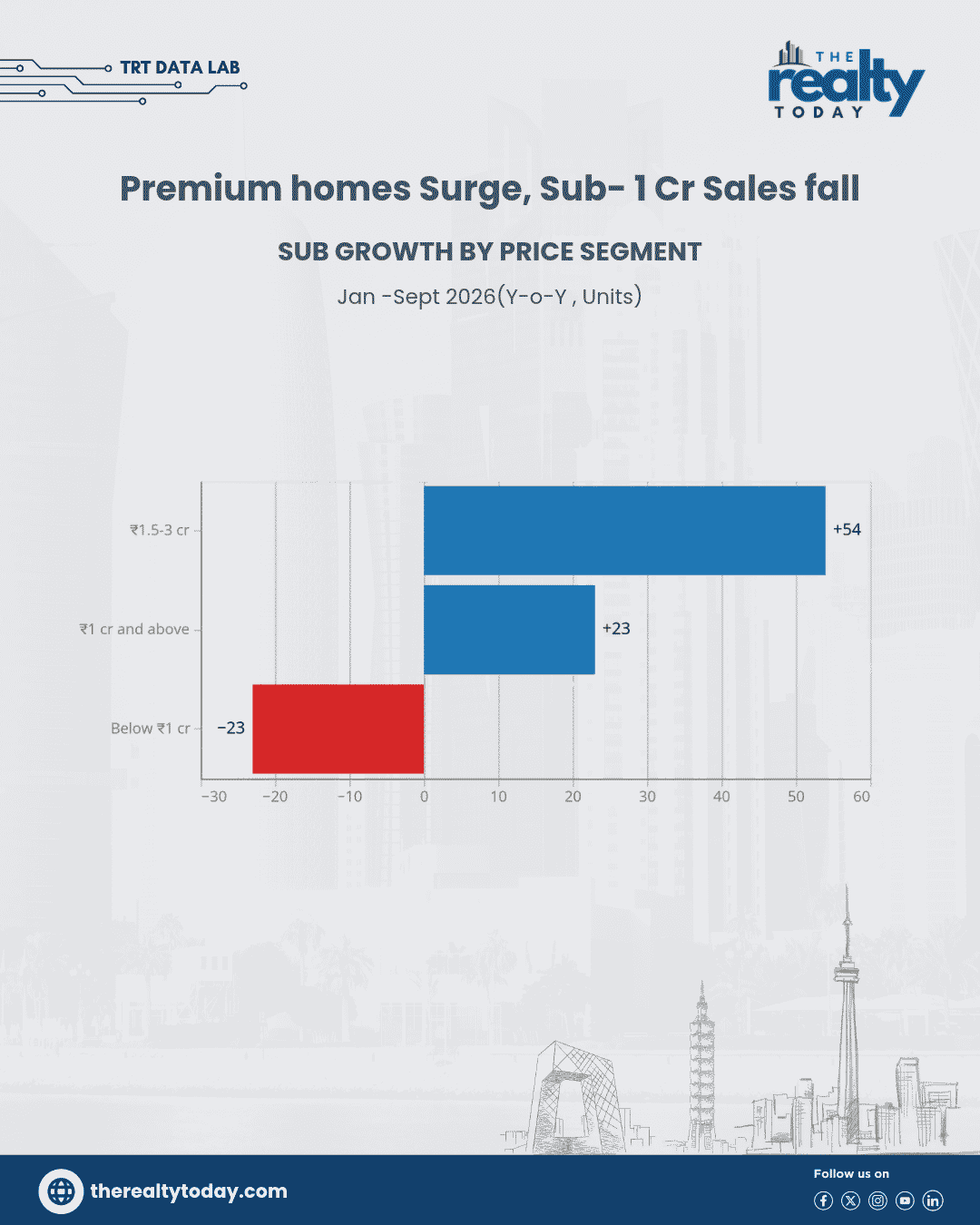
The market has split in two. Demand at ₹1.5–3 crore is rising fast, while demand below ₹1 crore is falling by almost a quarter. The numbers cross-check. A 72% share of about 214,600 homes is roughly 154,500 units. A 62% share of last year’s base of about 202,400 is roughly 125,500. That is close to the 23% growth JLL reports.
“The first nine months of 2026 reaffirm the structural shift in India’s residential market toward premium and larger-format homes.”
— Siva Krishnan, Senior Managing Director (Chennai and Coimbatore), Head, Residential Services, India, JLL
Prices rose in every major city
Capital values kept climbing in Q3 2026. Bengaluru saw the sharpest gain at 15%. Chennai followed at 12% and Kolkata at 11%. Delhi NCR rose 10% and Mumbai 8%. Pune rose just 6%.
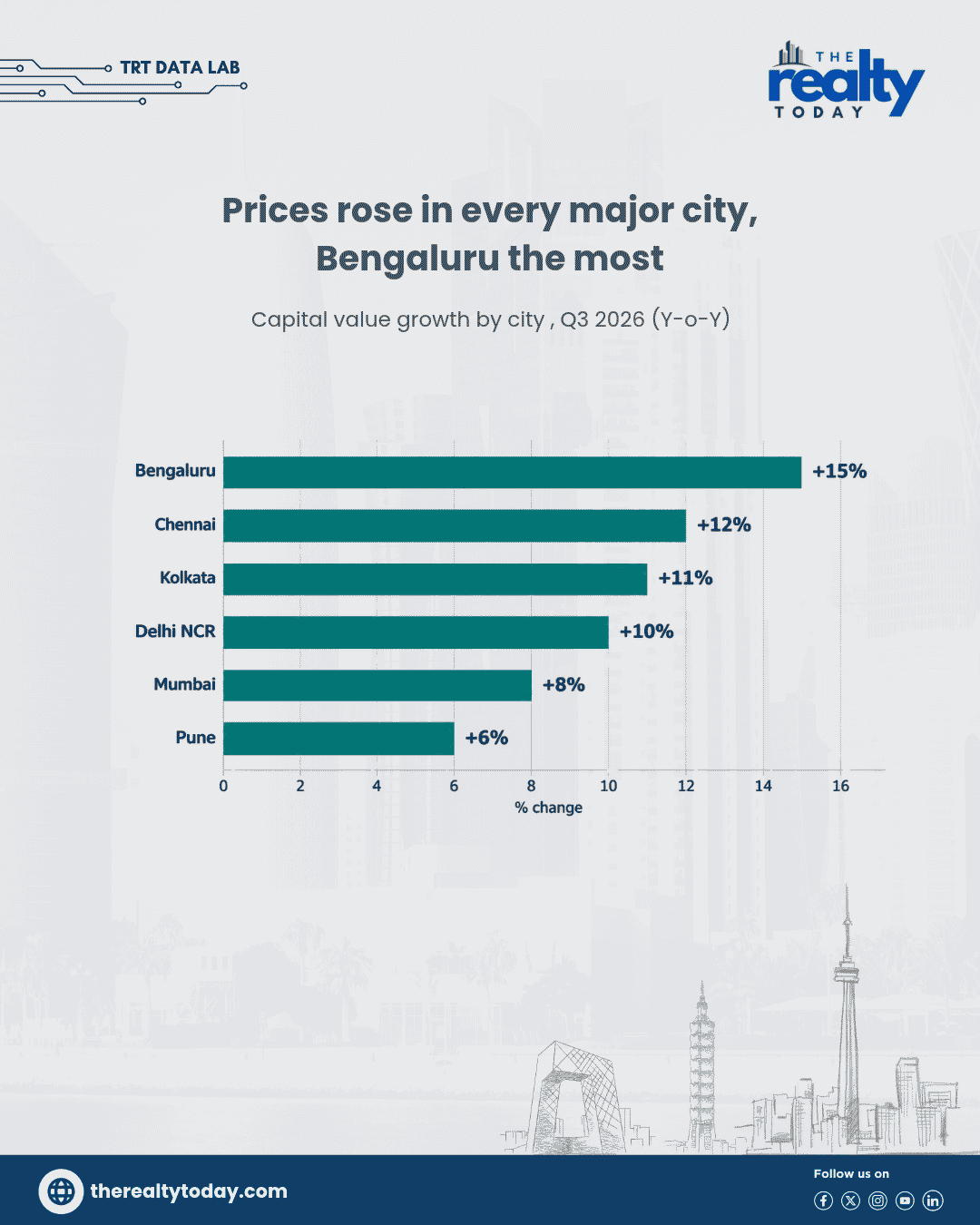
Price growth tracks demand. Pune has the weakest sales and the slowest price rise. Bengaluru has strong sales and the fastest price rise. Demand there is outrunning good supply.
Developers are following the money
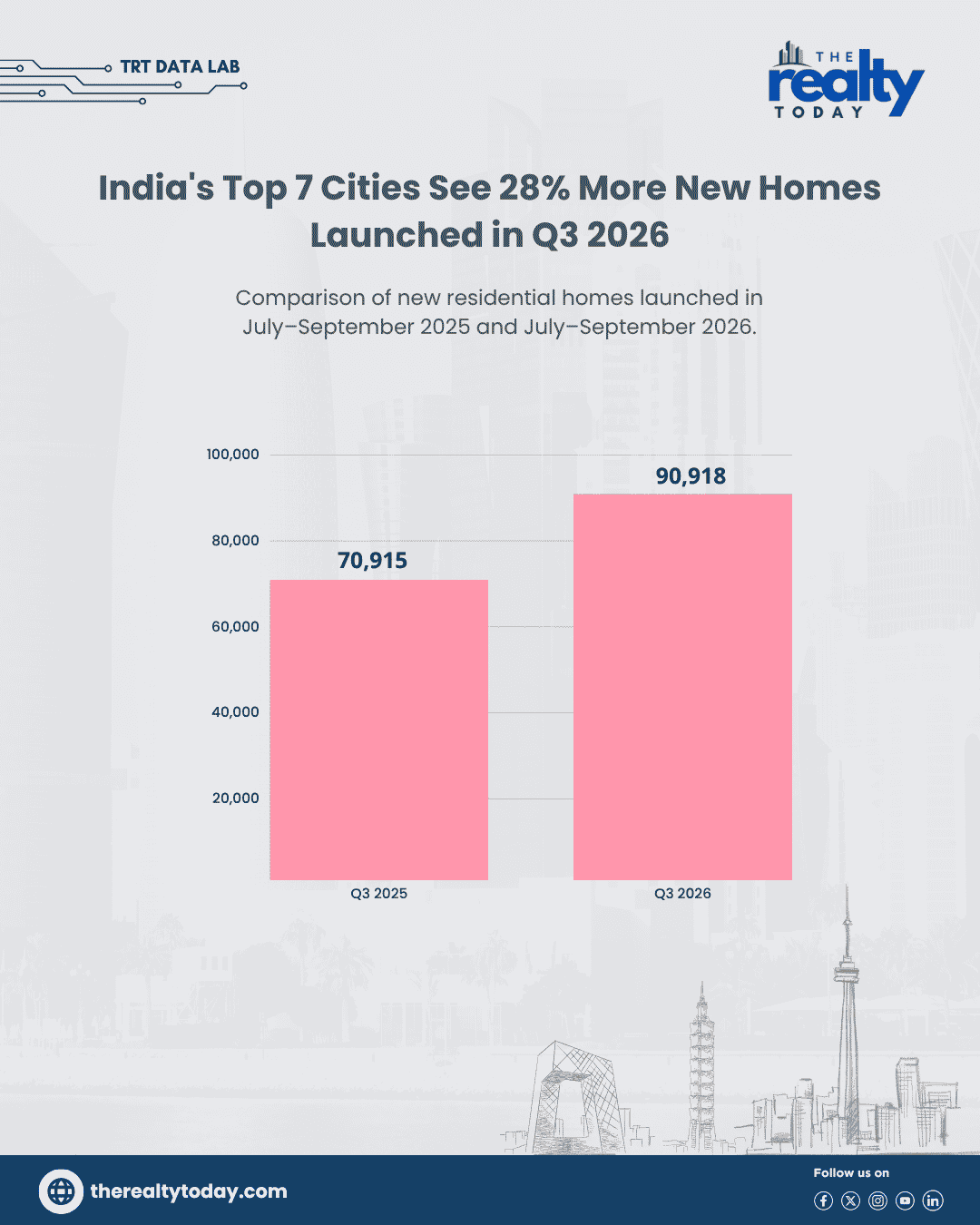
Builders have read the demand. Q3 2026 launches reached 90,918 units. That is up 28% from 70,915 a year earlier and 16% higher than the previous quarter. JLL says the premium push shows up in a 70% rise in launches.
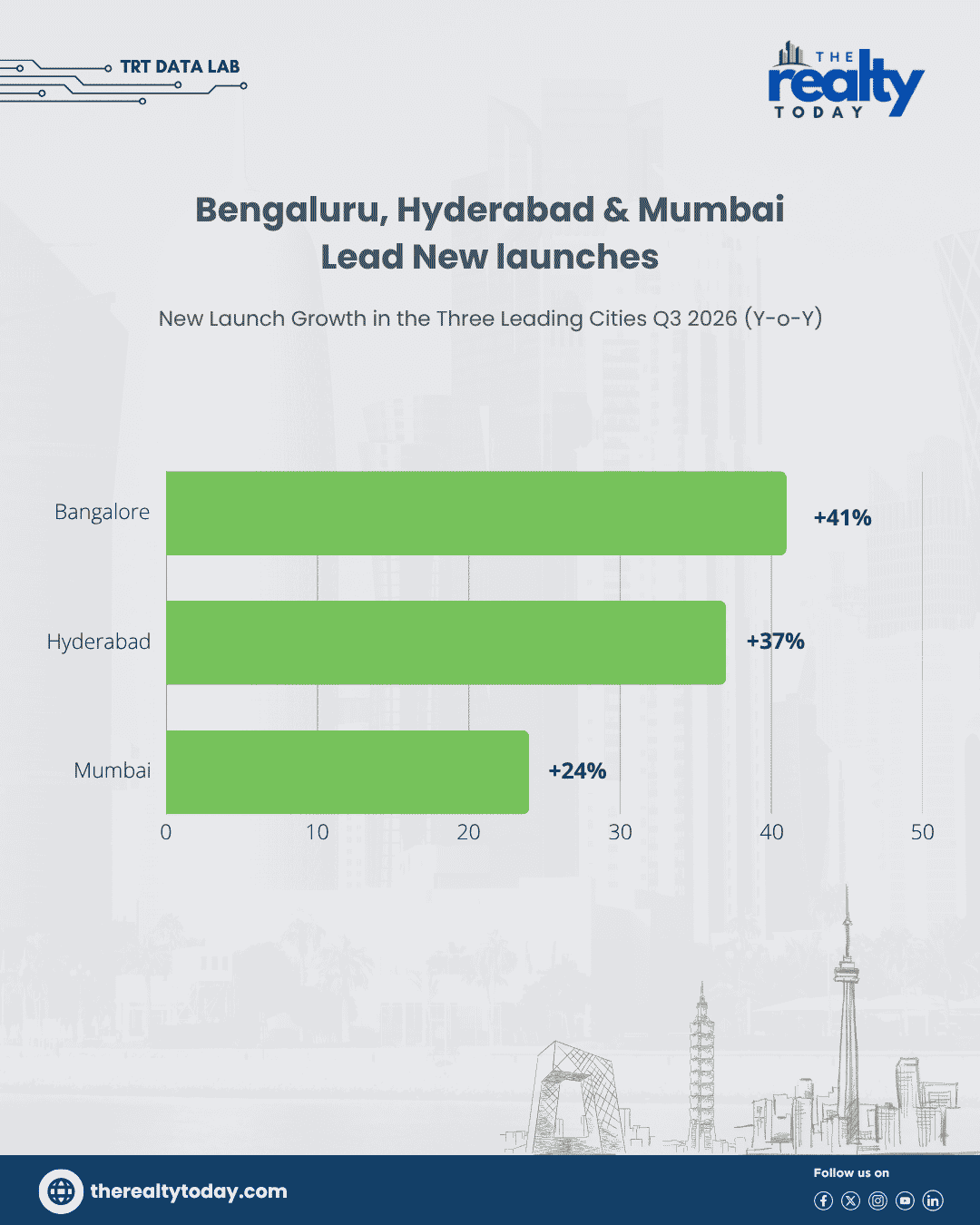
Bengaluru, Hyderabad and Mumbai led the expansion, with launches up 41%, 37% and 24%. Kolkata, Chennai and Pune pulled back.
Chennai is the odd one out. Its sales grew fastest, yet launches fell. If that continues, supply will tighten and prices there may rise faster still.
What JLL expects next
The ₹1.5–3 crore segment should keep outperforming, backed by affluent buyers who want larger, amenity-rich homes.
Capital values should keep rising, mainly in Bengaluru, Chennai and Kolkata. Limited quality supply and higher construction costs are the drivers.
Mass and affordable housing will stay under pressure as buyers lean toward quality over price.
Overall volumes should stay stable to modestly positive. Value growth should keep outpacing volume growth.
The market is bifurcating. The premium end has confident buyers and busy developers. The affordable end has cautious buyers and falling sales.
For homebuyers under ₹1 crore, choice may narrow as builders chase higher-ticket projects. For investors, Bengaluru and Chennai show the strongest mix of sales and price growth.
The risk is a market leaning on a single segment. If affordability worsens further, the premium band’s momentum will be tested too.
Source: JLL India report, released 5 November 2026