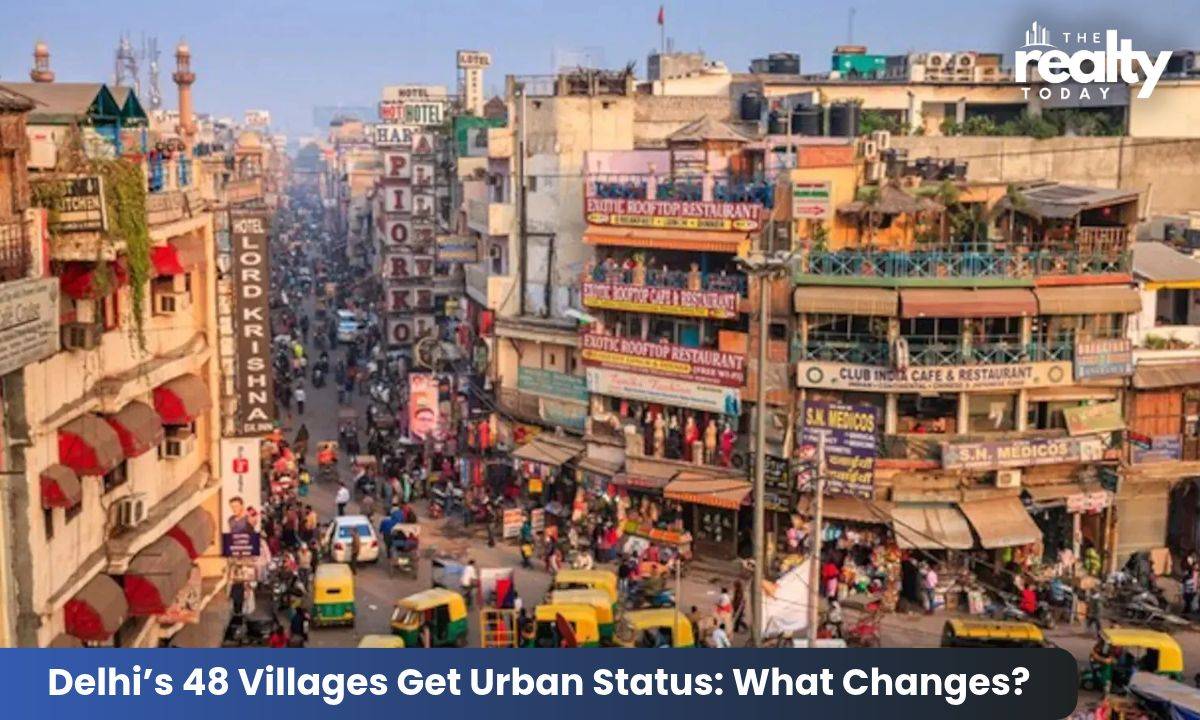
New Delhi: Delhi has declared its last 48 rural villages urban. The Rekha Gupta government says the move will help bring better roads, water supply, sewerage and other civic amenities to areas that have long waited for planned development.
The 48 villages are the remainder of Delhi’s 357. The other 309 were already urban.
The proposal is not new. The Delhi Development Authority (DDA) approved it in February. The Municipal Corporation of Delhi (MCD) House cleared it in September. The notification now makes it final.
The government said the change will let civic agencies assess development needs, prepare plans and coordinate work in the villages.
Several of these villages are surrounded by urban areas but were still classed as rural. That made land-use approvals and development projects more complicated.
What changes for residents
Urban status gives a legal basis for planning roads, drainage, drinking water supply, sanitation, street lighting and waste management in these villages.
The urban tag does not automatically allow fresh construction or changes in land use. Residents and property owners must still follow building regulations, approved plans and statutory permissions.
Chief Minister Rekha Gupta said the aim is to bring the villages into Delhi’s development framework while preserving their identity and heritage.
Past concerns
The decision follows the Centre’s notification of the Master Plan for Delhi 2047 in August. Residents’ groups had earlier complained that urbanisation of other villages did not always improve civic services. They also raised concerns over delays in updating land records.
The 48 villages
Bakoli, Hamidpur, Palla, Kulakpur, Singhola, Sungarpur Delhi, Sungarpur Shahdara, Tajpur Kalan, Tehri Daulatpur, Rajpur Kalan, Auchandi, Mungeshpur, Shahpur Garhi, Nizampur Rasidpur, Chatesar, Pur Delhi, Jagatpur Delhi, Sultanpur Majra, Pur Shahdara, Sabapur Delhi, Badarpur Khadar, Bakiaabad, Khanpur Khani, Jafrabad, Jagatpur Shahdara, Badarpur Majra Burari, Fatehpur Beri, Chandan Hola, Badusarai, Deorala, Ghumanhera, Jainpur, Jhatikara, Kanganheri, Raghopur, Rawta, Shikarpur, Bijwasan, Nanak Heri, Bakargarh, Dhansa, Galibpur, Issapur, Kair, Mundela Kalan, Mundela Khurd, Surakhpur and Chak Chilla.