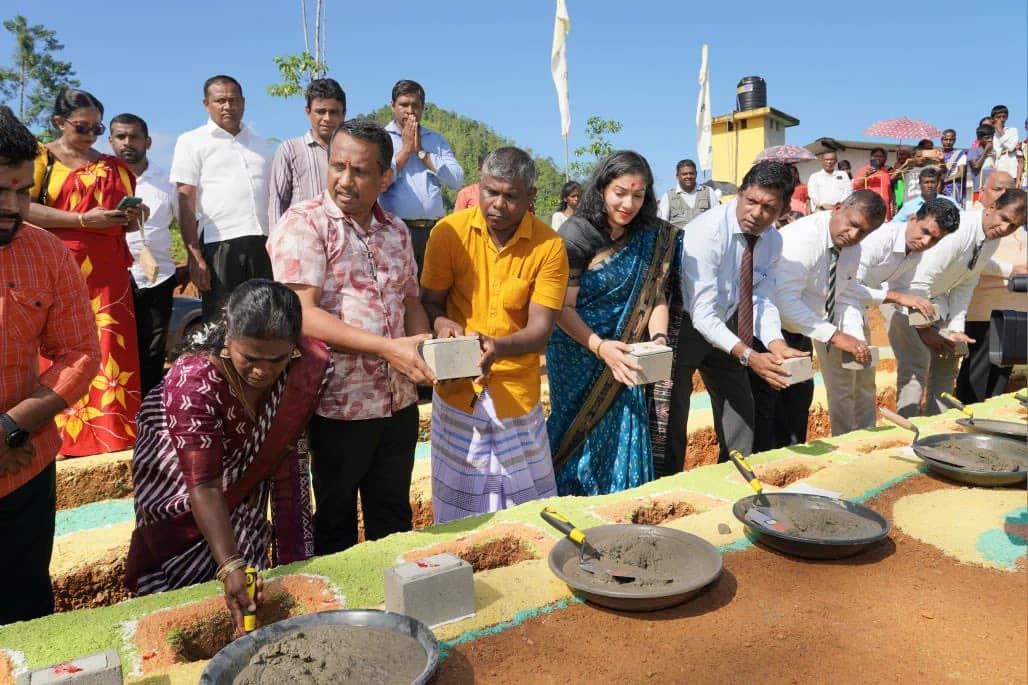
India's ongoing housing assistance programme in Sri Lanka is confirmed to add 37 residential units across two plantation estates in Kalutara district. Foundation stones for the houses were laid on November 24, 2026, as part of the second stage of Phase IV of the Indian Housing Project (IHP).
Out of the 37 houses, 29 will be built at Kiriwanakettiya Estate and eight at Kobowela Estate. Sri Lanka's Minister of Plantation and Community Infrastructure, K.V. Samantha Vidyarathna, attended the foundation-laying ceremony along with Indian High Commission officials and members of the Sri Lankan Parliament.
Representatives from the National Housing Development Authority (NHDA), district administration and the respective plantation estates were also present. The total construction costs and expected completion of the 37 houses were not confirmed in the announcement.
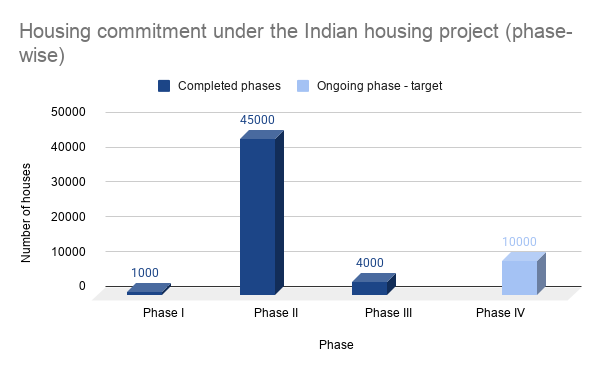
Phase IV of Indian Housing Project Covers 10,000 Houses
The fourth phase of the housing programme envisages the construction of 10,000 houses for plantation communities across six provinces in Sri Lanka. Indian Prime Minister Narendra Modi announced the additional housing commitment in May 2017, following which an agreement between the two governments was formalised in August 2018.
The first stage of Phase IV covers 1,300 housing units, while the second stage comprises 4,700 houses. Sri Lankan President Anura Kumara Dissanayake launched the second stage in October 2025.
According to an update issued by the Sri Lankan Prime Minister's Office in September 2026, construction of 522 houses under the first stage had been completed, with the units awaiting handover to beneficiaries. Preliminary work was also underway for another 2,529 housing units.
Construction has been taken up at several plantation estates during the current year. In July, foundation stones were laid for 57 houses at Cannavarella Plantation Estate in Badulla district. Another 51 houses were taken up for development at Alagolla Estate in the same district in September.
India Has Committed Rs. 1,835 Crore in Housing Assistance
The Indian government has committed approximately Rs. 1,835 crore in grant assistance for the development of 60,000 houses in Sri Lanka. Of these, 50,000 houses have been completed and handed over to beneficiaries.
During Phase I, which was undertaken in the Northern Province, 1,000 houses were built. This was completed in July 2012. Phase II saw the building of 45,000 houses in both the Northern and Eastern Provinces and was completed in December 2018.
Phase II followed an owner-driven construction model, under which beneficiaries undertook the construction or repair of their houses with financial and technical assistance from the Indian government.
Phase III covered 4,000 houses for estate workers in the Central and Uva Provinces, adopting a community-based construction approach. Work under this phase began in October 2016.
The final set of houses under Phase III was handed over to beneficiaries during Indian Vice President C.P. Radhakrishnan's visit to Sri Lanka in April 2026, marking the completion of the third phase.
Housing Construction and Land Ownership for Plantation Families
Phase IV is to be community or owner led and includes the involvement of community members in the building of their homes. Furthermore, the scheme will seek to stimulate both employment and the economy within plantation areas.
The Sri Lankan Government has also stated that it will provide a home to qualifying families within plantation communities. These will be situated on 10 perches (around 2,723 sq. ft) of land.
As of September 2026, housing projects had been initiated across 129 plantation estates for 2,184 beneficiaries who met the primary eligibility requirements.
In addition to building, the authorities have also begun to issue title documents to previous phase beneficiaries. On August 28, 2026, Sri Lanka’s President Anura Kumara Dissanayake and Indian officials presented 165 title documents to Phase III beneficiaries in the Badulla district, the Indian High Commission stated.
The latest development in Kalutara forms part of efforts to improve access to permanent housing and formal property ownership among Sri Lanka's plantation communities.