
India's commercial real estate market just hit a milestone: institutional investors put in $1.9 billion this quarter, according to Cushman & Wakefield. That's a big number, but the more interesting part is who's writing the checks and why.
Most of this money is coming from domestic institutions; Indian investors, not foreign ones and industry leaders say this isn't a one-time spike. It's a change in mindset. Investors used to chase properties mainly for their size or location, hoping for quick returns. Now they're looking for something steadier: buildings with good governance, transparent ownership, and reliable long-term rental income. In short, office real estate is starting to be treated less like a bet and more like a stable, income-producing investment similar to how people think about bonds or blue-chip stocks.
A few things are driving this confidence: better infrastructure, better connectivity, and stronger sustainability standards across the board. At the same time, flexible workspaces (shared or managed offices) are becoming mainstream, and large global companies are setting up more Global Capability Centres (GCCs) and tech offices in India. Together, these trends are pushing developers and investors toward a more careful, quality-first way of doing business and this is likely just the beginning of a longer, steadier growth phase.
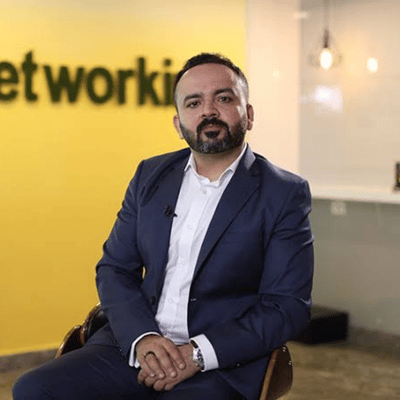
Pratik Sud, CEO, Synq Work
"The $1.9 billion in institutional investment this quarter reflects a broader recalibration in how capital views commercial real estate. Domestic investors are leading this deployment because they understand the fundamentals of the asset class, and office and commercial spaces are increasingly viewed as long-term, income-generating assets rather than cyclical bets.
This shift is being driven by a rise in the baseline quality of what's available. Infrastructure standards, connectivity, and sustainability compliance that were once differentiators are now prerequisites for institutional-grade capital, and this has expanded the universe of assets that meet investment criteria. Market stability adds to this confidence, allowing investors to commit capital over longer horizons rather than in cautious, staggered tranches.
For developers, this points to a clear strategic shift. Capital is no longer prioritizing scale alone; it is prioritizing governance, transparency, and asset quality. Developers who build with institutional standards in mind, strong asset management, well-planned infrastructure, and spaces designed around evolving occupier needs, will be best positioned to capture this wave of investment. As this trend continues, the market will only reward quality and preparedness more decisively."
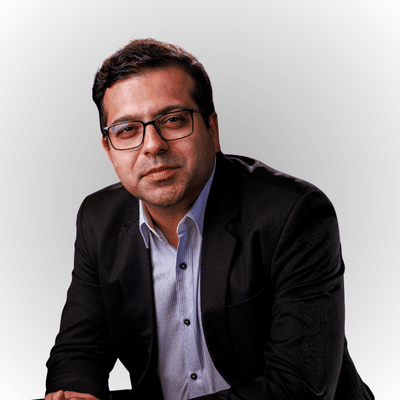
Mr. Manas Mehrotra, Founder, 315Work Avenue.
"Commercial property investment remains attractive for institutional investors due to healthy demand, especially in connected office spaces. One development that should be noted is the increasing popularity of managed workspaces. In today’s world, companies do not always seek a single office for an extended period because their employee numbers and requirements may vary rapidly. This has created steady demand for flexible workspace operators and, in turn, opened up another avenue for developers and investors. Good office buildings are no longer judged only by location and floor space. Connectivity, building quality, amenities and the ability to support different kinds of occupiers matter just as much. From an investment perspective, assets that can respond to these changing workplace needs are likely to remain relevant.
The opportunity is therefore not simply about adding more office space, but about creating commercial environments that businesses actually want to use. The flexible workspace sector is rapidly evolving into a mainstream commercial real estate asset class, and this momentum will continue. The demand has gained greater traction with corporates and MNCs continuing to make a beeline to managed spaces that have emerged as strong centres of growth. With coworking spaces poised to take a leading role in shaping India’s office market, their contribution to the overall portfolio is set to grow significantly in the coming years. As per a recent report, India’s flexible workspace industry has crossed the 100 million sq ft mark driven by enterprise occupiers and GCCs. Credit rating agency Crisil now estimates that sector capacity will expand to 140-145 million sq ft by FY28. As players in the flexible workspace sector continue to grow their footprint, it's clear that organizations in all sectors now recognize agile real estate not as a temporary solution, but as a long-term strategic priority. At the same time, increasing participation from domestic institutions, REITs and other long-term investors reflects growing confidence in this asset class. We believe this combination of robust occupier demand, improving asset quality and deeper institutional participation will continue to support the commercial real estate sector over the medium to long term."
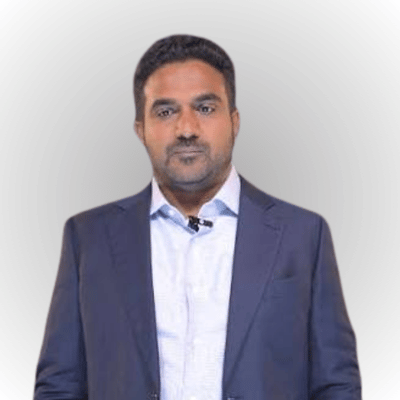
Anil RG, Managing Director, Concorde.
“Investor confidence in office and commercial real estate is being driven by the sector’s growing maturity, strong occupier demand and potential for stable, long-term returns. There is a clear preference for high-quality Grade A assets in established and emerging business corridors, particularly those offering strong tenant profiles, connectivity and efficient asset management. The continued expansion of GCCs, technology-led businesses and other large occupiers is further strengthening the office segment, while greater transparency, professional management and the evolution of the REIT ecosystem have made commercial real estate a more structured and institutionally attractive asset class.
Quality infrastructure is also emerging as a key driver of long-term asset value. Metro networks, improved road connectivity, airports and new commercial corridors are making previously peripheral locations more accessible and investible, while strong social infrastructure, employment generation and sustained occupier demand are helping create resilient real estate ecosystems. At the same time, sustainability, technology, energy efficiency and effective asset management are becoming increasingly important in determining the long-term strength of future-ready buildings.
For developers, attracting top-tier institutional and domestic capital is increasingly about demonstrating credibility across the entire development lifecycle. Strong governance, financial discipline, clear land titles, timely execution and transparency are becoming as important as location and product quality. Leading developers are therefore focusing on assets that remain relevant over the long term through better design, sustainability, technology integration, operational efficiency and strong tenant experiences. Ultimately, developers that combine strong locations, execution capability, governance and future-ready development practices will be better positioned to build lasting partnerships with institutional and domestic capital and capture the next phase of growth in commercial real estate.”
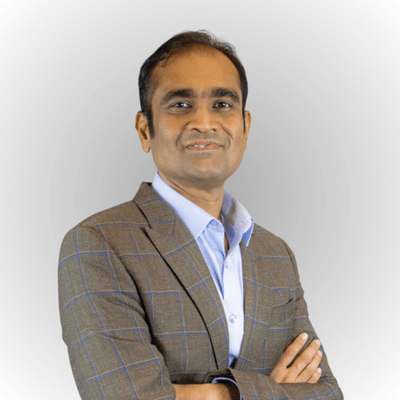
Mr. Anuj Mehta, Director, Dhuleva Group
“Real estate is entering a new phase where the strength of its ecosystem determines the long-term value of an asset. Improvements in infrastructure, better connectivity, and greater market stability are making established places more appealing for end-users and investors by providing them with sustained appreciation. Developers are realizing the need to shift from merely supplying properties to focusing on the quality of products they launch in the market. Also, institutional and domestic capital are becoming increasingly discerning in office and commercial real estate. Investors are paying great attention to the location, asset quality, income predictability, and appreciation potential of an asset. With the evolution of infrastructure and its impact on our way of life, future hubs for investment will probably be found in locations that are not only well accessible and characterized by significant demand and activity but also have limited supply, thereby providing significant investment opportunities. Because the industry is developing toward a more sophisticated understanding of value, in which the integrity of the developer, asset quality, and the surrounding environment directly influence investment prospects.”
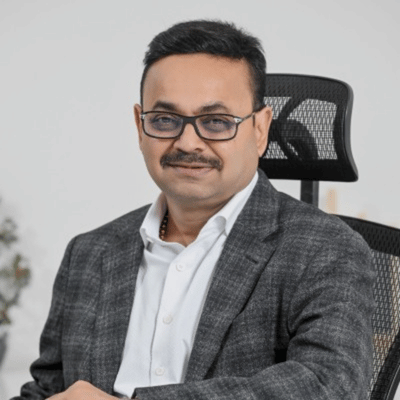
Mr. Shekhar Patel, Managing Director & Chief Executive Officer, Ganesh Housing Corporation Ltd.
"The sustained rise in institutional and domestic capital deployment reflects growing confidence in the fundamentals of India’s commercial real estate sector. Investors are becoming increasingly selective, prioritising high-quality assets backed by credible developers, strong occupier demand, robust infrastructure and the potential for long-term value creation.
Ahmedabad is emerging as a compelling commercial real estate market, supported by strong economic fundamentals, expanding enterprise activity, improving urban infrastructure and a stable business environment. Together, these factors are strengthening the city’s ability to attract leading occupiers and long-term investment.
Going forward, institutional capital will increasingly favour developers with strong execution capabilities and the vision to create integrated, sustainable and future-ready business ecosystems. Developments offering scalability, high-quality infrastructure and a strong workplace experience will be best positioned to shape the next phase of commercial real estate growth."
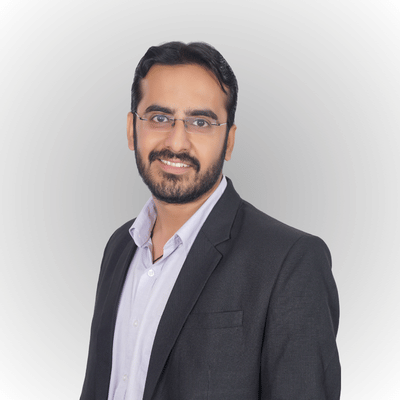
Mr. Umesh Uttamchandani, Managing Director, Dev Accelerator Ltd. (DevX)
"The USD 1.9 billion that moved into Indian commercial real estate last quarter is being underwritten on a specific bet, which is that Grade-A assets in the right locations will be leased and stay leased. What has changed is where investors believe those locations are. Metro extensions and highway upgrades have made nodes investable that would not have cleared an investment committee three years ago, and that widening of the map is one of the more consequential shifts in this cycle.
What has changed alongside it is what a completed building is expected to be. Enterprise occupiers increasingly want space they can move into and operate from immediately, not a warm shell that requires them to fund a fit-out and then run the site themselves. That expectation sits awkwardly with the traditional development model, and it is where the operator comes in. At DevX, our development model addresses it directly. We take on the fit-out and operations of the asset under a revenue-sharing structure with the developer, so the building comes to market as a fully operational managed workspace. The developer holds a stabilised, income-generating asset with an operating partner accountable for performance. The occupier gets Grade-A space it can occupy in weeks without committing its own capital.
What I find most interesting about this cycle is that flexible workspace has stopped being treated as a leasing outcome and started being treated as an asset strategy. Increasingly, developers and institutional owners are deciding how a building will be operated before it is built, and that is a meaningful shift in how commercial real estate in India gets financed and delivered."

Aakash Patel, Director, Atul Projects
"The infrastructure, including metro systems, roads, airports, and corporate corridors, has greatly increased access and connectivity. This has made the real estate in these locations more appealing, contributing to improved occupancy rates, increases in rentals, and capital appreciation. At the same time, the sound economic foundations and the high demand for Grade A offices have been a source of investor confidence in these real estate investments.
Quality, scale, and institutionalization are positioning themselves as key strategies among leading developers. Leading developers are now creating top-tier properties with contemporary features, sustainable practices, good connectivity, and quality tenants. At the same time, developers are entering into joint ventures, development platforms, and even REIT structures with international and local investors, enabling them to raise large amounts of capital.
Investors in the office/ commercial sector are becoming increasingly confident in their investments because of assured rental income, occupier demand, and growth potential. The growth of GCCs, technology, and BFSI services, among others, is driving demand for office space. The preferred choice for investors is Grade A offices located in developed or emerging business hubs with good infrastructure, high-quality tenants, ESG credentials, and growth potential."
Conclusion
Looking back at this $1.9 billion number, it's probably not the high point of a cycle it's the start of a shift. Institutional investors are beginning to treat Indian commercial real estate as a core, dependable part of their portfolios, not just an opportunistic bet.
Going forward, expect fewer deals but bigger, better-vetted ones. Investors will scrutinize a building's governance and quality more closely before putting money in, and the bar for what counts as "investment-grade" real estate will keep rising. Cities and business districts that meet these higher standards early will attract a disproportionate share of future investment. Those that rely only on cheap costs or a good location, without upgrading quality and transparency, may find it harder to catch up.
The bottom line for developers and investors: the market is now rewarding preparation and credibility more than ever. Those who adapt early to these higher expectations will be best placed to benefit as this wave of institutional investment continues over the next few years.