India’s luxury residential market is witnessing a significant transformation, driven by rising domestic wealth, evolving lifestyle aspirations and growing demand for differentiated housing experiences. The festive season, traditionally considered an important period for homebuying, is providing developers with an opportunity to introduce premium residential projects and attract buyers seeking larger homes, exclusive amenities and enhanced lifestyle offerings.
However, the changing dynamics of the market indicate that luxury housing is no longer defined solely by location, apartment sizes or premium specifications. Increasingly, buyers are evaluating residential developments through the lens of brand credibility, quality of services, design, privacy and the overall living experience.
One of the emerging trends shaping this transition is the growing popularity of branded residences. According to Savills’ Branded Residences Asia Pacific 2026 Report, India is among the top 10 markets in Asia Pacific for branded residential developments, with the number of projects in the country projected to increase by 126% over the next six years. This growth is expected to be driven primarily by major urban centres, supported by rising domestic wealth, expanding metropolitan populations and increasing appetite for internationally branded residential offerings.
The evolving profile of luxury homebuyers is also encouraging developers to rethink their offerings. Beyond spacious configurations and premium fittings, buyers are increasingly seeking integrated lifestyle experiences that combine quality, convenience, professional services and curated amenities. This is creating opportunities for developers to differentiate their projects through collaborations with established hospitality and lifestyle brands.
The growing importance of brand association is also reflected in regional market trends. Savills reports that the average brand premium across Asia Pacific increased from 23% to 29% over the past year. Furthermore, luxury projects account for 48% of the region’s branded residential pipeline, while upscale developments represent another 23%, indicating that branded living is expanding across price segments.
While festival launches can provide an important platform for developers to showcase these differentiated offerings, sustained demand will ultimately depend on project quality, delivery credibility and the ability to meet evolving buyer expectations.
As India’s residential market matures, the next phase of luxury housing is likely to be defined by more than premium addresses and expansive homes. The emphasis is shifting towards creating distinctive residential experiences, positioning branded living as an increasingly important dimension of India’s premium housing landscape.
Expert’s Quote

Saurabh Bhutani, Senior Director, Research & Consulting, Savills India says
“India's residential market is seeing a growing preference for premium and luxury homes, with buyers increasingly looking for larger spaces, better amenities and a higher standard of living. This is also reflected in developers' launch strategies, with homes priced at INR 2 crore and above accounting for over 35% of new residential launches across tier I cities in Q3 2026. The share remained broadly in line with the levels seen in Q3 2025, suggesting that developer interest in the higher-end segment continues to be strong. Festive launches offer developers an opportunity to tap into this demand by bringing new projects and differentiated offerings to the market.”

Mr.Kalyan Chakrabarti, CEO, EMAAR INDIA says,
“Housing demand this festive season is steady, and more importantly it is being fuelled by interested buyers who do their homework diligently before walking in and not just basis various offers. Homes priced between ₹3 - ₹6 crore have been the fastest-growing segment this year, with sales rising over 19% between January and September, according to Knight Frank. Buyers in this segment are spending more time on due diligence, particularly on a developer’s delivery history and construction quality. We see this as a positive development for the sector. With stable borrowing costs and infrastructure improving across NCR, we expect premium demand to remain consistent through the coming quarters.”
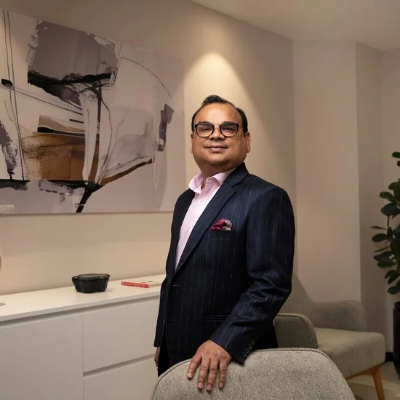
Vivek Singhal, Founder & CEO, Multigen,
"The festive season continues to be an important catalyst for residential real estate, not because buyers make impulsive decisions, but because it often accelerates purchase plans that are already under consideration. Today's homebuyers are far more informed and selective, evaluating factors such as project quality, developer credibility, location advantages, connectivity, and long-term value before making a commitment. While festive offers and flexible payment plans can enhance the proposition, the final decision is increasingly driven by genuine value rather than headline discounts. We expect demand to remain healthy this festive season, particularly in well-connected micro-markets and projects that align with evolving lifestyle aspirations and end-user preferences."

Ankush Kaul, Chief Business Officer, TARC Ltd. says,
“Homebuyers are increasingly recognising the value of premium residential developments within the city during the festive time where they can retain access to established neighbourhoods, social infrastructure, business districts space, privacy and lifestyle associated with premium gated communities without having to relocate to the peripheral markets of the NCR. Now days, homebuyers are always looking for the advantages of a city address without compromising on the strong response to high value residential offerings that reflects the willingness of buyers to invest in quality locations and thoughtfully planned living environments; this also points to a growing preference for communities that offer the space, privacy, security and lifestyle amenities traditionally associated with larger residential developments.
A key challenge in Delhi is the limited availability of sizable land parcels in established locations. This situation makes thoughtful planning, efficient land utilisation and the creation of well-designed residential communities increasingly important. Our approach is through a low-density development spread across 6.2 acres, comprising 417 residences across five towers. The larger opportunity for Delhi’s residential market lies in creating developments that combine the advantages of an established city address with the space, privacy and quality of life that today’s discerning homebuyers expect. Delhi’s next chapter in luxury housing will be shaped not merely by premium pricing but by the quality of the residential experience being created.”