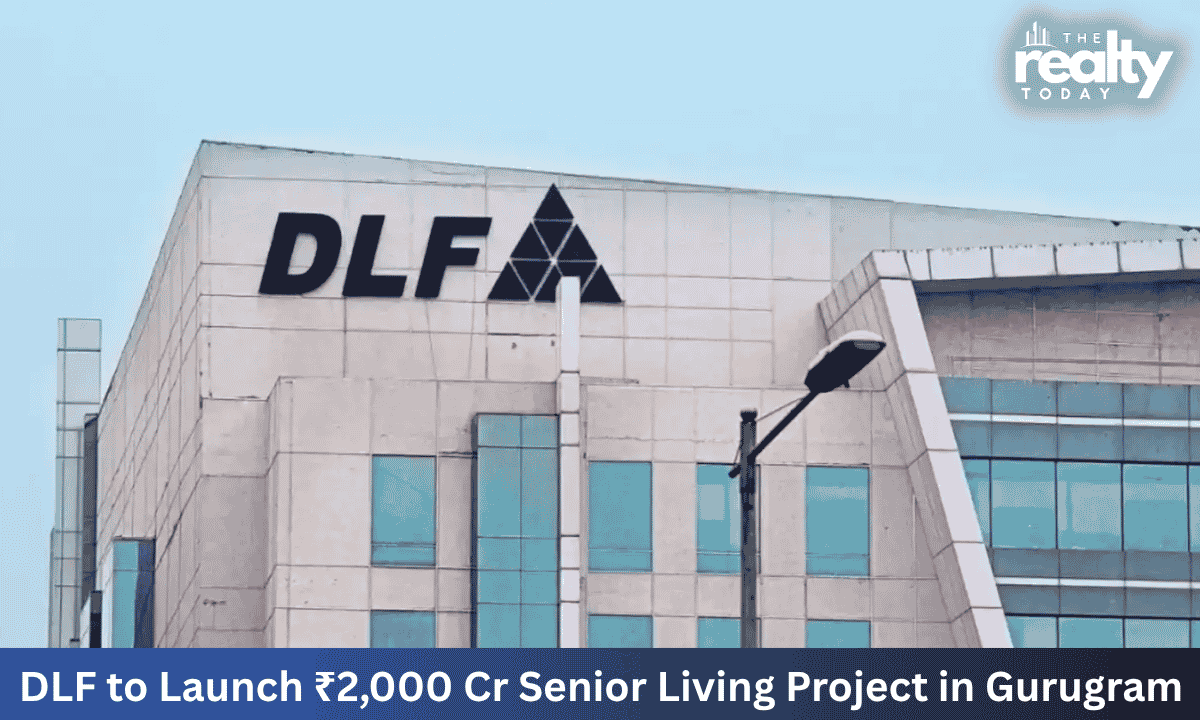
DLF is set to enter India’s senior living segment with a planned project in Gurugram, as demand for organised retirement housing picks up across the country. The move comes at a time when the senior-living market is estimated at around Rs. 30,000 crore and is expected to cross Rs. 1 lakh crore by the year 2030, according to Colliers.
The entry of one of India’s largest listed real estate developers comes as senior living moves beyond a niche housing segment and begins to attract larger developers, investors and institutional capital. While organised senior housing remains limited compared with overall demand, the growing investment pipeline suggests that developers are beginning to see the segment as a long-term residential opportunity.
DLF plans first senior-living project in Gurugram
The project will be DLF’s first dedicated senior-living development and is planned in Sector 63, along Golf Course Extension Road in Gurugram. The project is estimated to have a revenue potential of around Rs. 2000 crore.
The announcement has been made earlier this year. In August, the company continued to identify the senior-living project as part of its upcoming launch pipeline, indicating that the development is still in the process of taking forward.
The project is expected to cater to demand for purpose-built retirement housing in one of the country’s major urban markets.
DLF’s move also comes as developers increasingly explore housing formats beyond conventional residential projects. Senior-living developments can combine residential accommodation with services and amenities designed around the requirements of older residents, creating a distinct proposition from traditional housing.
Senior-living market projected to cross Rs. 1 lakh crore by 2030
According to Colliers, India's senior-living market has grown to around Rs. 30,000 crore, up nearly 70 percent from the year 2024. It is expected to exceed Rs. 1 lakh crore by 2030, almost four times its current size.
The market is expected to reach around Rs. 70,000 crore by 2028 before crossing the Rs. 1 lakh crore mark by 2030. The projected growth reflects a wider shift in India’s housing requirements as the country’s elderly population increases and demand grows for professionally managed residential options.
The demand-supply gap is also significant. Current demand is estimated at around 20-22 lakh units, while organised senior-living inventory stands at only about 25,000 units. By 2030, demand is expected to reach 30 lakh units, with organised supply projected to reach around one lakh units.
This leaves a substantial gap between the number of people who could require senior housing and the organised stock currently available.
This limited supply also indicates that the segment is still at an early stage of development in India.
Demand-supply gap draws developers and investors
The limited number in organised supply is making room for new projects and investments in the segment. More than Rs. 13,000 crore has been announced for senior-living developments since 2025, with the capital expected to be deployed over the next three to four years.
The investment pipeline is expected to support the addition of nearly 75,000 organised senior-living units over the coming years. Real estate developers, senior-living operators and investors are among the groups committing capital to the segment, indicating that interest is extending beyond individual projects.
The segment is also seeing greater collaboration between real estate companies and healthcare providers, as such partnerships can allow senior-living projects to combine housing with healthcare related services, which is crucial for this age group.
The sector is also being supported by longer life expectancy, changing family structures, rising income levels, greater retirement preparedness and increased focus on health and wellness. India’s ageing population is expected to further increase demand for housing designed according to the needs of senior citizens.
The nature of senior living is also changing. Instead of being limited to basic retirement accommodation, newer developments are increasingly being planned around community living, wellness, recreation and healthcare access and professionally managed services. This could make senior living a more distinct category within India's residential real estate market.
DLF's entry therefore comes at a time when the segment is moving towards greater institutionalisation. With organised supply expected to expand significantly and capital commitments increasing, the next few years could determine how quickly senior living develops from a relatively niche housing segment into a more established part of India's organised residential market.
Sources:
1. DLF In The News & Media Highlights
2. DLF eyes Rs ₹2,000 crore from senior living project in Gurugram - BusinessToday
3. DLF targets Rs 2,000 crore from senior living project in Gurugram - Economic Times
4. Colliers | India’s senior living market likely to exceed INR 1 trillion by 2030, almost 4X times current levels
5. Realty, PE players commit ₹13K cr for senior living homes as demand rises - Business Standard