

After several years of sharp post-pandemic expansion, India’s residential real estate market is entering a decisive transition phase, with mid-segment housing emerging as the next growth anchor, says the latest report by PropTech platform Square Yards.
According to the report, titled ‘2025 Recap, 2026 Outlook: Residential Real Estate’, the year 2025 marked a shift towards value-led growth, characterised by stable transaction volumes and a continued rise in overall market value even as premium and luxury segments showed early signs of saturation across select mature markets.
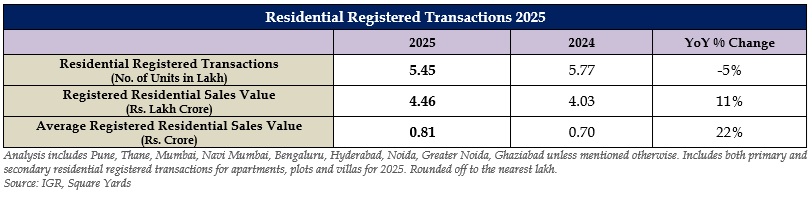
According to the report, in 2025, registered residential transactions in India’s 9 prime residential markets declined by 5% year-on year even as total sales value increased by over 11% in the same period. This growth, the report shows, is driven by a 22% increase in average deal sizes.
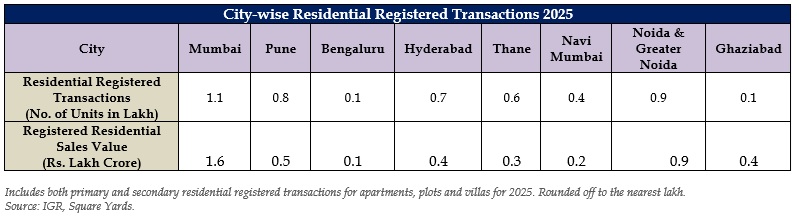
Regional demand patterns reflect varying trends
Western India accounted for over 80% of total registered sales value in 2025, supported by higher ticket sizes, while southern markets such as Bengaluru and Hyderabad continued to demonstrate strong end-user participation. Within the NCR, demand remained sharply price-segmented, with affordable and mid-market categories driving volume traction, signaling a more diversified and mature buyer profile.
“This divergence reflects a maturing market, where growth is increasingly shaped by demand rather than volume-led expansion. Amid a sharp rise in the number of wealthy Indians with higher disposable incomes, premium and luxury housing dominated value contribution in 2025, particularly across markets such as the MMR,” said Tanuj Shori, Founder & CEO, Square Yards.
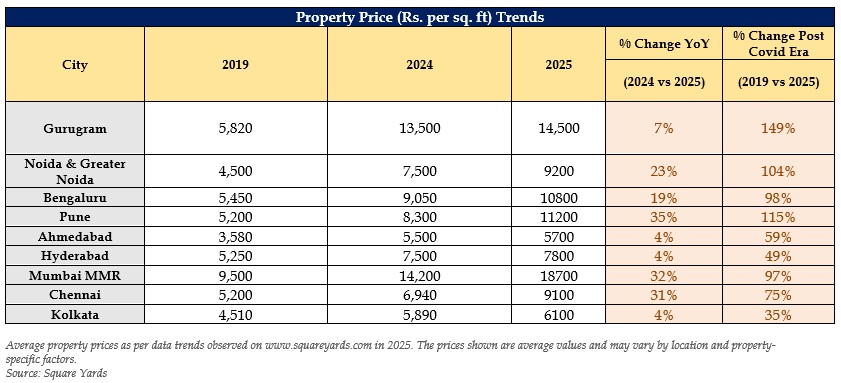
According to Shori, sustained price appreciation over the last three to five years has begun to test affordability thresholds in several premium micro-markets. While demand remains structurally resilient, incremental growth in the luxury segment is expected to moderate in 2026, indicating the onset of a stabilization phase rather than a slowdown.
Outlook for 2026
According to the report, the residential sector is moving from a phase of expansion to equilibrium. “As premium markets stabilize, and affordability improves across the mid-income segment, 2026 is likely to witness broader-based, end-user-led growth anchored in value rather than exuberance. Transaction volumes are expected to remain steady, average ticket sizes elevated, and price growth more evenly distributed across segments,” the report said.
Mid-segment set to drive growth in 2026
With housing inflation moderation and price growth stabilizing in several saturated markets, affordability for mid-income buyers is set to improve significantly, according to the report.
This segment stands to gain from a mix of stable pricing, better-quality offerings and infrastructure-driven expansion into peripheral urban corridors, although outcomes will depend on active developer participation and execution. As a result of this, the mid-segment segment (properties priced between INR 80 Lac and INR 1.5 crore) is poised to drive incremental demand.
 Overall, India’s housing market appears well positioned for sustainable progress in 2026, supported by disciplined supply pipelines, a maturing buyer base and a gradual rebalancing of demand towards the mid-market segment.