Not long ago, you may remember, you used to peep through the keyhole on the door to identify who had knocked. The keyhole was the last resort for visual confirmation before you opened the door to ensure it was safe to do so and let the person who knocked into the house.
The keyhole also served as a window, very small and nonfunctional at that, in many Indian homes in the past; even in the present day, there are homes and residents who do this. This practice is also in vogue, unmindful of how inconvenient it is and how ineffective it is. Many times if the person who knocked stood at a distance, his face could be seen; otherwise, only a portion of his person was visible to the person inside the house.
The same went for other security features at average homes. Doors always remained closed or enclosed with steel grill doors; windows also sported grills, and balconies were also secured with crude and ugly fabrication work, and gates on the main entrance were kept locked. It made the house security so transparent to the outside world. The haven, as we call our homes, suddenly looks so vulnerable and insecure when we assess our security options and heavily depend on physical fortification.
But wait! The Indian home is changing!. Thanks to the young and perceptive homeowners who want their living spaces to be more hospitable, open, airy, bright and with a clear view of the outside world, curtains are, however, excused in these newfound security schemes.
Walk into a contemporary home designed for a young homeowner, and it will open a new world for you, with larger windows, wider entrances, open balconies, indoor-outdoor spaces, open patios, and a greater emphasis on natural light, ventilation and views. The younger homeowner does not necessarily want the world kept out. They prefer to bring the world into their homes.
Trust us, the new generation of safety and security for our homes has arrived, and these will turn your homes into not just secure but also congenial habitats. And that is creating an interesting shift in how we think about security.
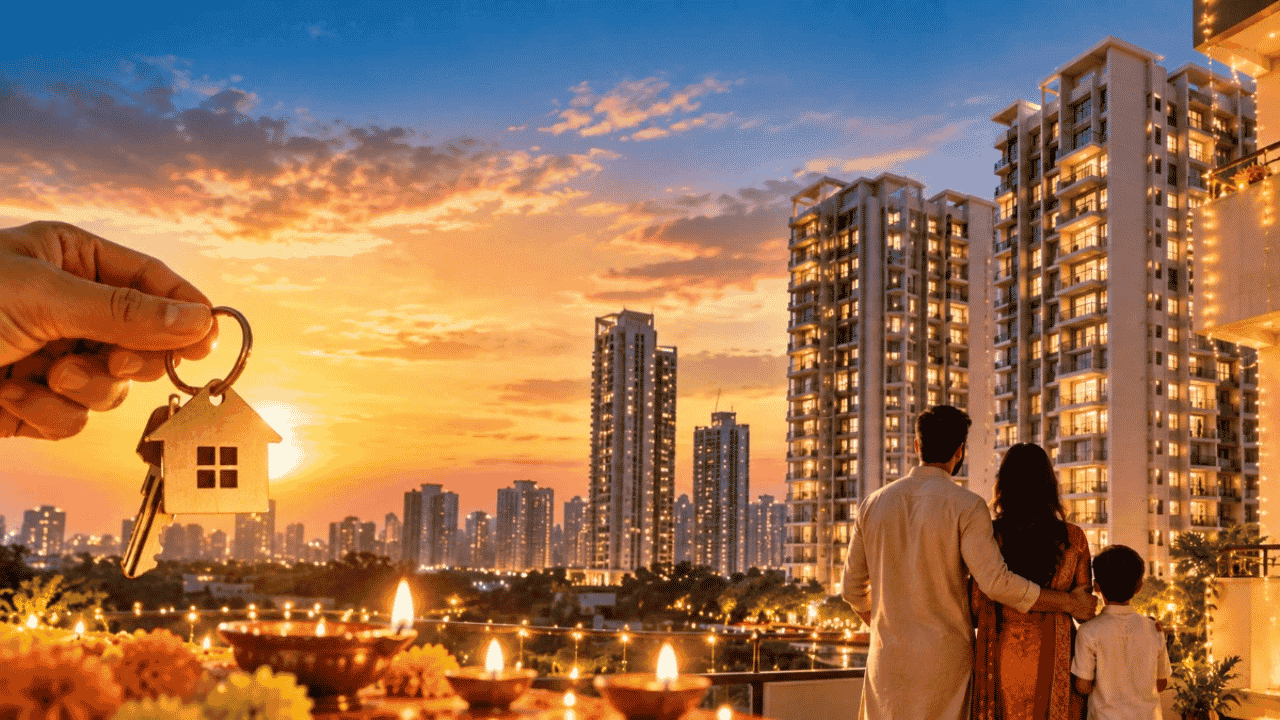
Yes, we are moving from the Keyhole to the Open Door houses without compromising the safety of our loved ones and ourselves. Gen X and the discerning elders have started defining the safety aspect differently, and rightfully so, because life as we know it has more to offer outdoors while still living inside the home without restricting our joy of being one with the outdoors.
For previous generations, security was closely connected to the idea of the
home as a sanctuary, it still is, but in a configuration and mélange of new, fresh ideas of security. In the past in our country, where multigenerational households were common, the front door was an important psychological boundary, which was also the mainstay of security from unwanted intruders. Children were taught not to open it to strangers. Elders were careful about locking up.
Security was not simply a product. It was a habit. It was taught and passed down through the generations. The enigmatic and all-important keyhole perfectly represented that mindset that you could look outside without exposing yourself. You could see without being seen. You could decide whether the outside world should be allowed in. That keyhole gave you control.
But it has an expiry date; it has lived its age and utility for generations behind us and that was not totally wrong and made sense for its time. A window grill was practical. A locked gate was sensible. A solid door was reassuring.
But life has moved on, with lifestyles leading the Indian home spaces to open up for fresh, new, urban and totally congenial safe havens. Younger homeowners are now paying greater attention to natural light, ventilation, views and the relationship between indoor and outdoor spaces.
The balcony is no longer simply an external part of the apartment. It can become a morning coffee space, a work-from-home corner, a place to entertain friends or simply somewhere to unwind by the end of the day or on weekends.
Windows are no longer just functional openings. They frame views and bring the outdoors into the home. Doors are no longer simply entry points. They are increasingly part of the architecture itself. The old mindset on security means the old assumption that security must automatically mean closing everything off. They want both. They want the balcony open to the breeze and protected. They want large windows and security. They want a welcoming entrance and peace of mind. They want the door open, but they still want control over what crosses the threshold.
The new outlook is changing fast: ‘From Barrier to Filter ’. This is where the evolution of residential security becomes particularly interesting and widely acceptable.
Newer approaches increasingly function more like filters than barriers. Rather than turning every opening into a visual obstruction, contemporary security solutions can protect while preserving visibility, airflow and a stronger connection to the outdoors.
Modern-day architects have dreamt of new home designs where security no longer has to dominate the appearance of a home. It can become part of the way the home functions. The keyhole technique has been left far behind in their way of thinking and designing. The open door is their choice. You can enjoy the breeze. You can see outside. You can connect with the garden or balcony. You can bring natural light into the home. And you can still create a layer of protection around that opening. The underlying desire has not changed. Both generations want control over their homes.
This is not an article about the divide between the old and the new mindsets. It would be too simplistic to describe this as a story about a cautious older generation and a fearless younger one. The older approach was shaped by the homes, neighbourhoods and lifestyles of its time. For many families, visible security was a sensible and necessary part of everyday life.
This is why younger homeowners increasingly look for security solutions that work with architecture rather than against it. They do not necessarily want their balcony to look like a cage or their windows to be dominated by heavy bars. They want protection to be present without constantly reminding them
A New Definition of the Open Door. Ultimately, the shift from keyholes to open doors is not really about doors. That does not mean eliminating boundaries. It means choosing better ones, more harmonious and more life-giving.
The door can be open. The home can breathe. The view can remain. And security can still be part of the equation. The Key to a More Open Home The story of the modern home is taking that idea much further. For architects, designers and homeowners alike, this has become one of the defining residential design challenges of our time: how to create homes that feel open without feeling exposed. The open door gives today's homeowners a way to experience it. And perhaps the future of home security is not about making us afraid to open the door. It is about giving us the confidence to do so.