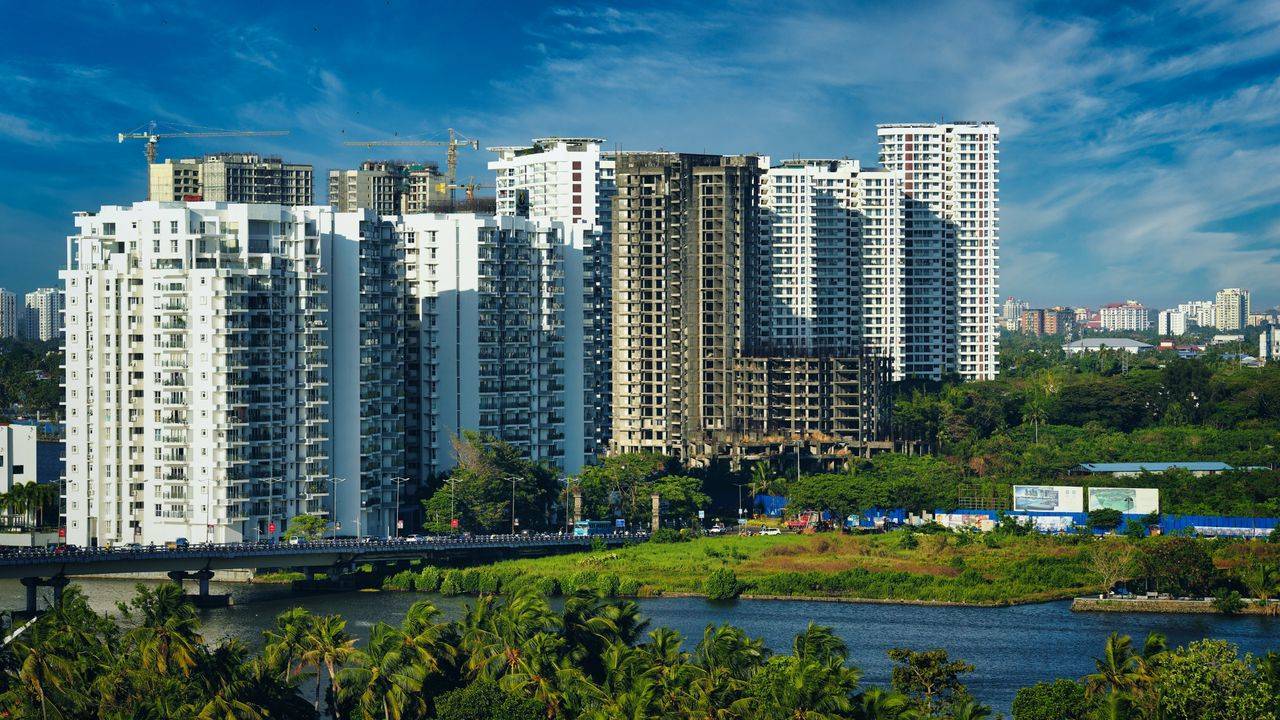

For years, India's luxury housing conversation began and ended with South Delhi, Gurugram's Golf Course Road, and pockets of South Mumbai. That conversation is changing now with Noida, long typecast as an affordable, mid-income suburb, is fast repositioning itself as one of North India's most compelling luxury real estate markets, driven by improved infrastructure, a maturing developer ecosystem, and a new generation of discerning buyers.
The Jewar effect
No single infrastructure project has altered Noida's trajectory as decisively as the Noida International Airport at Jewar. Positioned to become one of Asia's largest aviation hubs, it is doing more than just improving connectivity, rather, it is redrawing the map where luxury real estate makes sense in the National Capital Region.
Areas along the Yamuna Expressway and the broader Noida–Greater Noida corridor are now being evaluated by developers and buyers as future high-value micro-markets, much the way Gurugram's Golf Course Extension Road transformed after earlier connectivity upgrades. For luxury buyers, an international airport signals global business connectivity, hospitality investment, and aviation-linked employment, the kind of institutional confidence that underpins premium real estate cycles for years to come.
Evolving buyer preferences
The definition of "luxury" itself is being rewritten, and Noida's newer projects reflect this. Today's premium buyer isn't purchasing square footage alone; they're purchasing a lifestyle ecosystem. Key shifts include:
Space and privacy — larger floors, low-density towers, bigger balconies and terraces.
Wellness-first design — fitness zones, spas, jogging trails, and biophilic landscaping as baseline expectations.
Smart-home integration — app-controlled security, lighting, and climate systems.
Curated amenities — clubhouses, concierge services, private theatres, and co-working lounges.
Sustainability credentials — green certifications and energy-efficient design as genuine purchase criteria.
This mirrors global luxury real estate trends, where an asset is judged as much by the experience it enables as by its location.
The new buyer profiles
Perhaps the clearest signal of Noida's ascent is who is buying properties there. The premium segment is increasingly driven by HNIs, who view well-located Noida properties as portfolio diversification at meaningfully lower entry prices than Gurugram or South Delhi, with stronger appreciation headroom; NRIs, drawn by the rupee's relative value, improving global connectivity via Jewar, and proximity to family roots; entrepreneurs and business owners anchored to Noida and Greater Noida's expanding commercial base; and senior corporate professionals who have the income profile for premium housing but were historically pushed toward Gurugram for lack of comparable local inventory.
Together, these buyers represent demand rooted in lifestyle aspiration and long-term wealth preservation, which is a structural shift from the price-sensitive, investor-driven buyer that once defined the market.
Reputed developers
Developer participation is often the clearest indicator of a market's luxury credentials and Noida is seeing a marked uptick in activity from established, quality-focused developers, with branded residential projects featuring globally benchmarked architecture and hospitality-style amenities. This brings construction quality and service standards to the fore, while validating the market to institutional capital and enabling a broader shift in perception, from a transactional, end-user-heavy market to one capable of attracting discerning, brand-conscious buyers.
Price Appreciation
Among Noida's micro-markets, the Noida Expressway, sector 107 and sector 150 stand out. The Expressway benefits from direct Delhi connectivity, proximity to established IT hubs, and steady commercial development along its length, with residential values showing consistent appreciation that has outperformed several more mature NCR markets on a percentage basis. Similarly, sector 107 has earned a reputation as one of the city's most sought-after low-density luxury residential zones. It stands out for its upscale residential towers, easy access to key commercial centres, and prime positioning along the Noida-Greater Noida Expressway. Likewise, Sector 150, known as Noida's greenest sector, has built its identity around low-density living and recreational infrastructure, increasingly commanding premium pricing while still offering headroom compared to Gurugram or South Delhi equivalents.
For investors, the combination of attractive entry points, visible infrastructure catalysts like Jewar, and widening quality supply is a pattern that historically precedes sustained appreciation.
Commercial growth and employment
Luxury markets are ultimately sustained by end-users with the income to occupy premium homes, and Noida's fundamentals here are strengthening too, with sustained expansion in IT and ITeS operations alongside growing interest from BFSI, data centre, and logistics players. As Jewar comes fully operational, aviation, hospitality, and warehousing are expected to add a further layer of job creation, deepening the pool of genuine, income-qualified end-users who want to live close to where they work.
Noida's transformation is the product of several forces aligning, such as high-end infrastructural dominance of Jewar Airport, a maturing base of reputed developers, a buyer profile increasingly defined by HNIs, NRIs, entrepreneurs, and senior professionals, and a genuinely expanding commercial base. Micro-markets like the Noida Expressway, Sector 150 and Sector 107 offer an early look at what this looks like, when you have upgraded product quality and buyers willing to pay for lifestyle, not just location. As these trends compound, Noida appears well positioned to take its place alongside Gurugram and South Delhi as one of North India's defining luxury real estate markets.