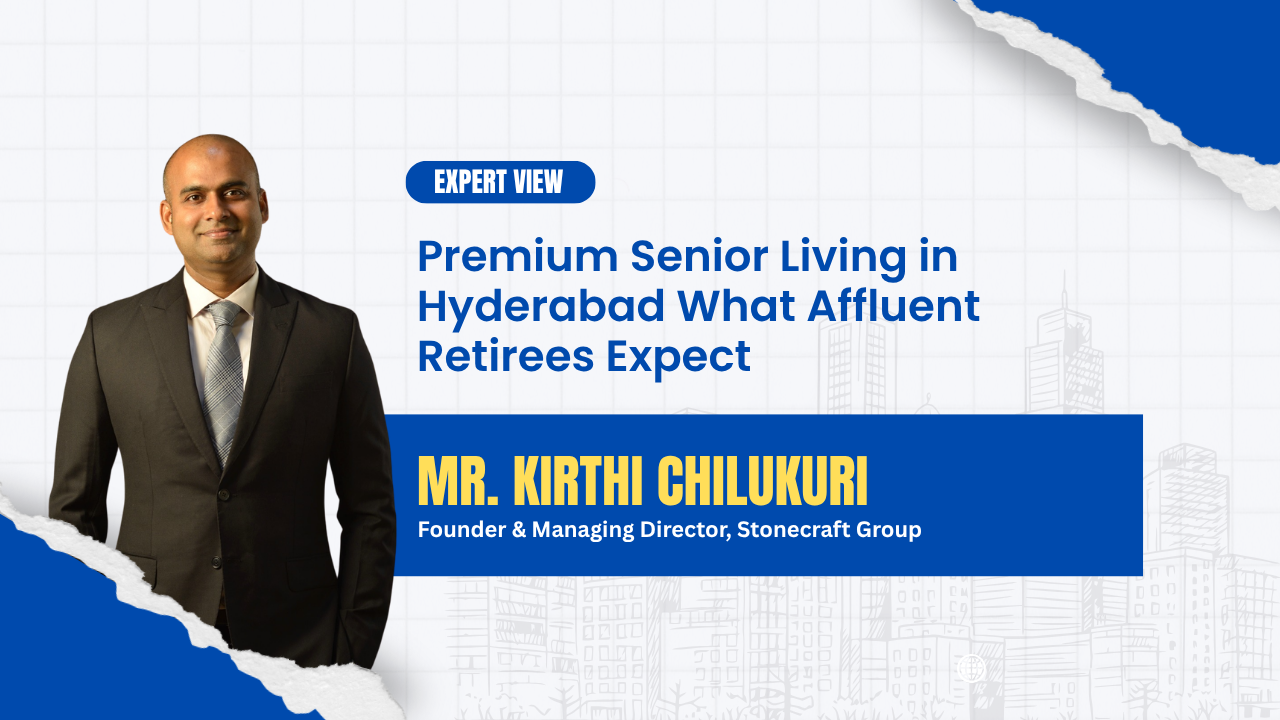
India's senior living market is in a different place than it was even five years ago. People are living longer, managing their own finances more confidently, and thinking about retirement in a completely different way. A retirement home is no longer something you settle for. For a growing number of people, it is something you actively choose, and the standards they are bringing to that choice are high.
Industry insights from KPMG research suggests demand for organised senior living in India could nearly triple over the coming decades. At the same time, the India's Senior Living Market Report published by JLL, puts current organised supply at under 200,000 units nationally. That gap is large, and it is beginning to shape how developers, investors, and cities think about this space. In and around Hyderabad, the shift is already visible on the ground.
A Shift from Retirement Housing to Lifestyle Ecosystems
The people driving demand in the premium segment are not looking for a place to be looked after. Many of them have spent decades running companies or working at senior levels in India and abroad. They are used to a certain standard of living, and they see no reason to give that up in retirement. What they want is independence, but with structure around it. Private homes within communities that offer shared wellness spaces, open areas to walk and spend time in, and enough social activity to stay engaged.
This shift toward lifestyle-driven communities is reinforced by research in the Emerging Asset Classes Report published by ANAROCK, which points to exactly this trend, noting rising demand for wellness-led and community-oriented housing formats, pushed along by smaller family units and an ageing population.
Location Strategy Now Matters More Than Ever
Where you live in retirement is as important as how you live. Dense city centres, with their noise and congestion, are losing appeal among this group. What is gaining ground are locations that offer connectivity without the chaos. The Indresham-Patancheru belt in western Hyderabad is one such area. It sits far enough from the urban core to offer space and quiet, but close enough to hospitals and city infrastructure to remain practical.
According to Knight Frank, average residential prices in the city remain around ₹6,164 per square foot, which keeps it well within reach compared to most other large cities in India. At the same time, office leasing growth of approximately 31 percent year-on-year in early 2025, and that kind of commercial activity pushes residential development outward into exactly these kinds of corridors. Nationally, Knight Frank data shows that nearly 348,000 residential units were sold across major cities in 2025, reflecting stable demand conditions, while premium housing now accounts for nearly 50 percent of total sales. This premiumisation trend aligns directly with the expectations of affluent retirees.
Cultural Anchors and Emerging Destinations
For many retirees, the decision about where to live is not purely practical. It is personal. Places that carry cultural or spiritual meaning are starting to attract serious residential interest. Yadagirigutta is a clear example. What was primarily known as a pilgrimage destination is now seeing township-scale planning and infrastructure investment that is drawing buyers who want to live near something that feels meaningful to them. ANAROCK's research backs this up, pointing to growing demand for housing that combines wellness with cultural connection, particularly among retirees and second-home buyers.
Wellness Is Now a Core Residential Expectation
A few years ago, a gym and a swimming pool were enough to call a project wellness-focused. That bar has moved considerably. Today's premium senior buyers expect green spaces that are actually usable, air and water quality that is looked after, layouts that are easy to move around in, and healthcare infrastructure that is either on-site or genuinely close by. Deloitte highlights the growing importance of healthcare ecosystems and preventive wellness infrastructure in shaping residential demand. It is clear that lower density, nature-integrated planning, and sustainable design are no longer selling points. They are entry-level requirements.
Assisted Living Without Compromising Independence
There is a balance that good senior living communities have to strike. Residents want to live independently. They do not want to feel managed or monitored. But they also want to know that if things change, the support will be there. JLL and KPMG both point to a growing hybrid model in senior living, one where independent living and assisted care sit within the same development, available as needed rather than imposed from the start. For families with members living in other cities or overseas, this kind of setup provides real peace of mind. The resident keeps their independence, and the family keeps their confidence.
Community and Social Continuity Are Central to Decision Making
Loneliness is one of the more serious challenges of retirement, and serious buyers know it. The communities gaining the most traction are the ones that make it easy to stay socially active, not through forced programming, but through thoughtful design. Shared spaces that invite use. Cultural environments that reflect residents' backgrounds. Neighbourhoods where you recognise your neighbours and have reasons to spend time with them. These are not soft extras. For many buyers, they are the main reason one project gets chosen over another.
Investment Logic Is Becoming Part of Retirement Planning
Premium retirees are also thinking about what they are buying as an asset, not just a home. PwC India and Colliers have both noted senior living's growing recognition as a distinct real estate category, one that is starting to attract institutional capital. According to CBRE, India recorded 59.6 million square feet of office leasing in the first nine months of 2025 and 82.6 million square feet for the full year, indicating strong economic momentum. This macro growth and commercial strength supports long-term appreciation in the residential corridors around it, including the newer zones in western Hyderabad where senior living projects are taking shape.
The Future of Senior Living Is Integrated and Forward Looking
What is taking shape in Hyderabad is not a collection of retirement projects. It is a broader ecosystem, spread across the western growth corridors and culturally anchored destinations like Yadagirigutta, that is being built around what this generation of retirees actually needs. The best retirement address today is not just comfortable. It is confident. Confident in its healthcare, its community, its surroundings, and its ability to support a full and independent life for as long as the resident wants one. Hyderabad is building toward that, and the pieces are falling into place.