
India’s economic strength has long been defined by scale. As the world’s fifth-largest economy, it has shown its ability to handle Coronavirus pandemic-led disruptions, with growth numbers indicating a steady and sustained recovery.
However, as the country moves towards becoming a developed economy, (India is set to become world’s third-largest economy by 2030) the nature of growth is changing. High-frequency data show that quality is now a lot more important to India and Indians than quantity. This shift is increasingly visible in the commercial real estate sector, one of the country’s largest employment generators, which is now being shaped by more nuanced demand drivers rather than just numbers.
Global capability centres (GCCs) reflect this shift. They account for nearly 40 per cent of Grade-A office demand across India’s top seven cities, with their share in overall leasing rising from below 30 per cent a few years ago to over 40 per cent in 2025, underlining their growing importance.
At the same time, there is a clear transition towards premiumisation, with occupiers choosing high-grade office spaces, strong ecosystems and access to talent over purely cost-led considerations.
Industry reports show that GCC demand is led by e-commerce, BFSI and technology companies, with American firms accounting for a majority share of leasing. Quality is the main criterion for these players while making the selection. This changing preference is reshaping demand patterns across cities.
This is where India's financial capital Mumbai stands to gain.
The contest for India’s GCC market is no longer about attracting the highest number of centres, but about securing the most strategic ones. This means, winning the numbers game alone will not ensure long-term sustainability.
What was once a cost-driven decision is now a portfolio approach, balancing quality, cost and scalability across micro-markets. Cities that offer this flexibility are gaining an edge, and Mumbai’s ability to integrate its core and peripheral markets is proving decisive.
At a time when competition to attract GCC investments is rising, Mumbai is not positioning itself as the largest destination, but as a critical one focused on high-value functions that need deep financial links, regulatory proximity and global connectivity.
Rather than competing directly with cities such as Bengaluru, the country’s leading GCC hub with nearly one-third market share, Mumbai is sharpening its positioning as a centre for finance-led, analytics-heavy and high-value GCCs. Its proximity to regulators, capital markets and global financial institutions continues to support demand for complex, decision-critical operations.
Large, high-quality transactions reinforce this positioning.
In December last year, JPMorgan unveiled plans to build Asia’s largest GCC in Powai, spanning about 2 million sqft and housing up to 30,000 employees by 2029. Brookfield and FedEx also announced plans of major GCC investments in Mumbai. While Brookfield committed over $1 billion for a Powai facility expected to generate up to 45,000 jobs, FedEx is exploring operations near Mumbai and Navi Mumbai airports.
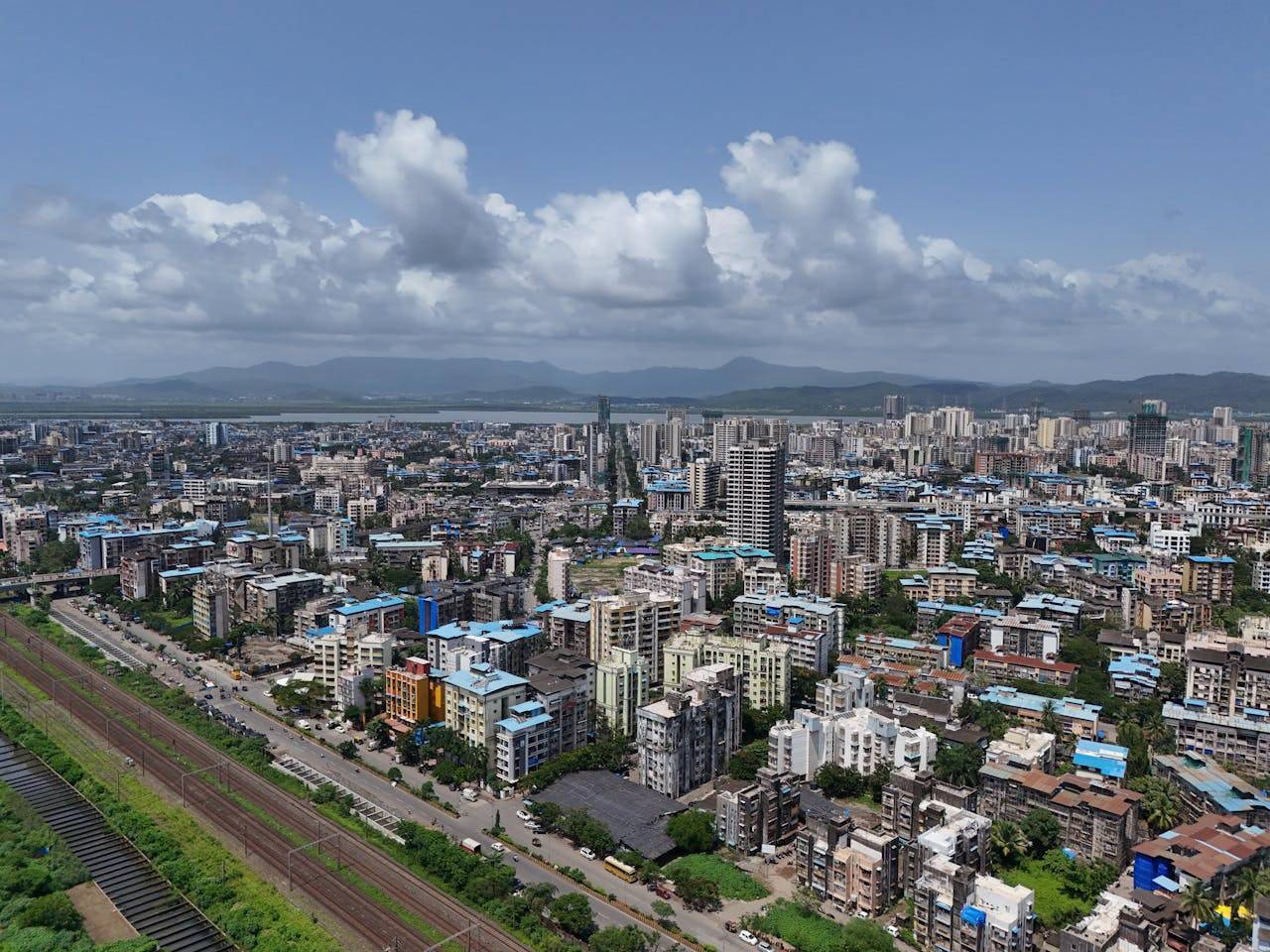
Even though high rentals, land constraints and infrastructure pressures have made expansion within core Mumbai challenging, peripheral markets are emerging as strong alternatives. For global firms, these locations offer the ability to scale without leaving the Mumbai ecosystem. High-value, client-facing and regulatory functions remain in core districts while large delivery and technology teams move to more cost-efficient locations within the same region.
For instance, Navi Mumbai, once seen as a peripheral extension, is now becoming central to this strategy. Supported by planned urbanisation, metro connectivity and a new international airport, it also offers significantly lower office rents compared to prime markets. This cost advantage is increasingly influencing location decisions.
The policy push
Mumbai’s GCC momentum is also being supported by a clear policy framework. Maharashtra’s GCC Policy 2025 aims to attract multinational firms through a mix of financial incentives, easier approvals and infrastructure support while also promoting skill development through industry-academia partnerships.
The policy envisions attracting 400 new GCCs and creating 400,000 high-skilled jobs by fostering cutting-edge research and building talent pipelines.
Conclusion
As GCCs move up the value chain, this policy push is expected to drive demand for large, high-quality office spaces across prime business districts as well as well-connected suburban corridors, supporting fresh absorption and steady rental growth.
If executed effectively, this favourable policy atmosphere along with a mix of premium districts and scalable corridors could help the Mumbai Metropolitan region retain leadership in high-value GCC segments.