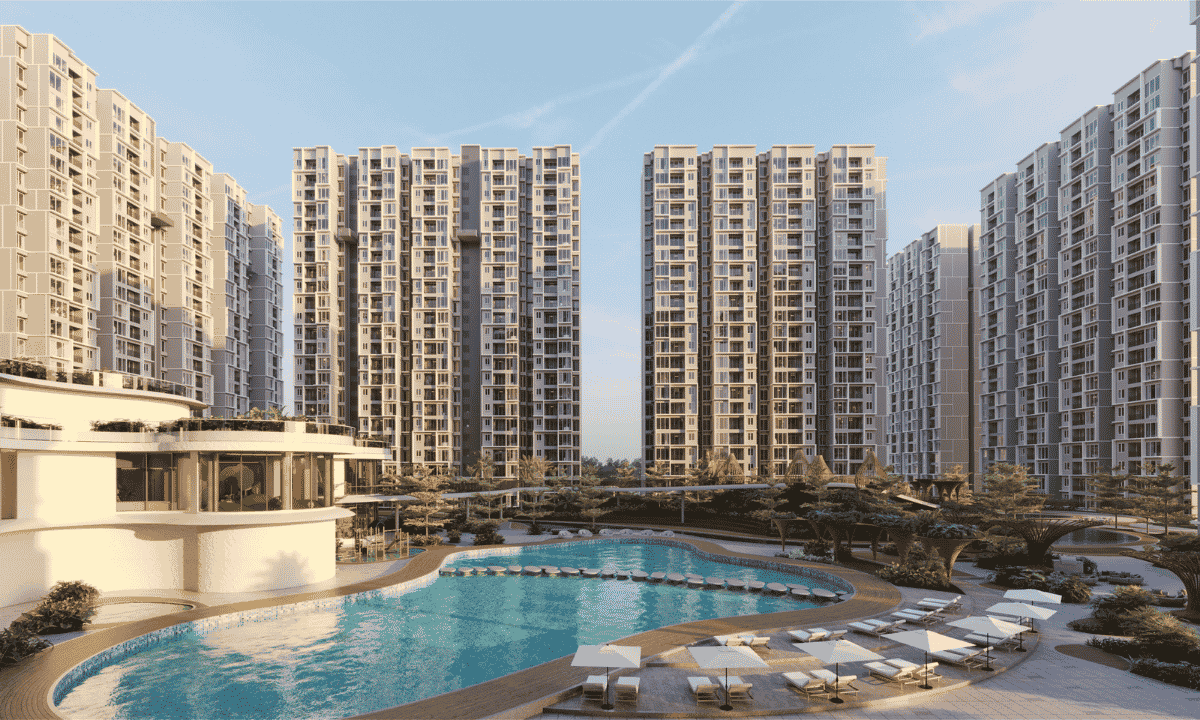

India is undergoing a decisive shift from a housing-centric model to one that prioritises holistic living. This transformation reflects the aspirations of a new India: more urban, more aspirational, and increasingly focused on quality of life. Today, real estate is no longer just about owning a home; it is about experiencing an integrated lifestyle that combines convenience, community, wellness, and sustainability.
This transition is being driven by rapid urbanisation and evolving demographic needs. India’s urban population is expected to grow significantly in the coming decades, crossing the halfway mark of the total population by mid-century. This expansion is fundamentally reshaping demand for housing and infrastructure, while also redefining what urban living must deliver in terms of liveability and experience.
At the same time, the real estate sector itself is witnessing strong structural growth. India’s residential real estate market is projected to reach USD 438 billion in 2026, growing steadily over the next decade. The sector’s long-term trajectory is even more compelling, with estimates suggesting it could touch USD 5.8 trillion by 2047, underlining its central role in India’s economic future.
However, as highlighted by Urban Futures Lab (UFL), the opportunity is accompanied by a significant innovation gap. India’s cities are expanding at an unprecedented scale, yet the systems and solutions needed to support this growth are still evolving. UFL insights point to a massive urban infrastructure requirement estimated at hundreds of billions of dollars creating a clear need for new, innovation-led approaches to city-building.
This is where the idea of holistic living becomes critical. Today’s homebuyer is no longer evaluating a property in isolation but as part of a larger ecosystem. Integrated developments that combine residential, retail, workspaces, healthcare, and leisure are increasingly becoming the norm. These environments are designed to reduce commute times, enhance convenience, and foster a stronger sense of community.
Consumer behaviour clearly reflects this shift. In 2025, while overall housing sales moderated, the market saw a strong move towards premium and high-quality housing. Apartments priced above ₹1 crore increased their share significantly, with premium housing demand continuing to grow even amid broader market stabilisation. This indicates that buyers are prioritising lifestyle, amenities, and long-term value over basic affordability.
Further reinforcing this trend, housing sales across India’s top cities crossed ₹7.3 lakh crore in 2025, more than doubling compared to 2021 levels. This surge highlights not just increased demand, but also a clear shift towards higher-value homes and upgraded living standards.
Infrastructure is playing a pivotal role in enabling this transformation. Enhanced connectivity through metro networks, expressways, and digital infrastructure is redefining urban boundaries and unlocking new micro-markets. Peripheral areas are rapidly evolving into well-planned residential hubs, offering a balance between affordability and quality of life. This decentralisation is allowing cities to expand more sustainably while improving liveability.
Yet, as Ashar UFL emphasises, infrastructure alone is not enough. The complexity of modern urban living requires a deeper integration of technology, sustainability, and innovation. Traditional development models must evolve to incorporate smarter, more adaptive solutions that can address emerging challenges such as climate change, resource efficiency, and urban congestion.
This evolution is already underway. Developers are increasingly collaborating with startups and technology providers to create smarter built environments. From energy-efficient systems and smart mobility solutions to modular construction and digital community platforms, the built environment is becoming a dynamic, innovation-led ecosystem. UFL’s focus on creating real-world urban testbeds is particularly significant in this context, enabling startups to pilot and scale solutions within live communities.
Sustainability and wellness are also becoming central to holistic living. Modern developments are placing greater emphasis on green spaces, natural ventilation, and wellness-oriented amenities. This shift is driven by a more aware and conscious consumer base that values both environmental responsibility and personal well-being.
Technology is further accelerating this transformation. The rise of PropTech is making real estate more transparent, efficient, and user-centric. Smart homes, app-based management systems, and data-driven planning are enhancing the overall living experience while improving operational efficiency for developers.
Importantly, this transition is also redefining value in real estate. As Ashar UFL insights suggest, the future lies in moving from asset creation to experience creation. Buyers today are investing not just in homes, but in lifestyles seeking developments that offer community engagement, accessibility, and long-term quality of life.
Regulatory reforms and institutional confidence are adding further momentum. India’s real estate sector recorded $6.7 billion in private equity investments in 2025, a 59% year-on-year increase, reflecting strong investor confidence and long-term growth potential. At the same time, improved transparency and compliance frameworks are strengthening trust among homebuyers.
Of course, challenges such as affordability and equitable access remain. While premiumisation is driving growth, there is a continued need to address housing for broader income segments. Bridging this gap will require innovation in financing, policy support, and cost-efficient construction technologies.
In this evolving landscape, platforms like Ashar Urban Futures Lab (UFL) play a critical role. By fostering collaboration between developers, startups, and policymakers, and by enabling real-world experimentation, UFL is helping shape a more resilient, inclusive, and future-ready urban ecosystem.
In conclusion, India’s transition from housing to holistic living marks a defining shift in its real estate journey. It reflects a broader societal change one that prioritises not just where people live, but how they live. As cities continue to grow, the focus must remain on creating environments that are sustainable, inclusive, and deeply human-centric.
The future of India’s built environment will not be measured merely in square feet but in the quality of life it delivers.
Authored By

Ayushi Ashar, Founder & CEO, Ashar Urban Futures Lab | Director, Ashar Group | Managing Committee Member, CREDAI-MCHI.She leads the entire development value chain - from land acquisition and design to sales, finance, and strategy. Under her leadership, the company has scaled 4x in seven years, becoming a top-10 MMR brand with 17.5 million sq. ft. under development.