Living on Groundwater: Key Highlight of a Hydro-Positive Microhome
- Hydro-positive microhome: Actively replenishes groundwater through a closed-loop rainwater and greywater recycling system.
- Context-specific design: Responds to Punjab’s groundwater crisis by treating housing as environmental infrastructure.
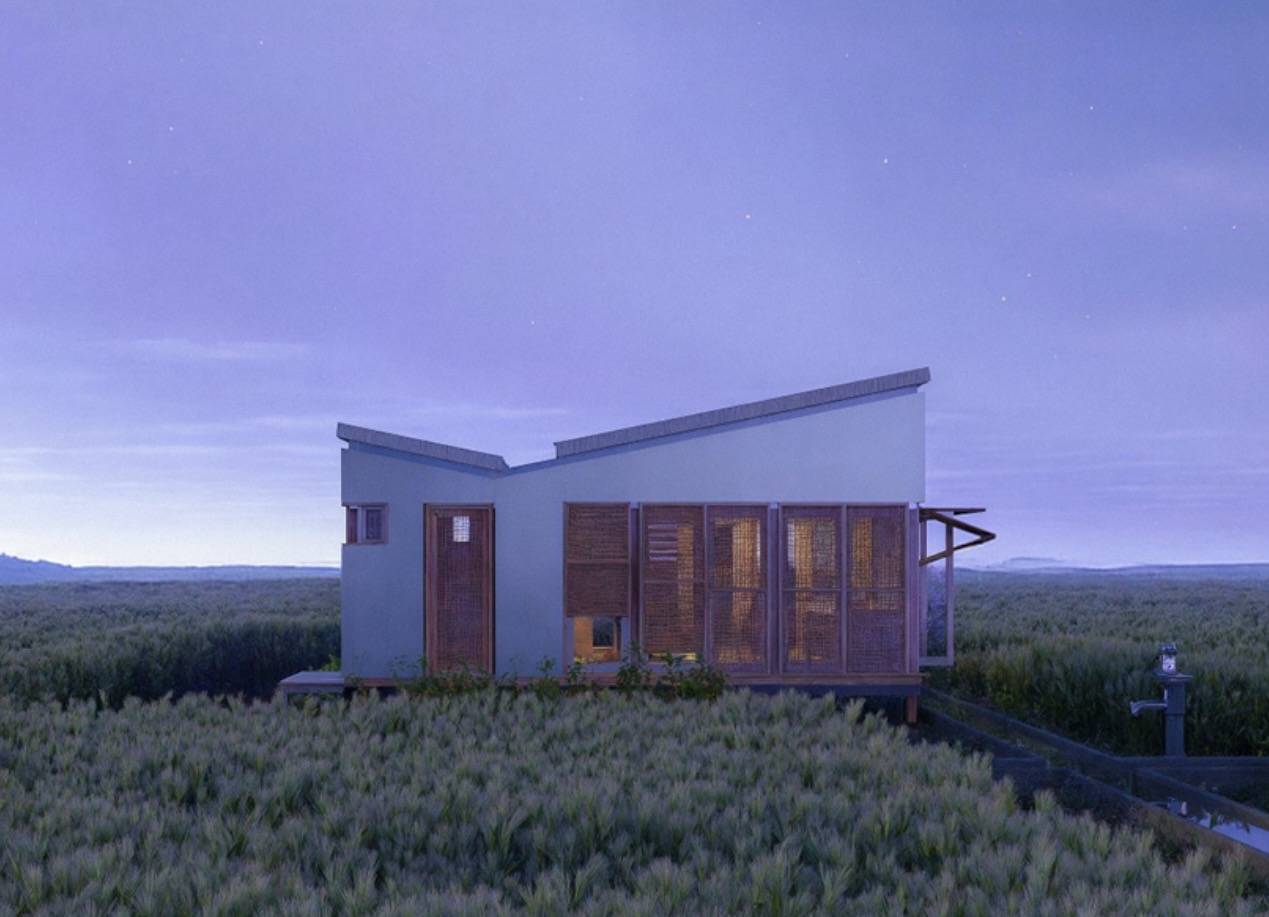
- Permeable, elevated structure: Raised timber frame and breathable facade allow water flow, ventilation, and minimal land disturbance.
- Efficient small-space living: Lofted sleeping area, flexible interiors, built-in storage, and compact wet core optimize the 25 sq m footprint.
- Prefabricated & scalable: Modular, off-grid prototype designed for easy deployment in water-stressed regions across India.
Living on Groundwater, a 25 square meter microhome prefabricated and designed by Aleksa Milojevic and Matthew W Wilde, suggests the idea that domestic architecture can interact with environmental systems in a completely new way. This project which is the winner of the first prize in Buildners Kingspan, funded MICROHOME #10 competition addresses the problem of groundwater depletion by treating the home not as a stand alone unit, but as a continuing and active element of the water cycle.
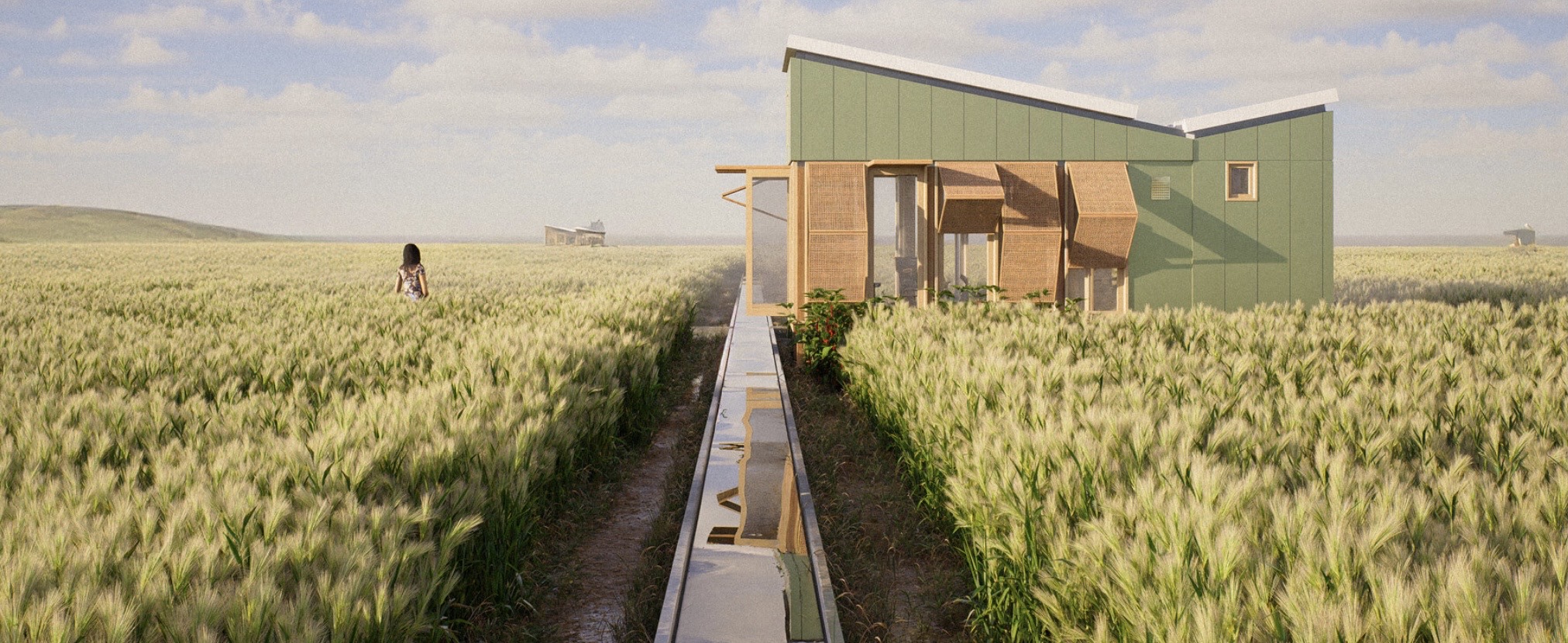
The proposal, which is a response to the situation in Punjab, India where groundwater extraction is the main source both for farming and for life, sees the housing in this way, as a kind of environmental infrastructure that can give back the natural resources to the environment that it takes from the environment.
The MICROHOME #10 competitions called on designers to create a small house for living without public utilities and having an area of less than 25 square metres. Designers were encouraged to be completely experimental with their approaches to material systems, spatial efficiency, and environmental performance by being given the freedom of no site constraints.
Living on Groundwater goes one step further by pinpointing water as the main element in the design. The whole project starting from the architectural and structural plans to the logic of construction and daily life has been moulded around the different aspects of water: its movement, treatment, and return. The micro home is imagined as a hydro, positive system where the inhabitants' activities at home are turned into processes that directly contribute to groundwater replenishment.
Water System Integration
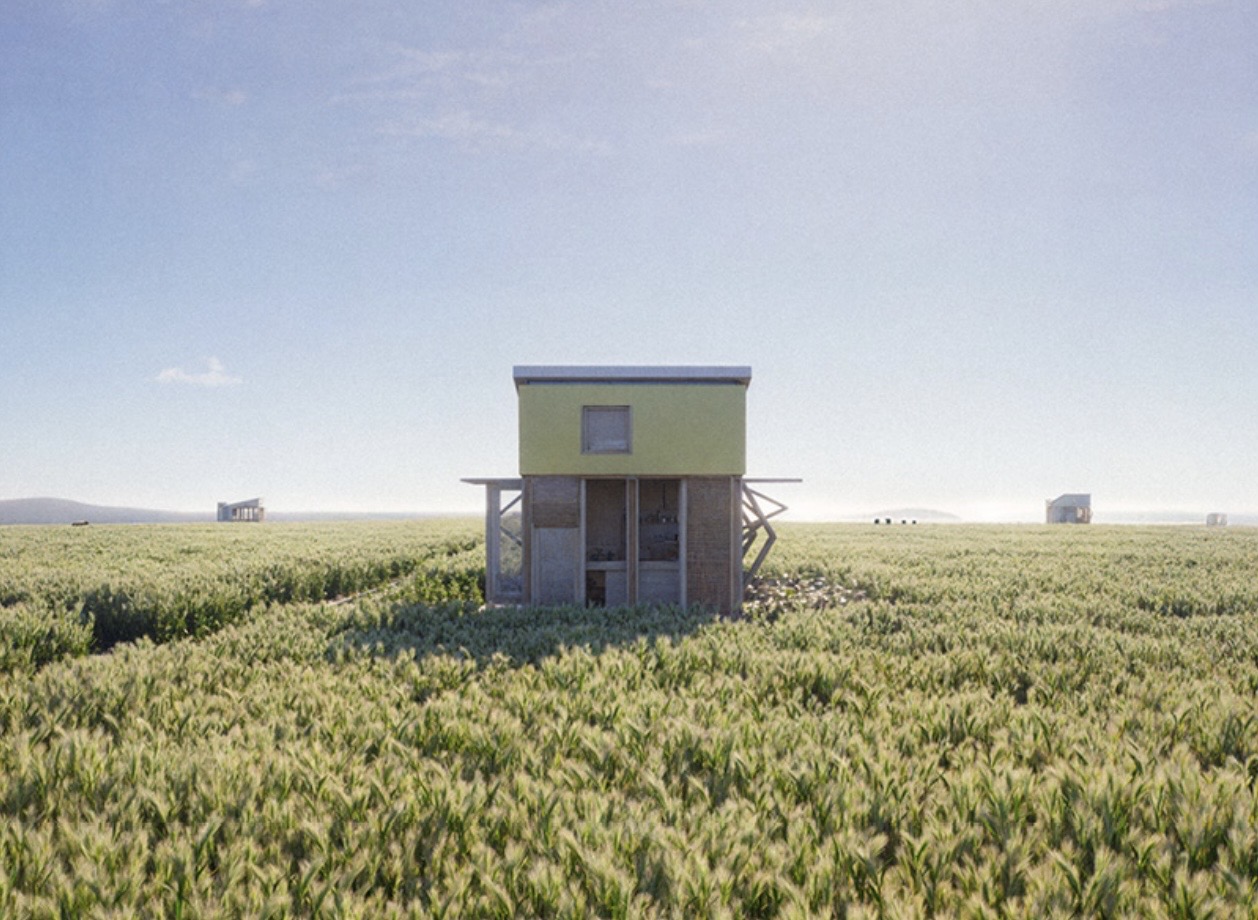
Central to the project is a closed, loop water system concept that helps in making infrastructure both legible and architectural. Rainwater is collected on the spot and is the source of water for daily domestic needs, while the greywater from the house is filtered and treated and then allowed to return to the soil via an injection well. Instead of hiding these systems underground, the project brings them to light through the use of drawings and spatial organization, thus emphasizing the notion that being environmentally responsible should be something visible and understood.
Key water strategies include:
- Rainwater collection integrated into the roof assembly
- On-site greywater filtration within the domestic wet core
- Injection well returning treated water to the aquifer
- A system designed to operate off-grid and at household scale
By completing this cycle, the dwelling moves beyond water efficiency toward active ecological repair.
Architectural Form and Environmental Response
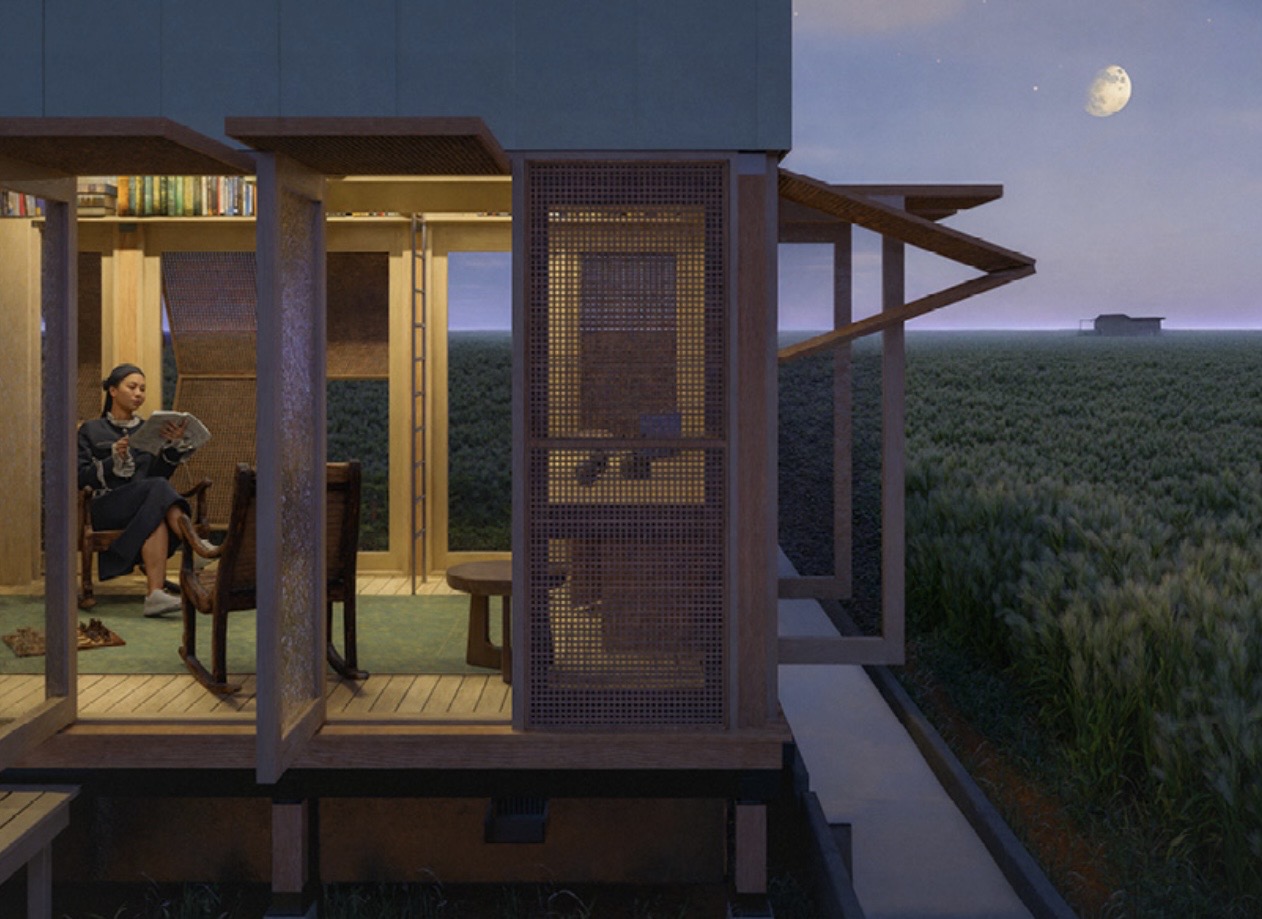
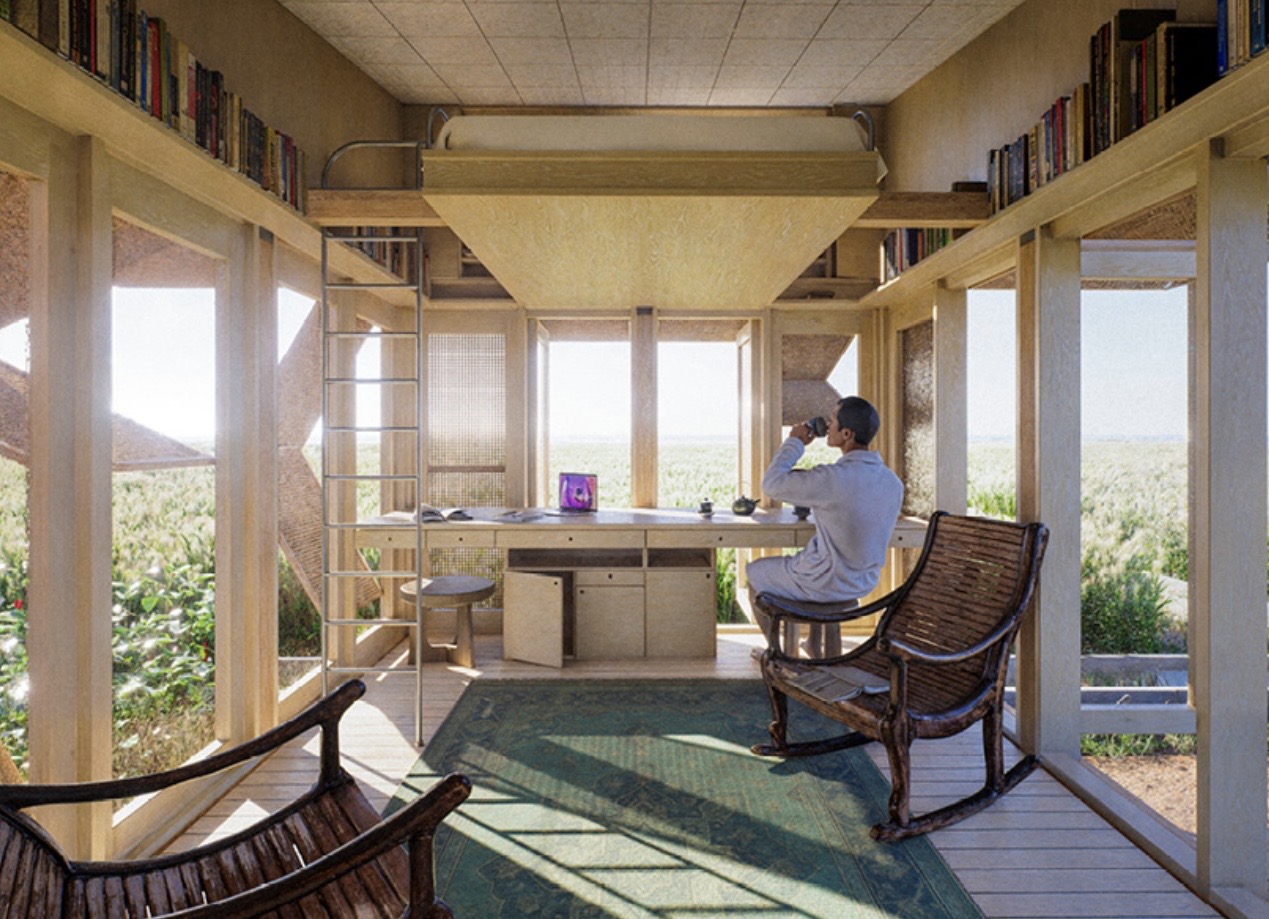
On the architectural side, the microhome is lifted on a raised timber frame, a feature that leaves the soil undisturbed and still allows the passage of water, vegetation, and airflow under the house. This elevated condition decreases the building's footprint and therefore supports its light, reversible presence in the landscape.
A permeable facade system encloses the house, it allows the exchange of light, views, and ventilation inside while it is also a seasonal response to temperature changes.
Operable panels let the interior space extend into the surrounding fields, thus blurring the division between interior and exterior and at the same time, constantly maintaining visual contact with the agricultural environment.
The small volume of the structure and its material discipline result in a tranquil home presence that is still in a close relationship with the natural environment.
Interior versatility in a small footprint
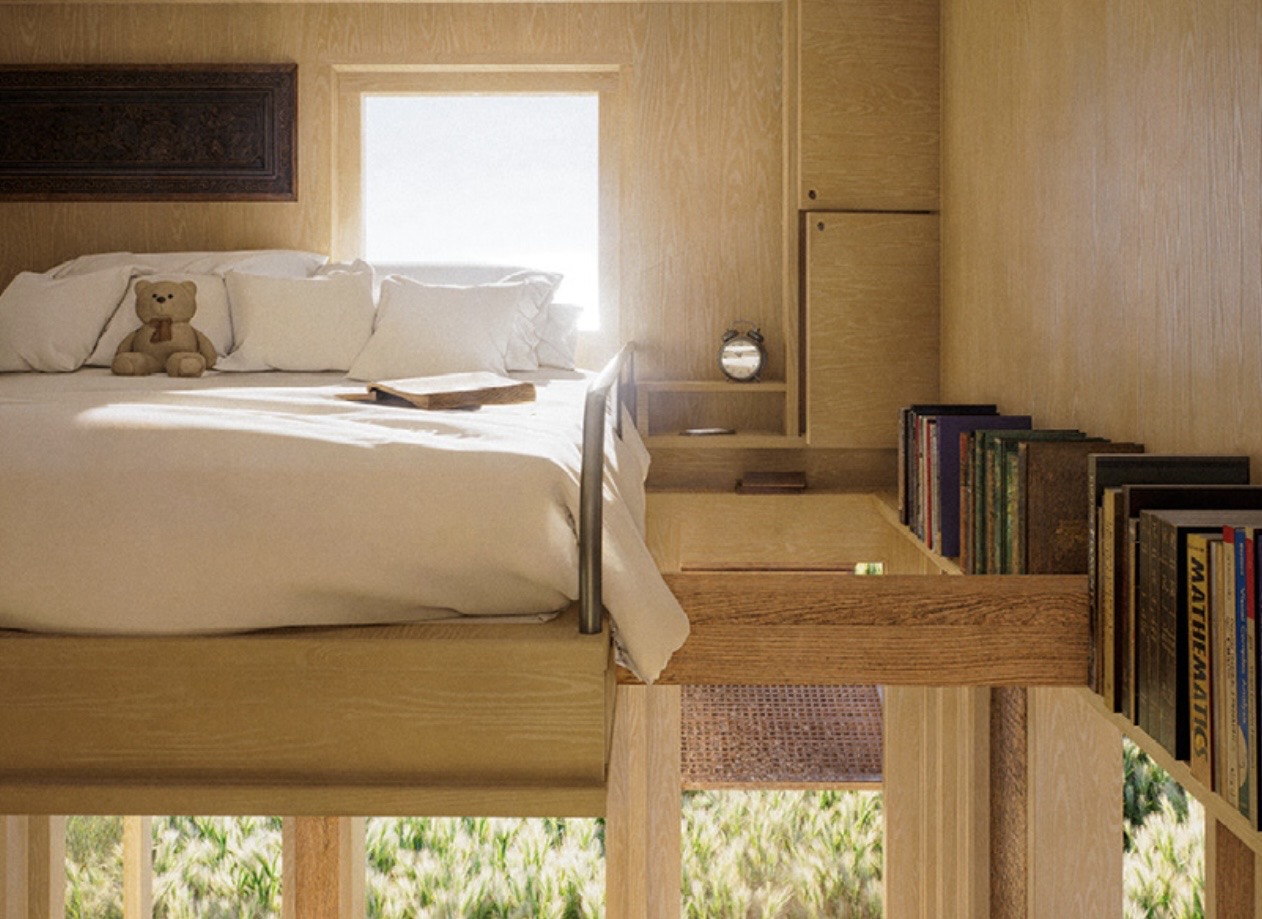
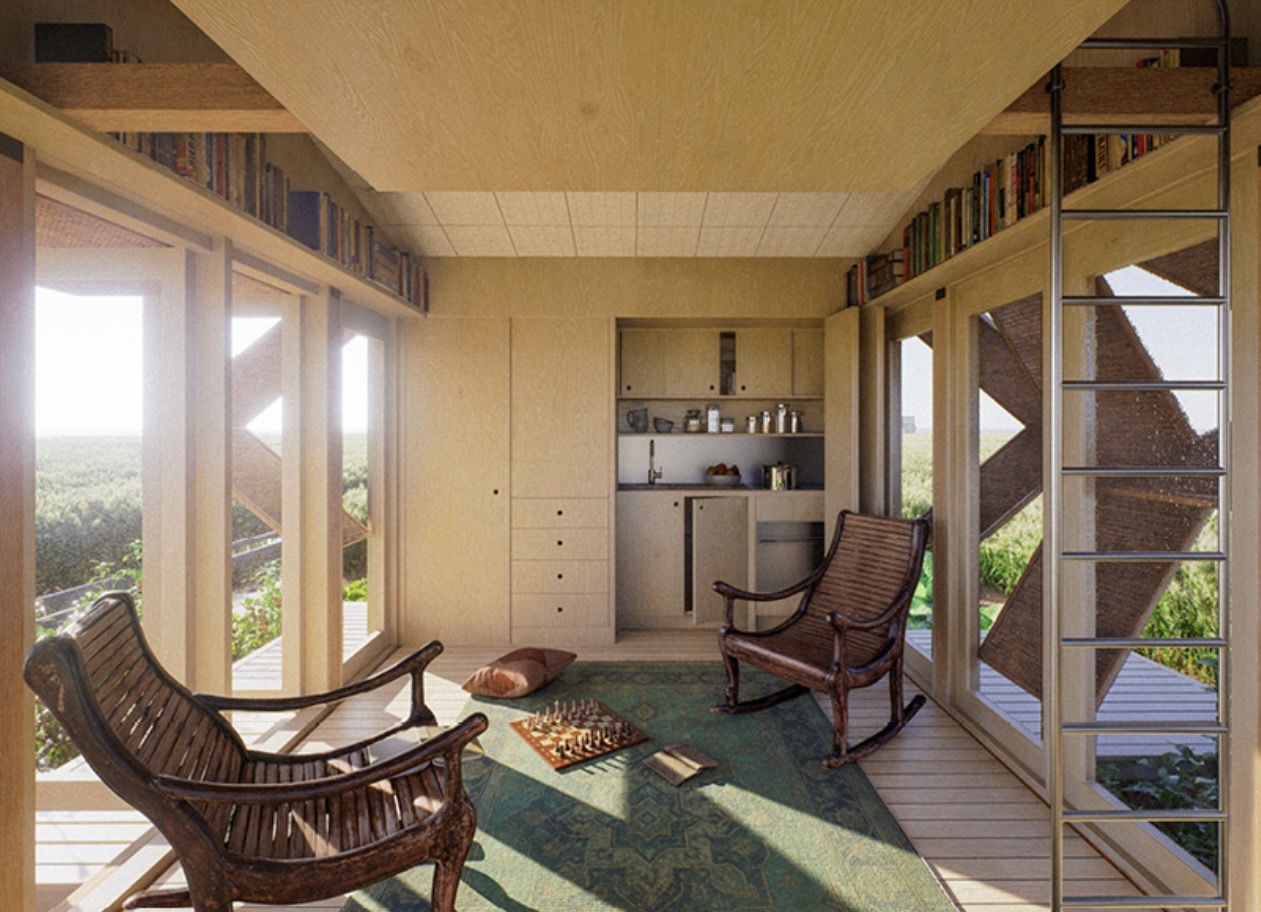
Although the space area is limited in terms of the floorspace, it has been designed to be convertible as well as durable. With the elevated position of the bedroom area keeping the floorspace free underneath it, it is possible to have a completely open floorspace for living, working, as well as dining space. Storage space has also been built in to the space, hence minimizing the amount of required pieces of furniture.
Interior strategies include:
- Lofted sleeping area to free ground-level space
- Flexible furnishings supporting multiple daily uses
- Built-in storage embedded within walls and structure
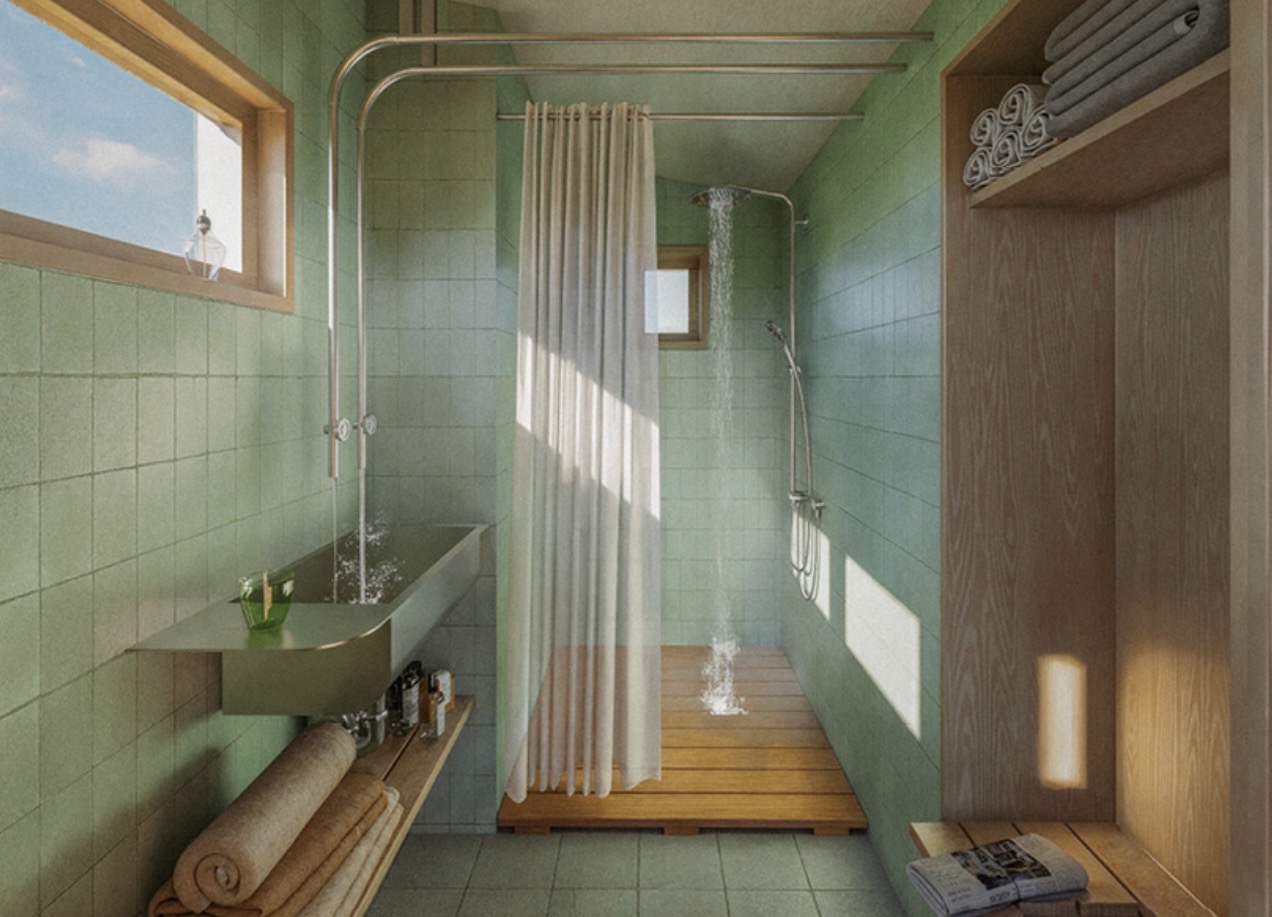
- Consolidated wet zones for efficient plumbing and filtration
The bathroom integrates greywater recovery systems within the domestic core, with filtration components concealed within the wet zone to maintain a clean, functional living environment.
Prefabrication and Scalability
Living on Groundwater is designed as a prefabricated prototype, which is based on standardized wall elements, roofs, floors, and structures. This easily adapts to scalability. This is important for making the model universal in application to other areas of the country which suffer from water stress. This also ensures that the structure is easily deployable.
Additionally, there is a linear walkway that provides connectivity from the microhome to other irrigation canals and agricultural fields, thus integrating the home instead of segregating it from the water resources. This design features an important aspect of communal resources and responsibility towards nature.
Recognition and Broader Significance
The MICROHOME #10 jury highlighted their appreciation of the design’s clarity in system integration, solution, and ability of the drawn content to convey environmental information and build ability. Among many responses that incorporate some aspect of environmental response, Living on Groundwater was differentiated by the direct link between ecological process and spatial design.
Previous approaches to sustainable architecture have emphasized minimizing the impact of buildings, and it is in response to this dominant ideology that Living on Groundwater challenges architects to reinvent a new idea of progressive regeneration in housing through integrating groundwater replenishment into domestic architecture in order to demonstrate how any small-scale intervention in architecture engages with global environmental challenges.
Images- designboom.com