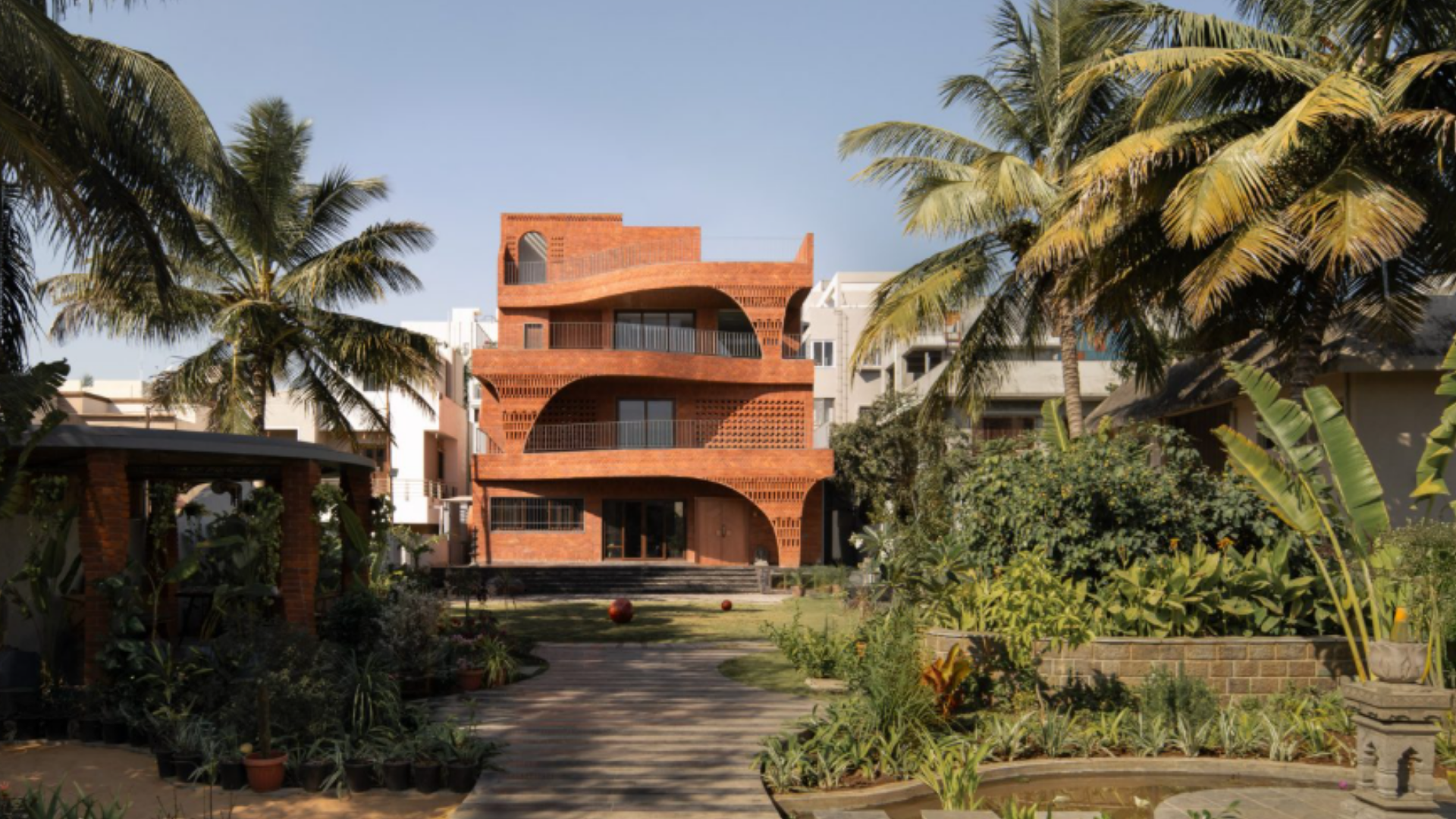
The Aurva Illam residence is a remarkable example of how architecture can respond to the environment in a powerful way, at the same time, it also challenges habitual perceptions of luxury housing in India. According to Iki Builds who is the designer of the house, the house deviates from the dominant trend of glass-and-marble villas and opts instead for a design language that is based on the land.
The project depicts a mindset where architecture is not something that is enforced but it is an outcome of a natural development of the conditions of the location. The name "Aurva Illam" is a great metaphor for this concept, "Aurva" translating to "of the earth" and "Illam" translating to "home". So when combined, they mean a house that is very much in touch with the earth on which it stands, and at the same time it reflects both the cultural and the natural aspects.
A Home Shaped by the Landscape
The home located in the suburbs of Hyderabad takes a great deal of inspiration from the scenic roughness of the Deccan Plateau. The architects intended manifesting the plateau's stone formations and soil colors through architectural pieces.
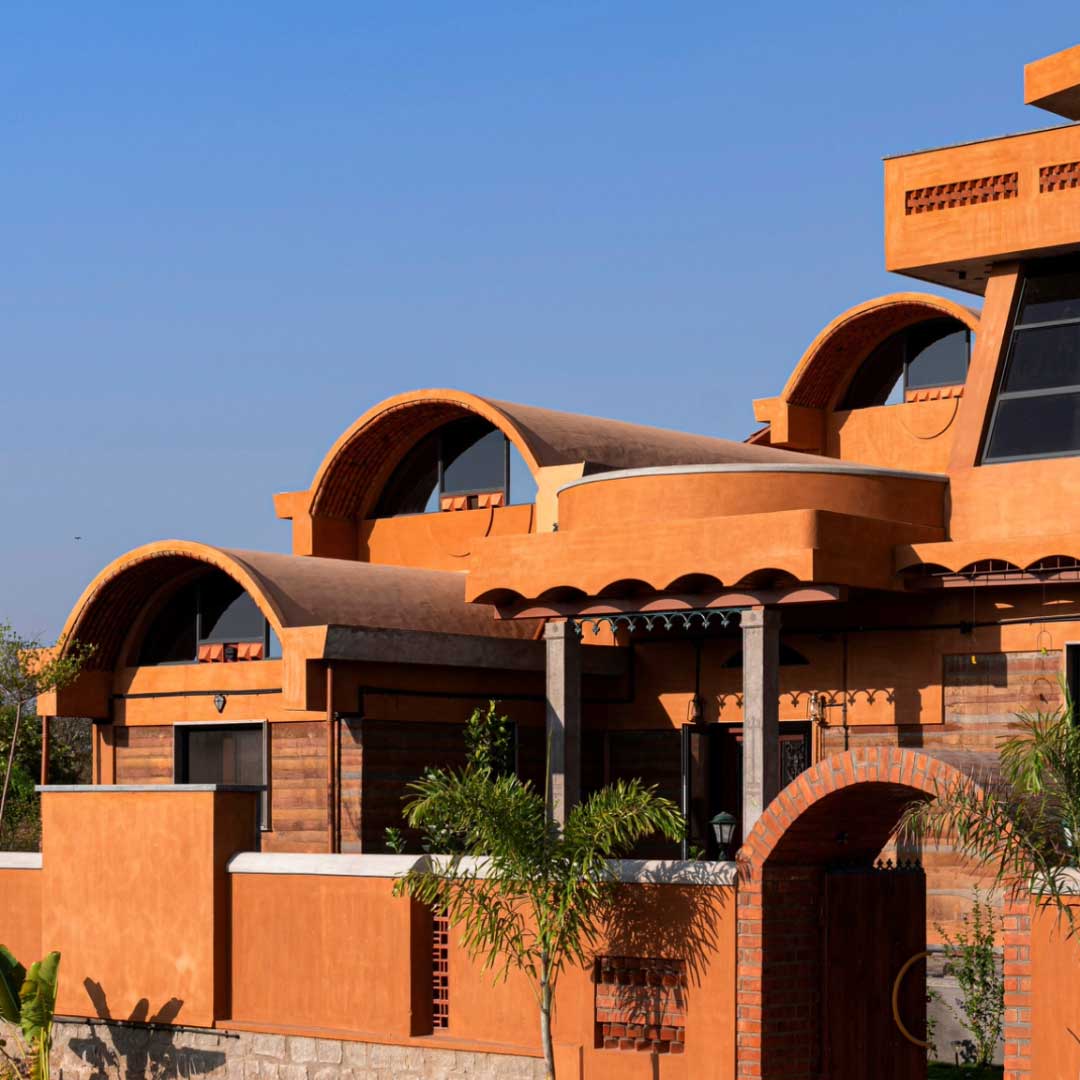
Instead of designing the house as one huge block, the architects have planned it as a chain of different levels. These stepped masses are a feature of natural landscapes where buildings are camouflaged. The design manages to give a notion of flow and gradation so that each stage of the project can be considered as a part of topography.
Spatial Planning and Layout
Spatial layout for the planning The design of the house in Aurva Illam considers not just the functional use of various rooms in addition to adding something entirely new to them, especially the involvement of senses.
In the beginning, while talking about the layout, the planning of this design includes vertical zoning wherein the two zones – public and private zones – are separated in a physical sense and located at different heights. Accordingly, the public spaces, which include living room, dining, and kitchen, are provided on the ground floor while bedrooms and study rooms are allocated on the upper floor.
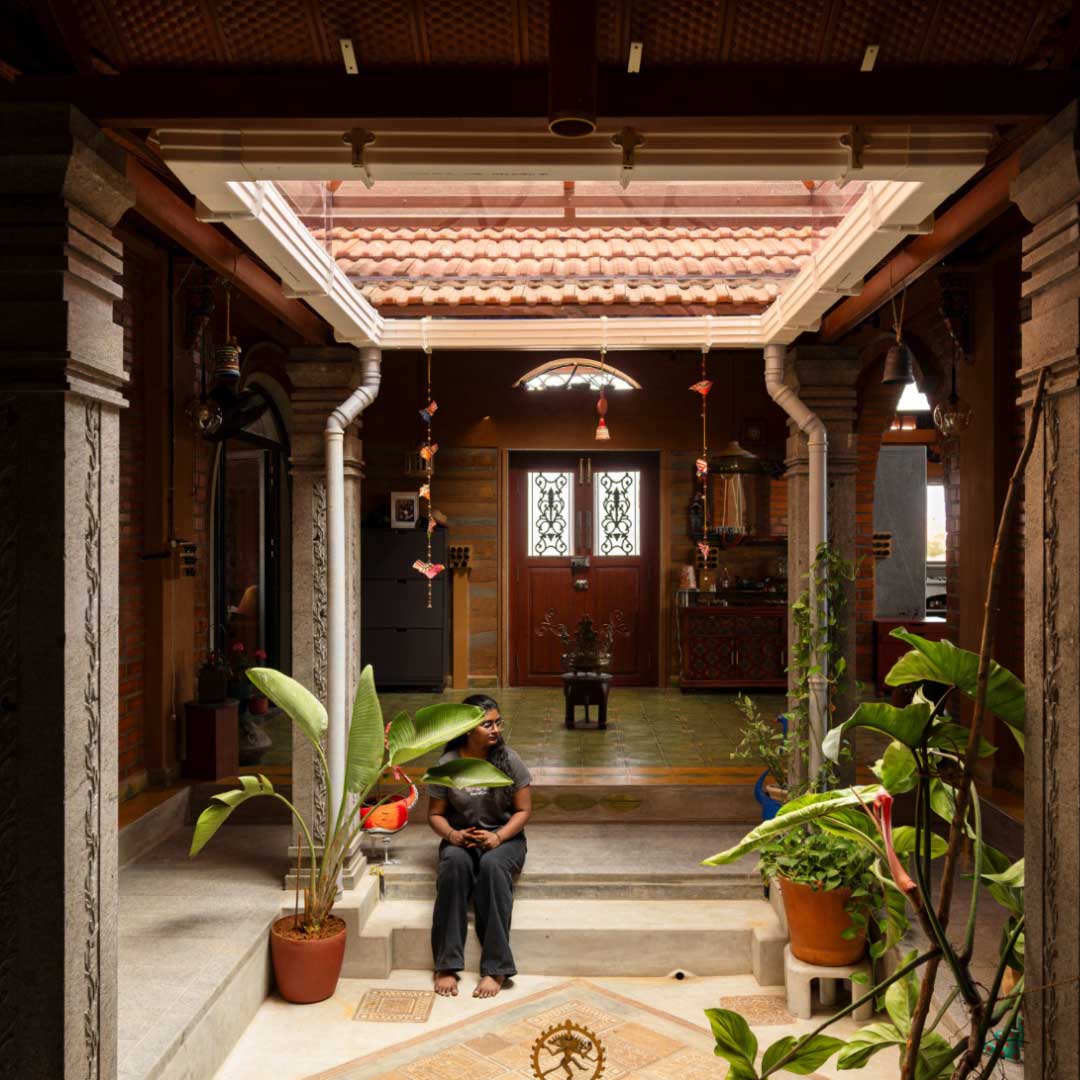
Even though the idea of a courtyard in the center of this design is based on Indian mutram, the courtyard serves as a buffer against climatic changes due to introduction of sunlight and airflow in the space. In addition, this secluded area provides a meeting place while interacting with nature.
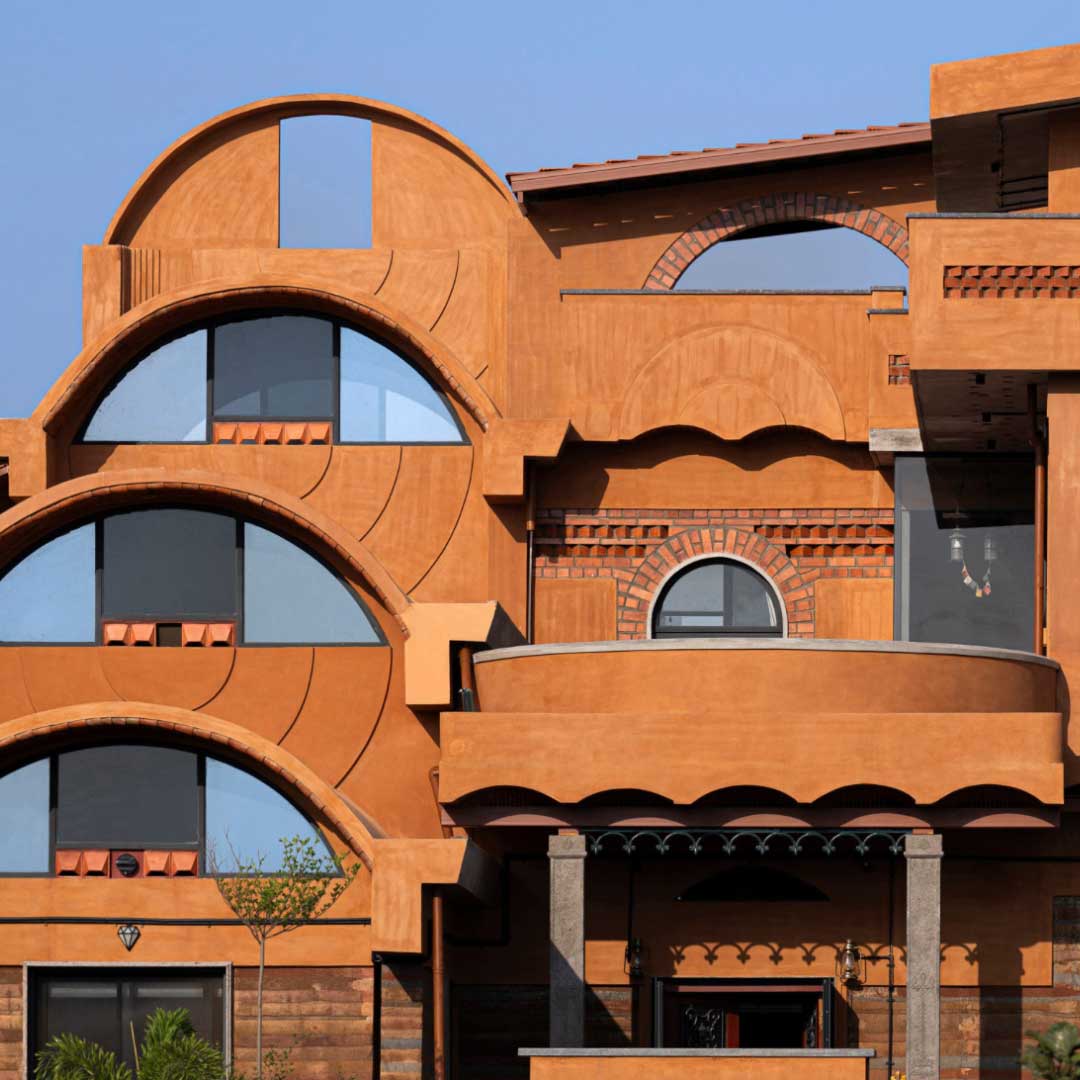
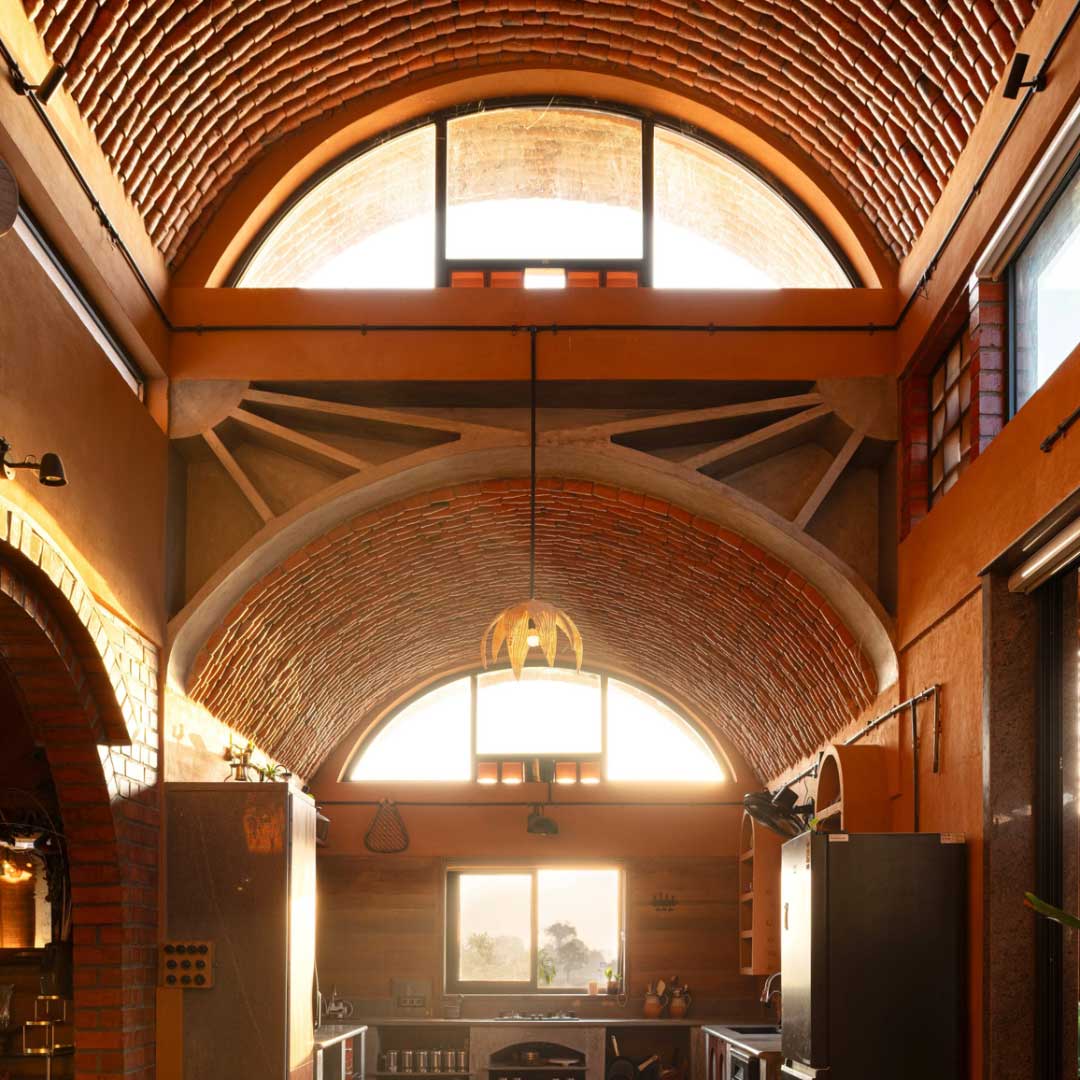
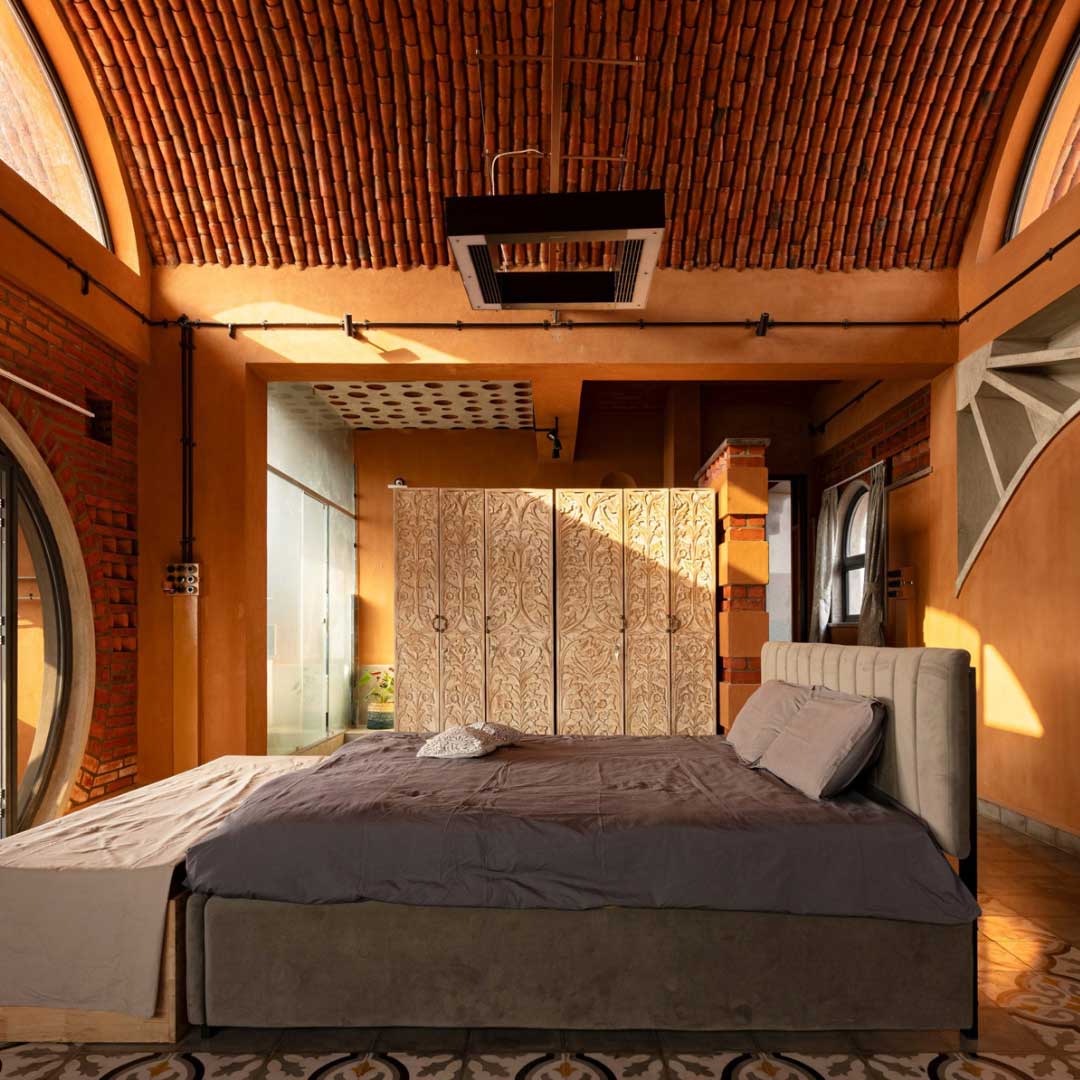
Vaulted ceiling makes the design appear spacious while providing a majestic appeal. Besides, the introduction of natural light through clerestory windows also livens up interiors.
Materials Palette and Construction Method
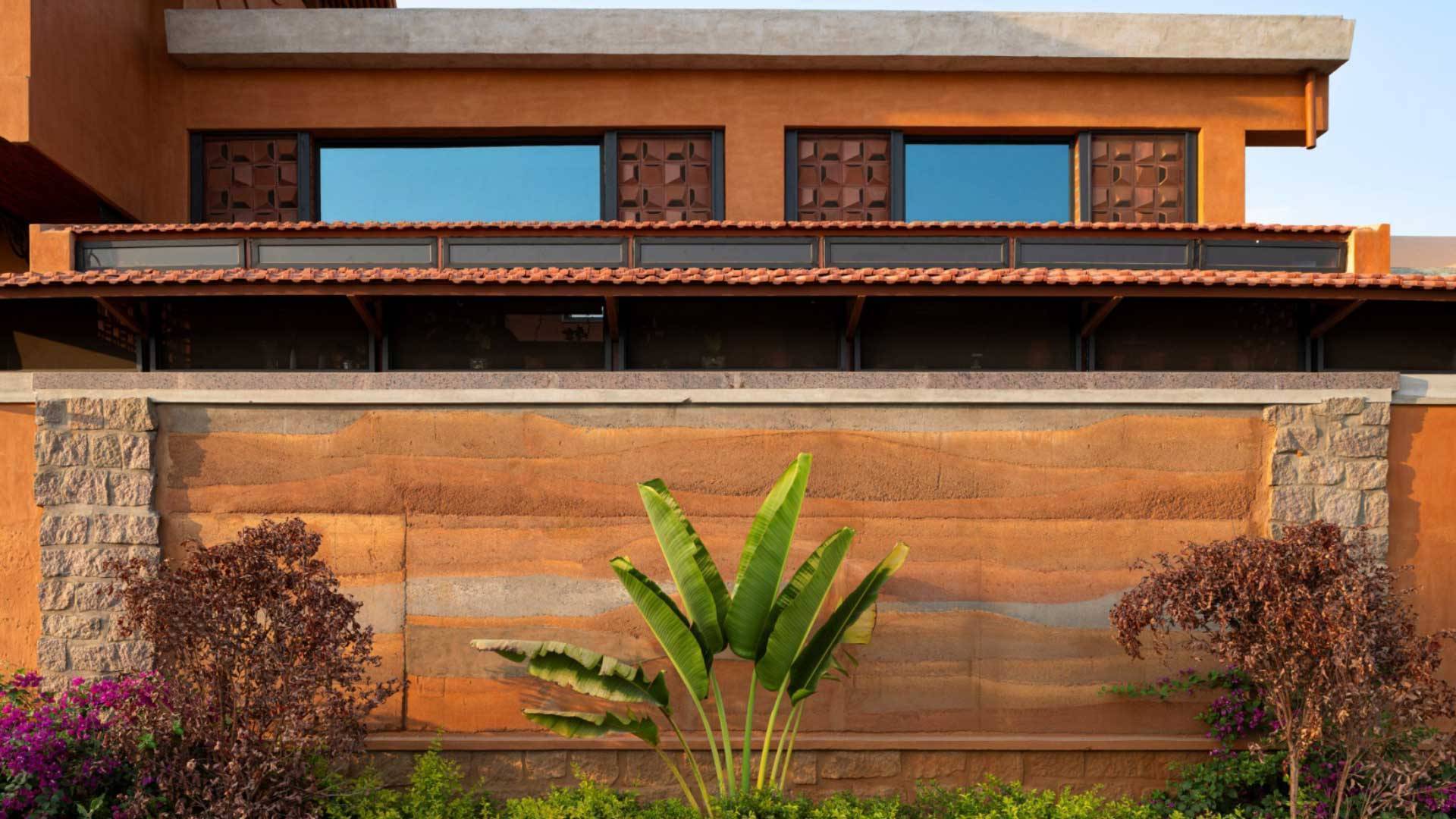
One of the features that defines Aurva Illam in a significant manner is the choice of materials used for its construction. In general, the building employs rammed earth made out of locally sourced material – excavated from the plot itself and mixed with quarry by-products.
Some of the rammed earth walls have been left unfinished so that the natural appearance of the material and its colors may be appreciated. It has been accompanied by terracotta-colored plaster, as well as red brickwork and tiles used for the construction of vaults.
Overall, the choice of locally sourced materials and methods has ensured that the house has been built in tune with its surroundings.
Sculptural Elements and Interior Experience
The most interesting element in the house is the sculptural granite stairway. The sculptural staircase is made out of reclaimed rock. The staircase combines functionality with artistry. It has rough underfoot areas while the top surface of the stairs is highly polished. This creates contrast representing the raw and refined qualities of the landscape.
In moving around the interior of the building, occupants traverse through a series of layers that correspond to geological formation.
Climate Sensitivity and Sustainability
In Aurva Illam, passive methods have been applied to enhance the efficiency of the construction in terms of ecology. The stepped form of the construction allows stack ventilation, which allows the hot air to go out through the top part of the construction, while the cold air comes in from below. As a result, there is no necessity for any artificial cooling system.
In addition, the application of the courtyard allows optimization of both ventilation and light. In addition, rainwater harvesting through ferrocement gutters is also considered within the scope of the project.
As one can see, traditional approaches allow the development of sustainable contemporary architecture.
Important Design Features
- Use of rammed earth using local excavated soil
- Vaulted structures resembling cascades from the natural landscape
- Open courtyard design (mutram)
- Materials used include terracotta, brick, and stone
- Granite sculptured stairs
- Stack ventilation system for cooling
- Rainwater harvesting system
Aurva Illam is a good example of residential architecture because it is based on the idea that luxury arises out of authenticity, context, and craftsmanship. The inspiration used in this building comes from the Deccan Plateau, and through using local materials to create the construction, Iki Builds has been able to design a structure that can endure through time. This piece of architecture is a great representation of how architecture within its context provides shelter and a fulfilling experience at the same time.
Images by; vivekeadara.com