

Worldwide, cities are changing the way business districts function. Global Business Districts (GBDs), are the new face of Central Business Districts (CBDs) which used to be the concentration of offices and banks. GBDs, unlike the old-style CBDs are vibrant, mixed-use hubs where work, leisure, retail, and culture coexist. Besides this, GBDs are constructed to be in operation 24 hours, as opposed to traditional CBDs which become deserted after office hours, providing collaboration, connectivity, and experiences to a workforce that moves around the globe.
GBDs in the leading cities of the world such as Paris’s La Défense, London’s Canarya Wharf, New York’s Hudson Yards, and Seoul’s Digital Media City have become the examples of how GBDs unite commerce, talent, and creativity to unleash innovation and economic growth. These districts put their emphasis on four key issues such as Accessibility, Sustainability, Technology, and Human-centric design thus, becoming the standard for the modern urban competition.
India is experiencing the same change now. In the Indian cities, which are becoming more integrated into global trade networks, there is a growing demand for holistic business environments. Apart from creating the office only areas, developers are now building districts with the network of office spaces, retail, hospitality, and lifestyle amenities where the young, mobile, and globally connected workforce will have access to such facilities.
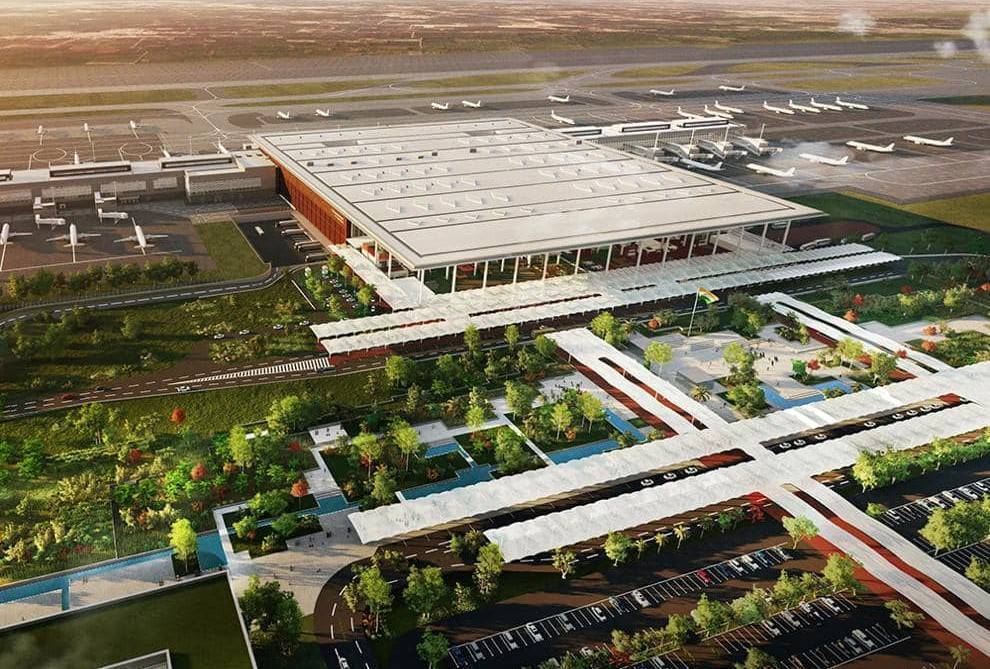
Worldmark at Aerocity, New Delhi, one of the most ambitious and future-ready business districts in India—is leading the way in the transition. Worldmark, which is rising as a Global Business District planned on a grand scale uniting connectivity, urban experience, and national relevance is strategically located near Indira Gandhi International Airport and is surrounded by more than 40 embassies.
Conceived as an integrated development of over 20 million sq. ft. and spread out over four phases, the idea behind Worldmark is that of a business ecosystem which is interconnected without any hindrance. Worldmark 1.0 which is already up and running comprises 1.5 million sq. ft. of top-of-the-line office and retail spaces and is the beginning of the commercial hub that Aerocity will be. Worldmark 2.0 which is the next step will take you to the next level with ~7 million sq. ft. of world-class office spaces and curated retail introducing. The fourth Worldmark has already been issued the Occupation Certificate (OC), while the fifth and sixth Worldmark are in the final stages and should be receiving their OCs soon. 7 Worldmark is expected to be finished in 2026 and The Mall at Worldmark, India’s biggest entertainment-led retail destination, will be launching in 2027.
The neighborhood is also home to such concepts as high-street and lifestyle ones: World St., a lively F&B promenade, The Haute District, a luxury boulevard together with India’s largest indoor location-based entertainment zone. Careful urban planning has made the area pedestrian-friendly with boulevards, attractive courtyards, and art corridors that help create a sense of community and liveliness. What makes it even more attractive for business? Its closeness to Indira Gandhi International Airport and over 40 embassies, which, thus, become an entry point for global business and attract the global brands dealing in finance, consulting, aviation, retail, and hospitality to come here.
India is on the way to embracing GBDs and developments such as Worldmark at Aerocity are a manifestation of a new urban paradigm that economic activity, culture, and community do not exist in isolation and intersect instead. These districts not only transform the skyline of cities but also position India as a global competitor. The kind of workplaces that these districts bring into existence will be resilient, sustainable as well as futuristic urban life-oriented ones.
Image- executivecentre.com



.png)