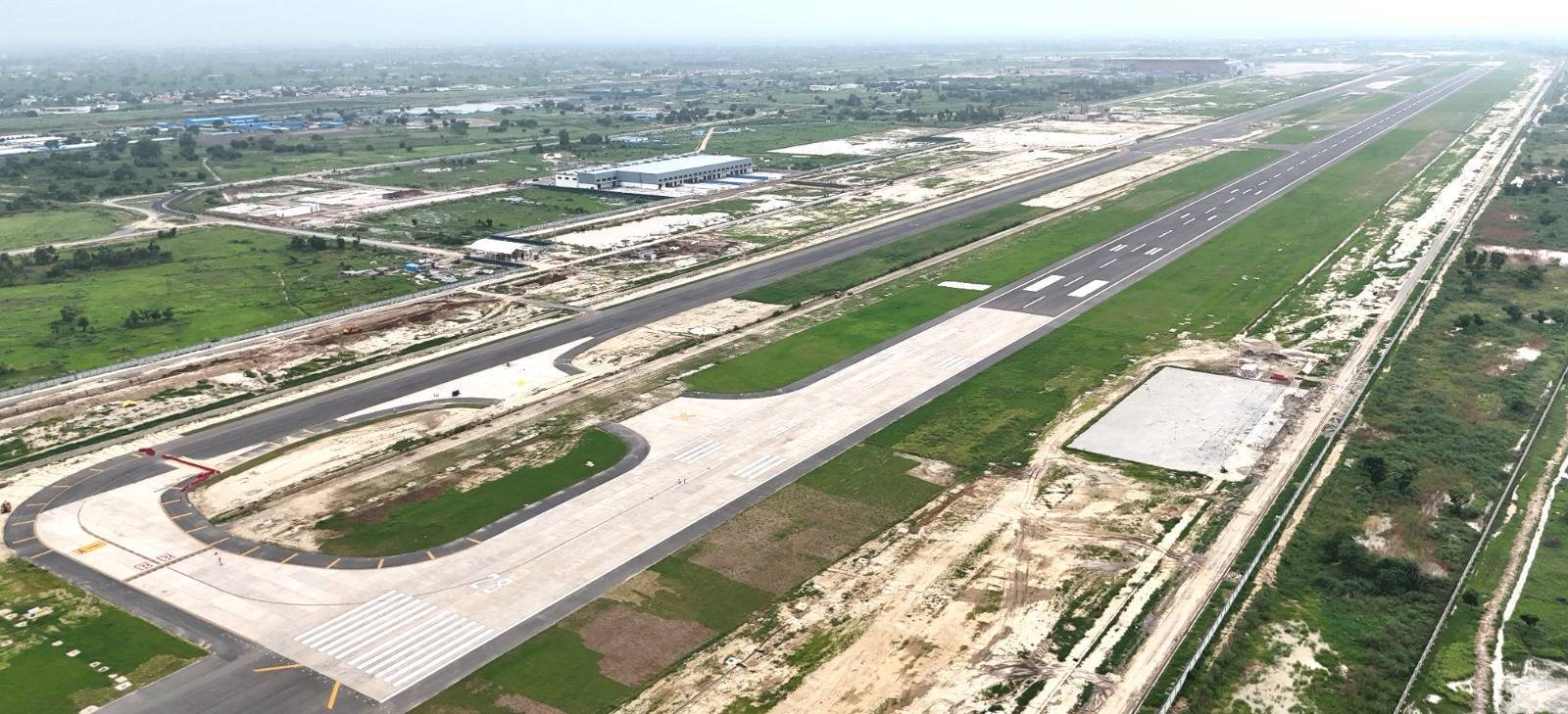

Infrastructure has consistently shaped Gurugram’s real estate landscape. From NH-48 to the Southern Peripheral Road (SPR) and, more recently, the Dwarka Expressway, every major connectivity project has influenced where the city expands next. Now, the upcoming 46-km Gurugram-Rewari Highway is drawing attention as the next piece of infrastructure that could strengthen New Gurugram’s evolution into a more integrated residential and commercial hub.
Strengthening Regional Connectivity
The new corridor, originating near Sector 88B on the Dwarka Expressway and connecting to the Kundli-Manesar-Palwal (KMP) Expressway, is expected to improve regional connectivity between Gurugram, Manesar and Rewari. Along with reducing travel time, it will provide better access to NH-48, the Dwarka Expressway and the upcoming Delhi-Gurugram-SNB-Alwar RRTS corridor. For New Gurugram, the significance lies beyond mobility—it has the potential to strengthen the region’s position as a well-connected residential and economic destination.

Ashok Singh Jaunapuria, Managing Director & CEO, SS Group, believes the project represents the next phase of Gurugram’s planned urban expansion. He said, “The transformation of New Gurugram has always been closely linked to infrastructure. Over the last few years, projects like the Dwarka Expressway have significantly improved the area’s appeal, and the Gurugram-Rewari Highway is expected to build on that momentum. Better regional connectivity will not only make commuting easier but also strengthen links between residential neighbourhoods, industrial hubs and commercial centres. As this ecosystem evolves, New Gurugram is likely to attract sustained end-user demand while supporting more balanced and future-ready urban development.”
Benefits for New Gurugram's Residential Sectors
The impact is expected to be particularly visible across New Gurugram’s residential belt, including Sectors 81, 82, 83, 84, 85, 86, 88A, 89, 90, 91, 92, 93, 95, 95A and 99A. Over the past few years, these sectors have emerged as organised residential destinations backed by improving social infrastructure, schools, healthcare facilities and proximity to employment hubs. Enhanced regional connectivity is expected to further improve accessibility for residents while strengthening long-term market fundamentals.

Jitender Yadav, Director, Roots Developers says, “The 46km Gurugram - Rewari highway is a major development for NCR’s southern corridor. Slashing travel time to just 45 minutes, we are expecting a 30 - 40% surge in property valuations as the project nears completion. The highway positions surrounding property markets in a positive direction. It makes upcoming and current commercial and residential projects highly attractive for buyers and investors.
While New Gurugram (Sector 88 - 98) remains the hotspot for premium residential growth with current rates ranging from Rs 10,000 to Rs 15,500 per sq. ft, other areas like Rewari and Bhiwadi will see growth in terms of property investment, turning from peripheral browns to high-potential, elevated cities.
For buyers seeking long-term wealth, commercial and logistics land in Rewari will offer better alternatives to saturated markets, while residential properties in Manesar cater to the homebuyers. Property prices along the highway are expected to surge to 1.5 to 2 lakh per square yards in the next five years.”
Supporting Industrial and Commercial Development
Unlike earlier infrastructure-led growth stories that primarily fuelled housing demand, the Gurugram-Rewari Highway is expected to support a broader development ecosystem. Improved connectivity with IMT Manesar, Dharuhera and Rewari could facilitate industrial expansion, warehousing, logistics and commercial activity alongside residential growth. This convergence of jobs, infrastructure and housing has the potential to create a more balanced urban corridor rather than a standalone residential market.

Pushpender Singh, Managing Director, JMS Group says, "The Gurugram - Rewari highway is going to be a major game changer for the region. Cutting travel time significantly to just 45 minutes completely shifts the dynamics for commuters, especially for potential home buyers and business personnel for luxury real estate. We are expecting a 30-35% spike in property demand, as connectivity improves.
If you’ve been on the fence, the best time to invest is right now, before the prices surge. For better capital appreciation, residential plots and apartments around New Gurugram are significant, with Sector 95B being a major market for mixed-use lands. The development also makes Pataudi a great investment choice for high-end properties. For residential properties, commercial shops and warehouses near IMT Manesar are lucrative bets."
As Gurugram continues to expand beyond its traditional core, infrastructure is increasingly shaping buyer preferences and investment decisions. The Gurugram-Rewari Highway is expected to complement the city’s existing road network while reinforcing New Gurugram’s emergence as one of NCR’s most strategically connected growth corridors. Rather than creating a new hotspot, the project is likely to deepen the region’s evolution into an integrated urban cluster where connectivity, employment and housing develop together.