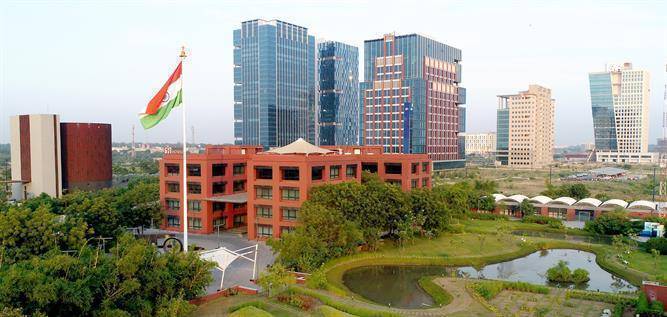

In a significant development for the region’s real estate sector, the Greater Noida Authority has granted in-principle approval to appoint co-developers for two long-stalled group housing projects in Sectors 10 and 1. This move comes under the Uttar Pradesh government’s co-developer policy for legacy projects, aimed at accelerating the completion of projects delayed due to financial or technical issues.
As per the 2023 rehabilitation policy for housing projects that have come to a standstill, co-developers with good financial health and credibility may be allowed to complete the construction jointly and clear the pending dues. Moreover, the policy extends the interest waivers if the developers make an upfront payment of 25% of the total dues and the balance of 75% is payable over a period of three years. Industry specialists point out that this structure has been instrumental in the renewal of several frozen projects, thus, bringing renowned developers like Birla Estates, Sobha, etc., to the region.
In the first approved case, Birla Estates has been authorized as a co-developer for the stalled project of Nobal Buildtech in Sector 10. The project, spread across approximately 20,000 square meters, was allotted in 2015 with a seven-year completion deadline but saw no construction activity in the interim. As of December 2023, the Authority had calculated dues of around ₹78 crore and issued a demand for 25% payment, roughly ₹19 crore.
The original allottee could only deposit ₹1.7 crore, leading to a recovery certificate of about ₹120 crore being issued in October 2025. Following a joint application by the allottee and Birla Estates, the Authority reviewed Birla’s financial credentials and approved its induction as a co-developer, provided the stipulated 25% dues are cleared within a month.
In the second case, Floral Homes has been approved as a co-developer for the stalled project of Gayatri Hospitality & Realcon in Sector 1. The project, covering approximately 36,000 square meters, was allotted in 2011 but witnessed no construction progress. Dues for the project were assessed at ₹131 crore, and the allottee was asked to deposit ₹29 crore, which was pending due to NCLT proceedings.
With approval from the National Company Law Appellate Tribunal (NCLAT) in July 2025, Floral Homes applied to join as a co-developer, backed by ₹300 crore funding from the SWAMIH Fund. The company has committed to deposit the required dues within a month using this funding.
The UP government’s co-developer policy, experts say, is designed to tackle legacy projects stalled by financial distress, technical delays, or loss of trust in the original developer. By allowing a credible co-developer to step in, projects can be completed efficiently while protecting homebuyer interests. Once a co-developer pays 25% of pending land dues, the project is regularized under RERA guidelines. This permits formal recognition of the co-developer as a promoter, allowing them to validate building plans, seek extensions, and access bank financing.
As per Hindustan Times Newspaper Ravi Kumar NG, CEO of Greater Noida Authority said, “The policy has revived several stuck projects and provides a ray of hope for homebuyers. Reputed developers like Birla Estates, Sobha, and others are entering Greater Noida to take forward these legacy projects.” The policy also offers a commercial incentive for developers, who can utilize unutilized Floor Space Index (FSI) for profitable construction once the stalled portions are completed.
Experts observe that the co-developer policy offers a faster, market-aligned solution as opposed to the long and uncertain results through NCLT, thus making it possible for projects to transition from being stagnant to getting completed within a few months rather than years. The examples of these reforms, like the green light given to Sunworld Residency in Sector 168 and Ambience Private Ltd in Sector 115, have therefore served as a catalyst for the localities' revival.