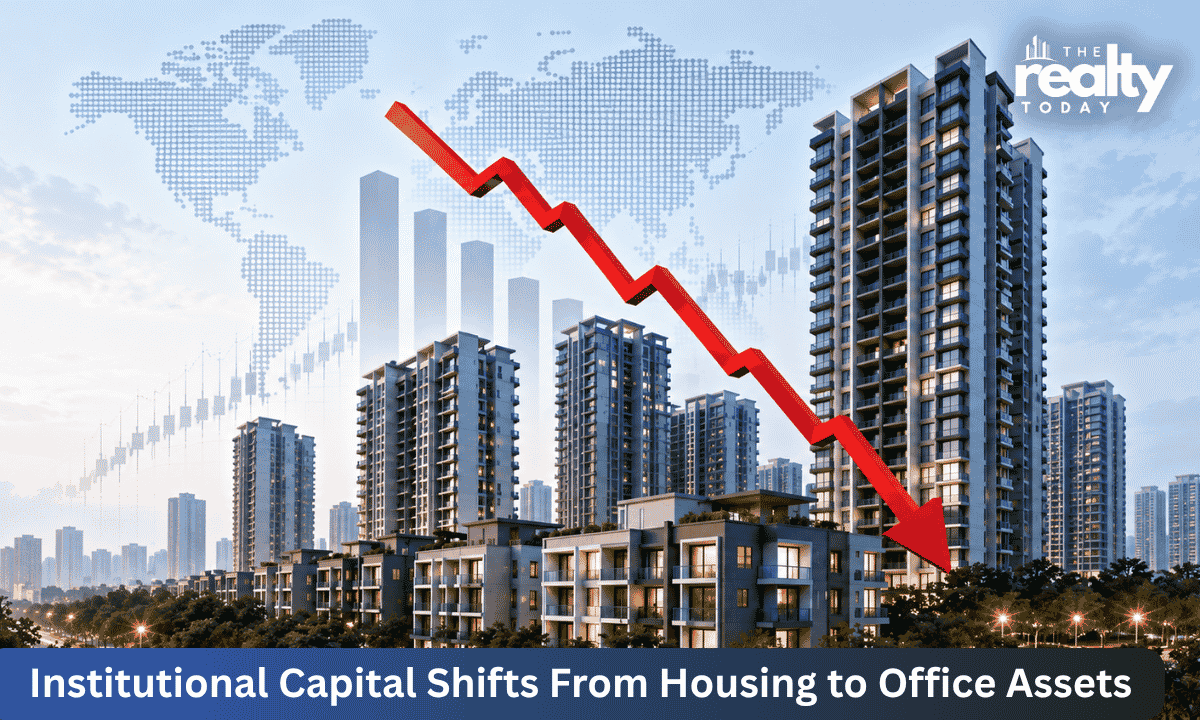

India's REIT market crossed $17.7 billion this year, growing 62% since the end of 2024 and pushing past Hong Kong to become Asia's fourth-largest REIT market. For a country where real estate investment has meant one thing for decades which is buy a flat, wait and sell , is now changing and evolving to other ways to invest in real estate. Interestingly, a growing number of Indians are now earning from office buildings and malls they'll never set foot in, without taking a home loan or dealing with a single tenant.
Start with what a REIT actually is, because the name confuses more people than it should. A Real Estate Investment Trust pools money from thousands of investors and uses it to buy commercial buildings that already have tenants paying rent, mostly IT parks and malls leased to companies like Google, Amazon or Global Capability Centres of multinational banks. By SEBI's rules, the trust must hand out at least 90% of the rent it collects to investors every quarter. You buy a unit the same way you'd buy a stock and you get paid the same way a landlord does, minus the landlord part.
What that pays right now varies by REIT. Embassy Office Parks, the oldest and largest of the five listed REITs, is yielding around 5.3–5.5% annually on its current price while Mindspace Business Parks is paying closer to 7.2%, with a payout ratio above its accounting profit. Notably, since the first REIT listed in 2019, the five now trading in India have together paid out more than ₹19,500 crore to unit holders, against a combined asset base of roughly ₹1.5 lakh crore.
The appeal isn't just the yield, it's also the ticket size. SEBI dropped the minimum REIT investment from ₹2 lakh at launch to ₹50,000 in 2019, then to ₹10,000–15,000 in 2021, while cutting the minimum lot from 100 units to one. Practically, that means someone can now own a slice of a Bengaluru tech park for the price of a nice dinner out and sell it the same afternoon if they need the cash back. That liquidity is the one thing property has never been able to offer.
Real Estate Property
Property, for its part, hasn't stood still. ANAROCK's tracking of eleven major residential markets between 2019 and mid-2026 shows Noida prices climbing 125%, from ₹4,795 to ₹10,780 per square foot, with Gurugram close behind at a 117% rise. Bengaluru and Hyderabad each gained roughly 90%, and even a more mature market like Mumbai moved 64%. What's notable is that rental yields in these cities rose alongside prices instead of shrinking, which goes against the usual pattern, normally, the faster prices rise, the more rents lag behind them. Analysts are crediting this to the same GCC and IT hiring boom that's filling up REIT-owned office towers spilling over into demand for nearby rental housing.

Put the three side by side and the pattern becomes obvious: each one is solving a different problem. Bonds solve for certainty and you're not exposed to any market's mood. Property solves for long-term wealth building for someone with the capital and patience to hold through an illiquid, high-friction asset. REITs solve for something in between; real estate income, spread across many properties, bought and sold as easily as a stock, at a fraction of the entry cost of either of the other two demands.
There is a tax wrinkle worth flagging for both REITs and bonds: the income you receive from each is largely taxed at your regular income slab, which means the yield you see quoted isn't quite the yield you keep, especially for anyone in a higher tax bracket. Property has its own version of this friction upfront, in the form of stamp duty that's paid regardless of what the asset eventually does.
None of this makes one option universally better. It makes them differently suited. Someone who wants real estate exposure but doesn't have a few lakhs sitting idle, or doesn't want to deal with tenants and paperwork, now has a genuine entry point that didn't exist a decade ago. Someone who already owns property and wants to diversify without locking up more capital in bricks might find a REIT does that job efficiently. And someone who simply wants their money safe, with a number they can bank on, is still better served by a bond than either.
What's changed in 2026 isn't that property has gotten worse or REITs have gotten dramatically better. It's that, for the first time, comparing the two side by side is actually a fair fight and bonds remain the quiet baseline every comparison eventually gets measured against.