

The government of Karnataka has rolled out an automatic property mutation system aimed at speeding up khata transfers and reducing the need for citizens to visit revenue offices. The reform is expected to automate nearly 98% of mutation cases, significantly shortening the time required to update ownership records after a property transaction.
The system was launched by the state revenue department as part of a broader push to digitise land administration and simplify property documentation.
Over 35 Lakh Transfers Already Processed
Officials say the technology-backed system has already processed more than 35.1 lakh khata transfers automatically between April 2024 and February 2026. The automated platform integrates property registration with land record databases. Once a sale deed is registered, the mutation request is automatically triggered within the system, removing the need for separate applications in most cases.
Karnataka Auto Mutation – Key Numbers
● 35.1 lakh khata transfers automated since Apr 2024
● 98% mutation cases expected to be automatic
● 10–15 lakh mutation requests handled annually in the state
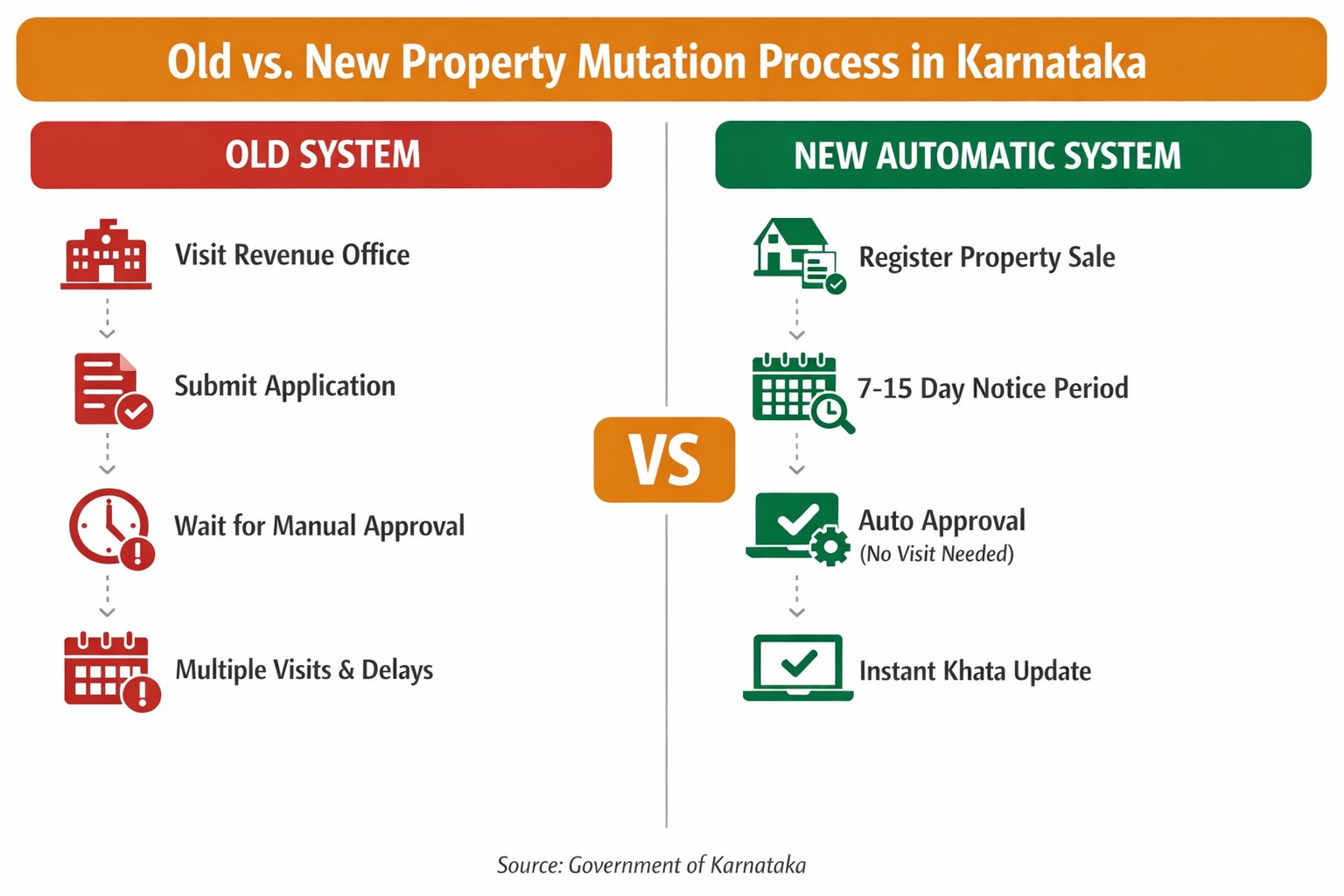
Earlier, even after the statutory notice period ended, revenue officials had to manually approve mutations through digital signatures. This often led to delays in updating property records.
How the New System Works
Under the new mechanism, mutation requests enter a notice period once a property transaction is registered.
● 7-day notice period for registered transactions
● 15-day notice period for certain other mutation cases
If no objections are filed during this window, the system automatically approves the mutation on the 8th or 16th day, updating ownership details in government records. In cases where objections are raised, the matter is referred to the local revenue authority for review.
Old vs new property mutation process
Part of a Larger Digital Land Reform
The reform builds on Karnataka’s long-running land digitisation efforts, including the Bhoomi land records platform and online property services. Land records systems in the state handle around 10–15 lakh mutation cases every year, making automation a key step toward improving administrative efficiency.
Urban markets such as Bengaluru are expected to benefit significantly from faster khata transfers, particularly in areas where property transactions occur frequently.
Why Mutation Matters in Property Transactions
Property mutation is a crucial step after registration because it updates ownership details in government records. The process enables property owners to pay property taxes, apply for building approvals and carry out future transactions.
Delays in mutation have long been a source of complaints among property buyers and sellers, especially in fast-growing urban regions.
Officials say the automatic mutation system is designed to reduce administrative delays and limit the role of intermediaries in routine property transfers.
What It Means for the Real Estate Market
Faster mutation processes could make property transactions smoother for buyers and developers alike. Real estate analysts say streamlined documentation can help improve transparency in land records and reduce disputes over ownership, particularly in rapidly expanding urban corridors across Karnataka.
As property markets continue to grow across the state, digital land administration reforms are expected to play a larger role in supporting efficient property transactions.







.png)