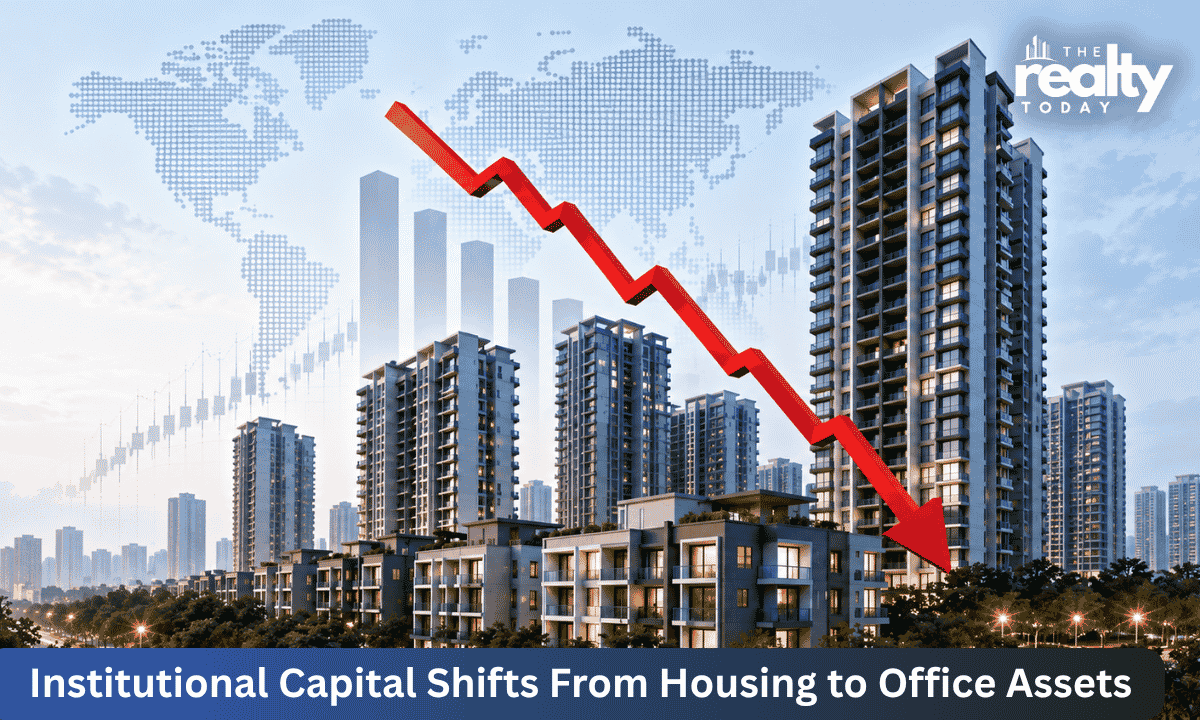
India’s real estate sector could increase its contribution to the country’s GDP from the current 8–9% to 15–20% by 2047, according to Gulam Zia, International Partner and Senior Executive Director at Knight Frank. Zia said the sector, currently valued at around $600 billion, has significant room to expand as the Indian economy grows. However, reaching that level will depend on growth across multiple property segments as well as the industry’s ability to address affordability, capital availability and changing demand.
Real estate sector could become an $8–10 trillion industry
Zia said India should aim to build an $8–10 trillion real estate industry as the country’s overall GDP expands to an estimated $25–30 trillion. The current sector size of around $600 billion represents about 8–9% of GDP.
He expects the industry to maintain long-term growth of around 9–10% annually, although real estate will continue to move through cyclical periods. A higher contribution to GDP would also reflect the
sector’s expanding role in the wider economy rather than growth in housing alone.
Residential demand remains strong, but premiumisation is reshaping housing
Residential real estate continues to be an important component of the growth in the industry. Roughly 175,000 apartments were sold in the first half of the year in the top eight cities, broadly similar to the same period last year. Zia said the figures do not indicate that the residential market is turning into a downturn. At the same time, organised developers are increasingly focusing on mid-to-upper and premium housing, where margins are higher. This shift has allowed developers to generate comparable revenue from fewer units, but it has also raised concerns about the availability of homes that are affordable to a wider section of buyers.
Office and emerging sectors could widen real estate’s contribution
The growth opportunity extends beyond residential property. Zia identified offices, warehousing, logistics, education and healthcare as areas that could expand the sector’s economic contribution.
The office market, in particular, remains a bright spot despite concerns that AI could reduce technology-related employment. Zia said new technology is also creating demand for skilled professionals, including roles linked to AI, while global capability centres continue to support office requirements.
Warehousing and logistics are also gaining importance as manufacturing, consumption and supply-chain activity expand. The growing presence of education and healthcare assets further broadens the definition of real estate beyond conventional residential and commercial development.
Affordability could remain a major hurdle
The shift towards premium housing is creating a challenge for the sector’s longer-term growth. While higher-value projects can improve developer revenues and margins, rising prices in major urban markets are making home ownership more difficult for many buyers.
Mumbai, Delhi and Bengaluru are among the markets where affordability pressures are highly visible. The challenge is therefore not just to simply increase the value of real estate but to make sure that the sector can continue serving a broader base of homebuyers.
For the industry, this could mean finding a balance between premium projects that support financial growth and housing supply that addresses demand across different income groups.
Capital availability will influence the sector’s growth
Access to capital is another challenge that could influence how quickly the sector expands. Zia pointed to a decline in foreign direct investment into India over the past few years, while noting that real estate investment trusts still have considerable room to develop.
For the sector to move towards the scale projected for 2047, sustained investment will be required across housing, offices, logistics and emerging asset classes. At the same time, developers will need to respond to changing occupier requirements and shifts in demand.
The projection of a 15–20% GDP contribution highlights the scale of opportunity for Indian real estate, but achieving it will depend on how broadly that growth is distributed. Strong residential and commercial demand can support the sector, while better access to housing and capital will be important in determining whether the expansion reaches beyond the premium end of the market.