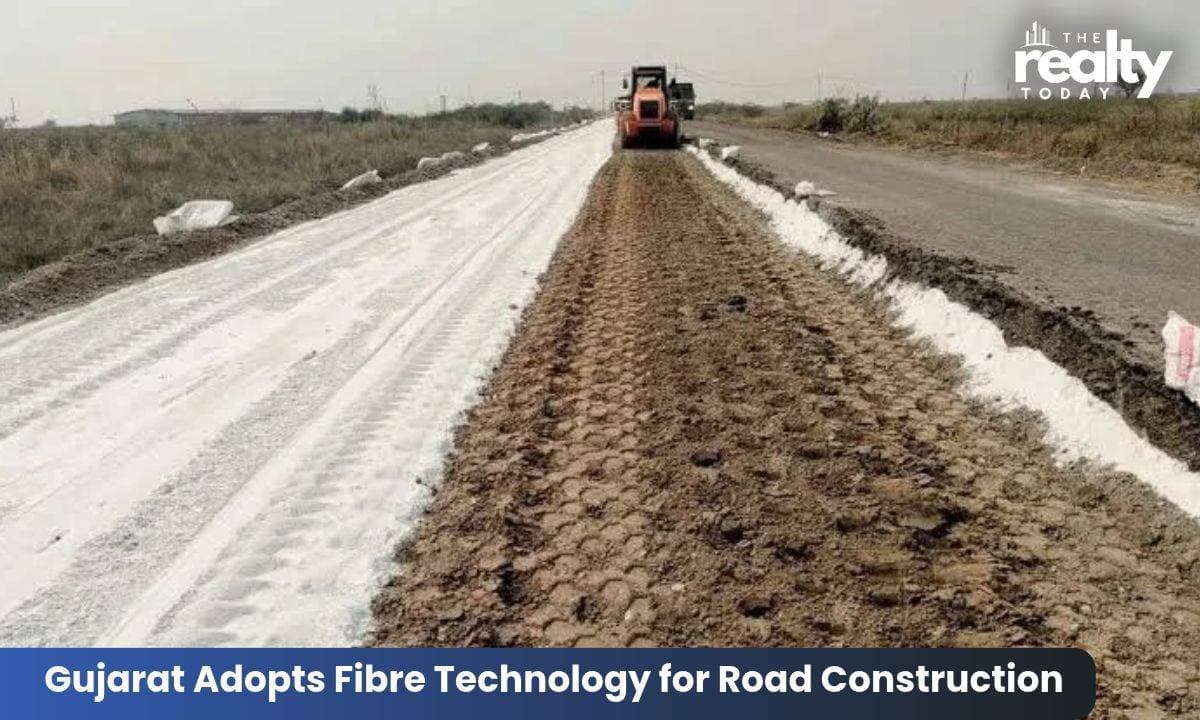
Gujarat is taking up the construction of 20 climate-resilient roads using modern techniques, including fibre-based reinforcement, as part of a Rs. 1,147-crore infrastructure programme. The projects will cover several districts and combine the reuse of existing road materials with construction techniques aimed at improving pavement strength and durability.
One of the methods that will be used on the roads is Stress Absorbing Membrane Interlayer (SAMI). This is a fibre mat laid down underneath the asphalt to reduce stress from vehicles travelling along the road. This helps to protect the road surface from premature deterioration.
The program also includes a number of improvements including widening, resurfacing and four-laning. The methods used will depend on what each section of road requires.
How Fibre Reinforcement Helps Control Road Cracks
SAMI is used by placing a fibre sheet over the prepared sub-base so that it can absorb stresses and reduce cracks.
The road surface will be subject to continual stress from the vehicles, temperature changes and moisture. This can cause cracking in the road. Once cracks have formed they can spread through the pavement and allow moisture to penetrate into the lower area. This will cause the structure to become weaker meaning more repair work will be required.
The fibrous membrane aims to reduce damage to the road surface by absorbing pressure, reducing crack propagation. However, how well it performs will depend on material quality, road base preparation and how the layers were applied.
Gujarat to Reuse Existing Materials in Road Construction
The construction process will also involve recycling materials from existing roads instead of relying entirely on fresh construction inputs. The old pavement will be excavated, treated with lime and stabilised through pulverising and rolling.
The recovered material will then be spread and compacted, followed by cement application and chemical stabilisation. The surface will be levelled and compacted using machinery before the next stage of construction.
After a period of seven days, the SAMI fibre sheet is laid before the asphalt is applied. This sequence is intended to strengthen the road foundation while adding a layer that helps manage stress within the pavement.
The reuse of existing materials is also expected to reduce the requirement for fresh resources and help manage construction costs. The approach combines base stabilisation with surface reinforcement rather than relying on a single technology to improve road performance.
20 Road Projects Across Gujarat
The Rs. 1,147-crore programme covers 20 road projects across districts including Patan, Gir Somnath, Mahisagar, Bharuch, Morbi, Surendranagar, Surat, Vadodara, Chhota Udepur, Anand, Mehsana, Kutch, Bhavnagar, Jamnagar and Narmada.
The identified works include the Lanwa-Manund-Sander-Balisana Road and Radhanpur-Mashali-Madhapura Road in Patan, Bhidiya Somnath Road in Gir Somnath, and Dindoli-Karadwa-Iklera Road in Surat. Other stretches include the Surendranagar Bypass Road, Manglej-Nareshwar Road in Vadodara and Talaja-Gopnath Road in Bhavnagar. Separately, Gujarat has also seen efforts to streamline approvals for
highway and canal crossings, as part of wider infrastructure coordination in the state.
The projects will involve a mix of road widening, resurfacing, four-laning, protection works, side shoulders, rumble strips and drainage-related works. White topping and glass grid technology are also among the methods included in the programme, depending on the requirements of each road.
New Construction Methods Aim to Improve Road Durability
Materials and reinforcement methods are used to improve the durability of the road network. This can reduce the number of times the surface needs to be repaired by reinforcing the road base and reducing crack propagation.
Other methods are being looked at such as waste plastics in asphalt, fly ash, cement stabilisation, cold mix asphalt and geogrids. Glass grids made from fibreglass can be used to strengthen the pavement layers and distribute the traffic loading.
This shows there is a move towards more durable road networks. However the benefits of using these will need to be evaluated over the lifetime of the constructed roads.