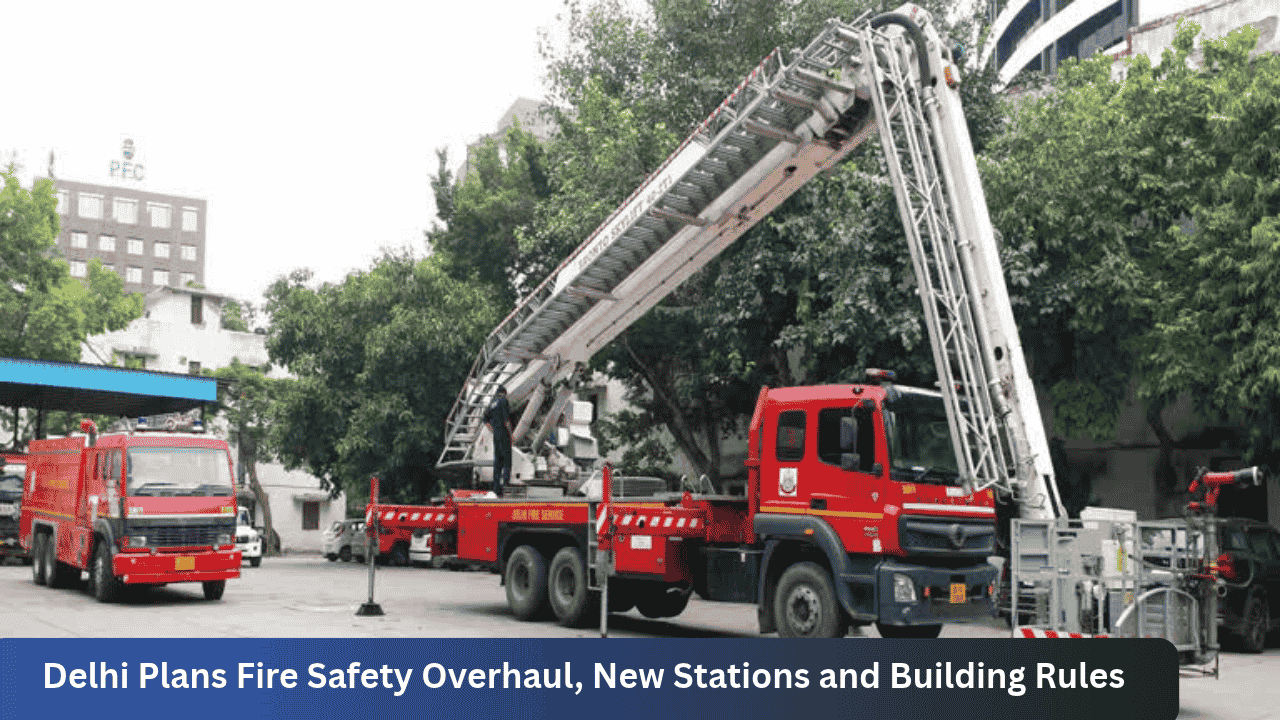
The Delhi government has announced a comprehensive overhaul of the Delhi Fire Service (DFS), with plans to improve emergency response, address staff shortages and strengthen fire safety measures in buildings. It will also include setting up new fire stations, faster hiring, purchase of specialised tools and revising rules to enforce strict fire safety protocols in existing buildings.
The plan was discussed at a review meeting conducted by Lieutenant Governor Taranjit Singh Sandhu on November 3. Delhi Home Minister Ashish Sood said the department would work with other government agencies to improve its response system and address the issues in fire prevention and emergency management.
New Fire Stations and Recruitment to Improve Response
The government plans to establish new fire stations at a number of locations recommended by the Ministry of Home Affairs. The Delhi Development Authority (DDA) is expected to allot land for the proposed facilities, while the Public Works Department (PWD) will coordinate their development. The expansion is intended to improve fire service coverage across the city and help emergency teams reach incident sites more quickly.
The department is also expected to increase its sanctioned manpower in line with the recommendations of the Ministry of Home Affairs. The recruitment process for station officers and firemen will be expedited through coordination between the Home Department, Services Department, Union Public Service Commission and Delhi Subordinate Services Selection Board. Regular physical fitness assessments for fire operators are also among the proposed measures.
The need for additional personnel is crucial. A report in May 2026 said the DFS had around 2,500 personnel across 71 fire stations, against a stated requirement of 9,123 under its 24-hour shift arrangement. This indicated a shortage of more than 6,600 personnel. The November plan seeks to address staffing requirements through an increase in sanctioned strength and faster recruitment.
The government also plans to procure specialised firefighting equipment and appliances to deal with fires involving highly combustible materials. The procurement will follow prescribed norms and draw on an existing memorandum of understanding with the Delhi Metro Rail Corporation. The department's emergency communication system is also set to be revamped to improve coordination during operations.
Existing Buildings May Face Stricter Fire Safety Rules
One of the main proposals concerns fire protection in buildings that are already in use.The government plans to review existing fire safety rules to make sprinkler systems and fire alarms mandatory in existing buildings, with reports on the proposal also referring specifically to existing commercial properties.
The Delhi Fire Service is also expected to issue advisories to property owners and occupants on installing safety systems required under building by-laws. The proposed review could have implications for residential and commercial property management, particularly where older buildings may need to assess their existing fire protection arrangements. The scope of the requirements will depend on the revised rules.
The government is also considering changes to the framework for fire safety inspections. Qualified third-party auditors and architects from the Municipal Corporation of Delhi's panel may be engaged to support assessments. The rules are expected to be amended to provide for the empanelment and training of eligible professionals. Fire safety audits have also become a focus in other parts of the NCR, with Gurugram ordering audits of commercial properties.
Civic agencies, including the MCD, New Delhi Municipal Council and DDA, are expected to coordinate on incorporating structural fire safety requirements into building by-laws and building-plan approval processes. This would bring fire prevention into closer consideration during the planning and approval of buildings, rather than limiting attention to emergency response after an incident.
Manpower and Access Remain the Main Challenges
The proposed changes arose due to the operational challenges faced by the city's fire services. Narrow lanes in older and densely populated neighbourhoods can make it difficult for fire tenders to reach buildings. Traffic congestion can also cause major delays and affect response times, while high population density increases the demands placed on emergency services.
Electrical overloading is another major concern which was identified in the government’s review. The Power Department is expected to direct electricity distribution companies to address overloaded connections through increases in sanctioned loads and upgrades to network capacity.
The government has also proposed fire safety awareness campaigns and closer coordination between departments. The DFS, civic agencies and power utilities will have to work together on prevention, compliance and preparing for emergency situations.
The proposed overhaul therefore extends beyond adding fire stations or equipment. Its implementation will depend on recruitment, infrastructure development, revised safety rules and coordination between agencies.