
India, 20 May 2026 – CapitaLand Hope Foundation (CHF) has announced the second edition of CapitaLand Community Resilience Initiative (CCRI) with a new funding of up to S$4 million. The funding platform will support 12 grantee organisations across China, India, Singapore and Vietnam to empower children and youth. CHF’s commitment in this edition includes an initial mobilisation of S$3.5 million and a new Outcomes Achievement Fund that grantees can unlock upon successful delivery of defined results.
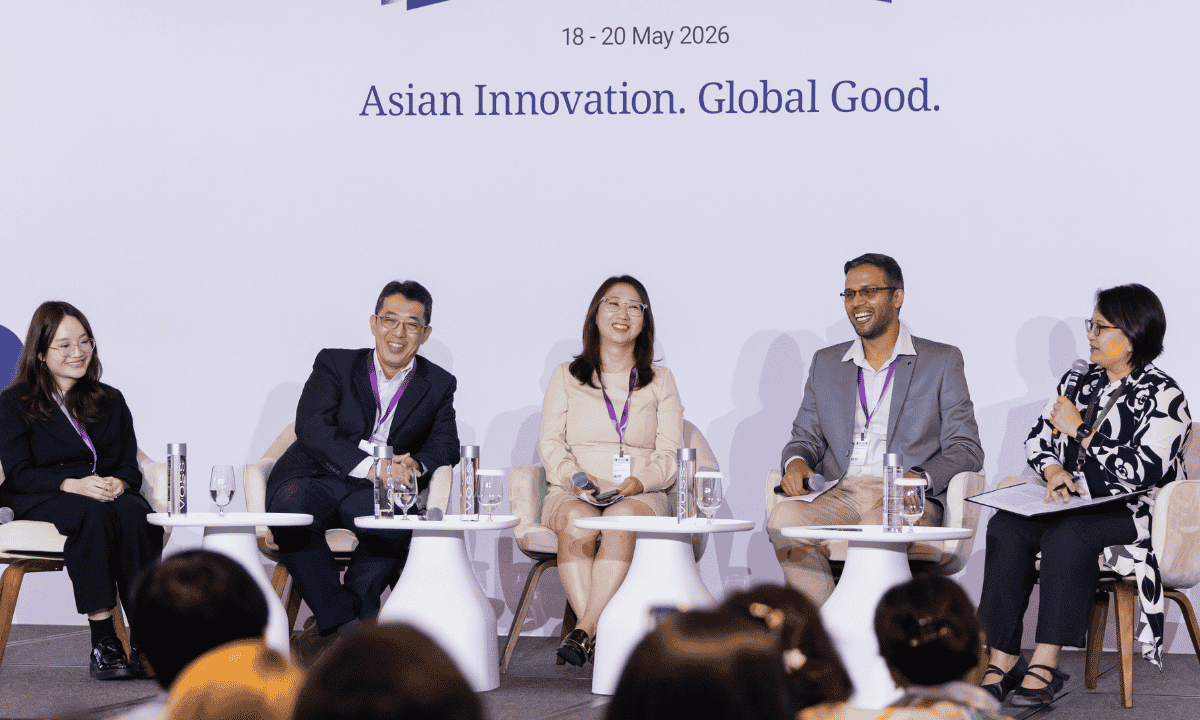
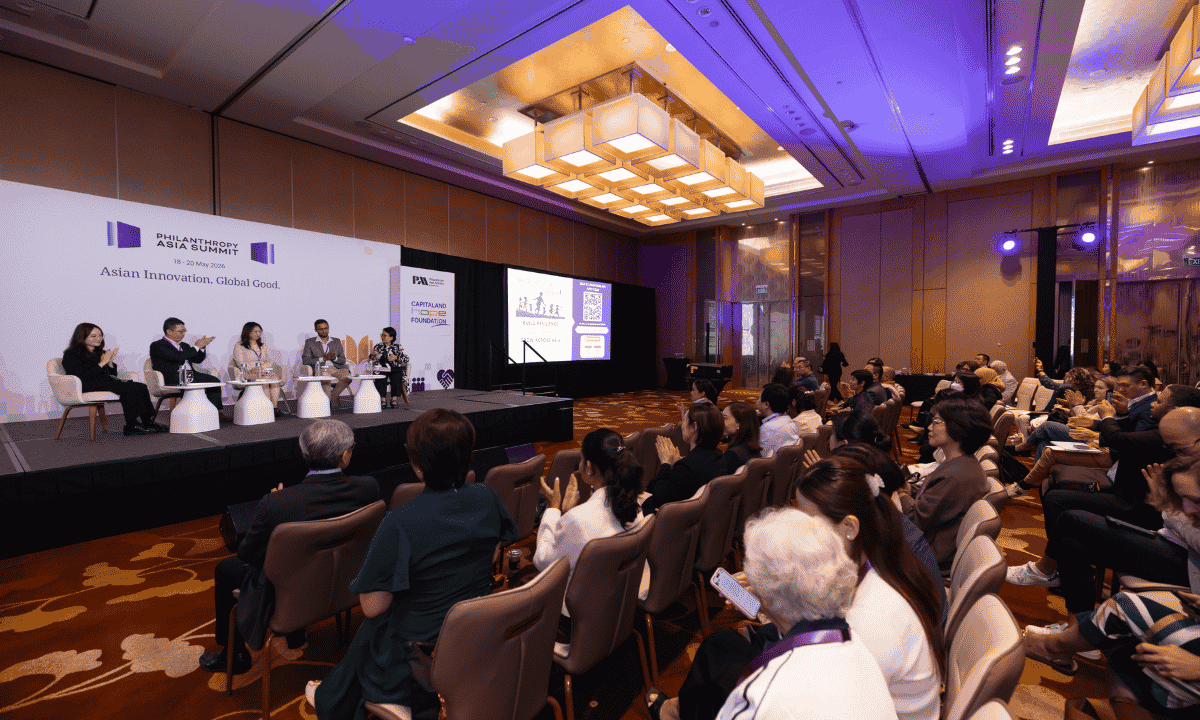
The announcement was made at Philanthropy Asia Summit 2026 (PAS 2026), where CHF held a panel discussion themed “From Commitment to Impact: Catalysing Community Resilience Through Investing in Children and Youth”. The session discussed how collaborative and outcome-driven philanthropy can deliver long-term impact for vulnerable children and youth.
A platform built for sustained impact
The inaugural CCRI last year, which awarded S$3.4 million to 12 grantees, focused on identifying and funding high-potential non-profit organisations. CCRI takes a broader ecosystem approach in 2026. It strengthens capacity building for non-profits, provides greater access to partner networks and prioritises delivery of outcomes.
Mr Gauri Shankar Nagabhushanam, Director, CHF (India), and CEO, CapitaLand India Trust:
At CHF India, we see first-hand how access to education, skills and emotional support can shape stronger futures for children and youth. Through the second edition of CCRI, we are strengthening our commitment to support organisations that are creating meaningful and measurable impact at the grassroots level. India’s young population represents immense potential, and by working alongside credible partners and non-profits, we hope to help build resilient communities that are better equipped to navigate social and economic challenges.
CCRI deepened collaborations with two partners this year:
AVPN, one of Asia’s largest social investment networks, strengthens the grantee selection process by bringing a wide pool of quality applicants, due diligence, outcome monitoring, cross-regional learning and capacity building.
Philanthropy Asia Alliance (PAA), part of the Temasek Trust ecosystem, identifies CCRI grantees with proven results and taps on its network to further scale high-impact solutions.
Patsian Low, Chief of Markets & Deputy CEO, AVPN said:
AVPN is proud to continue as the global knowledge partner for the second edition of CCRI. What makes this initiative distinctive is its willingness to invest in the capacity of non-profits, partner connections and collective intelligence that enable organisations to grow their good work. This is the kind of coordinated and strategic philanthropy that Asia needs.
Applications for CCRI 2026 are open from 19 May to 22 June 2026. Organisations are invited to submit proposals across three impact areas to support children and youth, amidst escalating climate risk and socio-economic challenges:
Education
Skills development
Mental well-being
Visit www.capitaland.com/CCRI2026 for more information on the submission criteria and application.
Grantees will be announced in November 2026, with projects to be implemented from January 2027 to December 2028. For more information on CCRI 2026, please refer to Annex A.
Voices from the field: cross-regional perspectives on community resilience At the PAS 2026 session, practitioners from across Asia gathered to discuss the journey from philanthropic intent to sustained community impact. Panellists shared how their organisations navigate systemic barriers, build partnerships, and deliver results for vulnerable children and youth.
For more information on the panellists and their respective quotes, please refer to Annex B.
About CapitaLand Group (www.capitaland.com)
CapitaLand Group (CapitaLand) is one of Asia’s largest diversified real estate groups. Headquartered in Singapore, CapitaLand’s portfolio focuses on real asset management and real estate development, spanning across 277 cities in 45 countries.
Within its ecosystem, CapitaLand has developed an integrated suite of real asset management, real estate development, and operating capabilities that supports its businesses in building core competencies across the value chain. With this full range of capabilities, CapitaLand can optimise the strategies of its listed real asset management business CapitaLand Investment, and its privately held property development arm CapitaLand Development; to drive competitive advantage for its businesses.
CapitaLand places sustainability at the core of what it does. As a responsible real estate company, CapitaLand contributes to the environmental and social well-being of the communities where it operates, as it delivers long-term economic value to its stakeholders.
About CapitaLand Hope Foundation (www.capitalandhopefoundation.com)
CapitaLand Hope Foundation, the philanthropic arm of CapitaLand Group, was established in 2005. The Foundation contributes towards building resilience in communities where CapitaLand operates, through supporting education, health and well-being initiatives, targeting children, youth and seniors. Going beyond donations, the Foundation also advocates volunteerism as an integral part of building a caring and inclusive community.
Annex A – CapitaLand Community Resilience Initiative 2026 fact sheet
Annex B – Panellists’ quotes
Philanthropy Asia Summit 2026: From Commitment to Impact: Catalysing Community Resilience Through Investing in Children and Youth
Xu Shan, Vice Dean, Beijing Normal University China Philanthropy Research Institute (CPRI):
“The foundation of a resilient community lies in how different stakeholders collaborate and mobilise resources to support children and youth. Smaller communities are often inherently vulnerable, hence it is essential to draw on diverse external resources to support community development and sustain a healthy ecosystem.
As the implementing agency for the 2026 edition of the CapitaLand Community Resilience Initiative in China, CPRI believes this Initiative is a timely and strategic approach to strengthening resilience in our community. Its shift from broad-based thematic funding to a targeted, place-based implementation model sharpens its focus on urban contexts. Through a systematic approach that combines psychosocial support, inclusive networks, and local capacity building, the Initiative contributes to a more equitable future for children and youth.”
Vaibhav Kumar, Co-founder & CEO, SwaTaleem Foundation:
One of the biggest lessons we have learned while partnering with government systems in India is that trust-building and long-term relationship management are just as important as program design. Government partnerships require patience, alignment with existing priorities, and the ability to remain adaptive while maintaining program quality. We have also learned that demonstrating credibility through consistent field presence and evidence of impact helps create stronger ownership within the system and enables deeper scale over time.
CapitaLand Community Resilience Initiative has played an important role in strengthening SwaTaleem’s work by going beyond financial support to creating an enabling ecosystem for our girls and team. Through opportunities such as hosting girls at CapitaLand India’s office in Bangalore, CapitaLand staff volunteer engagement, and additional support like the schooling essentials distributed during International Women’s Day, the Initiative has helped broaden exposure, aspiration, and confidence among the girls we work with. The partnership has also created meaningful avenues for collaboration, visibility, and institutional support that strengthen our long-term impact.
(SwaTaleem Foundation is a CapitaLand Community Resilience Initiative 2025 Grantee – India)
Dr. Andrew Lim, CEO, Presbyterian Community Social Services (PCS):
For PCS, a strong ecosystem for vulnerable children and youth is one where acceptance and equal opportunities are assured, and where the community responds to each individual’s needs holistically. At PCS, we work through our 3E framework—Engage to understand each client, Equip them with relevant skills and support, and Empower them to reach their potential. Programmes like the CareAbilities Programme (CAP), supported by the CapitaLand Community Resilience Initiative, reflect this approach by equipping and empowering youth with special needs to contribute meaningfully to the Community Care Sector.
Funding from the Initiative has enabled PCS to design CAP in a more rounded and sustainable way—providing stipends that give trainees financial stability over a year-long programme, while also opening access to CapitaLand’s ecosystem of staff volunteers and resources that enrich trainees’ exposure, confidence and communication skills. Being part of the CHF network has also allowed PCS to explore provision of targeted training for youth with special needs to develop roles in facility and event management.
(Presbyterian Community Social Services is a CapitaLand Community Resilience Initiative 2025 Grantee – Singapore)
Huynh Thi My Lam, Communications & Fundraising Coordinator, Ho Chi Minh City Child Welfare Association:
In the context of working with children and youth, we define resilience not only as the ability to overcome hardship, but also as the capacity to adapt, recover, and thrive in the face of urban challenges such as poverty, migration, and social pressures. In urban areas of Vietnam, one of the greatest barriers is the lack of coordination among social services, education systems, and families, as well as limited resources and opportunities for children’s voices to be heard. Multi-stakeholder partnerships, particularly among companies such as CapitaLand, social organisations, and local authorities, have proven effective in building holistic and sustainable support systems.
With the support of CapitaLand Community Resilience Initiative, we have expanded access to education, life skills and child rights programmes, vocational training, mental health support, and family livelihood initiatives, helping vulnerable children and communities strengthen their resilience, confidence, and opportunities for a more equitable future.
(Ho Chi Minh City Child Welfare Association is a CapitaLand Community Resilience Initiative 2025 Grantee – Vietnam)