India’s post-pandemic economic outperformance has created a new wave of wealth at an unprecedented pace. As one of the fastest-growing major economies, the country has consistently outpaced many developed markets in terms of GDP growth, entrepreneurship and capital formation. Unsurprisingly, this has translated into a sharp rise in high-net-worth individuals (HNIs), with the number of Indians owning wealth of over USD 1 million projected to touch 1.65 million by 2027.
As this expanding pool of wealthy individuals aspires to move up the wealth curve and enter the ultra-high-net-worth (UHNI) bracket, long-term capital planning has taken centre stage. Family offices, tasked with preserving, growing and transferring wealth across generations, are playing an increasingly pivotal role in shaping these investment decisions. Among the asset classes drawing renewed attention, rent-yielding luxury real estate has emerged as a core allocation.
The case for tangible assets
Over the past decade, wealthy families have steadily shifted capital towards tangible assets that combine capital preservation with predictable cash flows. This trend has become quite prominent after the pandemic, which exposed the vulnerability of portfolios heavily skewed towards volatile public markets.
For HNIs seeking to transition into the UHNI league, the math itself dictates diversification. Moving from high-net-worth to ultra-high-net-worth often requires a 10-30x expansion in wealth, a feat that cannot rely solely on aggressive equity exposure. As a result, fast-growing yet relatively predictable sectors such as real estate have become integral to family office portfolios.
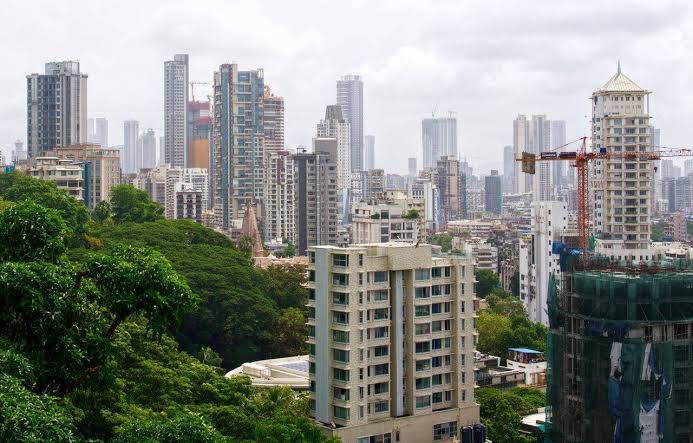
This structural shift is reflected in market data. Despite global uncertainty, rising geopolitical risks and fluctuating interest rate cycles, the ultra-luxury housing segment in India has consistently increased its share in overall residential sales and new launches over the past decade. Prime assets in top urban markets have shown resilience, liquidity and long-term appreciation, qualities that align closely with family offices’ multi-decade investment horizons.
Beyond residential homes
The growing appetite for real estate among wealthy investors is not limited to luxury housing alone. According to India Sotheby’s International Realty’s Luxury Residential Outlook Report 2025, commercial real estate is also gaining prominence, with 41% of HNIs and ultra-HNIs planning to invest in the segment over the next 12–24 months. Additionally, 24% are exploring Alternative Investment Funds (AIFs) to diversify and enhance portfolio returns.
Together, these trends underscore a broader reallocation towards real assets, both residential and commercial, that offer a combination of income generation, capital appreciation and inflation protection. For family offices, this balanced risk-return profile is particularly attractive in an environment marked by global financial market volatility.
Renting as an opportunity, not a constraint
The post-pandemic period has also fundamentally altered housing consumption patterns. Sharp price appreciation in premium and luxury housing segments has pushed ownership beyond the immediate reach of many urban professionals. In 2025 alone, capital values in India’s prime residential markets rose by up to 36% year-on-year, underscoring the scale of the price surge.
At the same time, renting has evolved from being a necessity to a conscious lifestyle choice, especially among high-income, mobile professionals. An increasingly asset-light generation prefers flexibility, access to premium locations and world-class amenities without the long-term commitment of ownership.
This behavioural shift has created a strong demand base for luxury rental housing. For family offices, investing in amenity-rich, future-ready homes in prime micro-markets offers a compelling income opportunity. These properties cater to CXOs, expatriates, startup founders and senior professionals who are willing to pay a premium for quality, security and convenience.
Rental yield as part of a larger strategy
Traditionally, rental yield has been the primary metric used to evaluate real estate investments in India, often unfavourably compared with equities or alternative assets. Such comparisons, however, overlook the broader role real estate plays in wealth management.
For family offices, rental income is not viewed in isolation but as a complementary cash flow that supports long-term capital appreciation and wealth preservation. Luxury real estate, particularly in supply-constrained locations, has historically delivered superior price growth over extended periods, while also providing downside protection during market corrections.
Importantly, rental income adds an element of stability to portfolios, enabling families to meet liquidity needs without being forced to exit core assets during unfavourable market conditions. This becomes especially relevant in multi-generational strategies, where capital preservation is as critical as growth.
A multi-decade growth story
India’s luxury real estate market continues to benefit from favourable structural tailwinds. Rising affluence, urbanisation, global exposure and evolving lifestyle aspirations are expected to sustain demand over the long term. Industry estimates suggest that the luxury housing segment is poised to grow at a compounded annual growth rate of over 21%, reaching a market size of approximately USD 102 billion by 2029. Property prices in the segment are projected to rise by 7-15% annually during this period.
For family offices with patient capital, these projections reinforce the case for allocating to rent-yielding luxury properties. Beyond returns, such assets offer strategic advantages, tangible ownership, control over holding periods, inflation hedging and the potential to serve as legacy assets for future generations.
A strategic allocation, not a trend
The growing interest of family offices in luxury real estate is not a cyclical trend driven by short-term market conditions. Instead, it reflects a deliberate shift towards asset classes that align with long-term wealth objectives. As India’s wealth ecosystem matures and family offices become more institutionalised, allocations to high-quality, income-generating real estate are likely to deepen further.
In this context, rent yielding luxury properties are increasingly being viewed not just as lifestyle assets, but as strategic instruments for wealth creation, preservation and inter-generational transfer, cementing their place at the core of family office portfolios.