
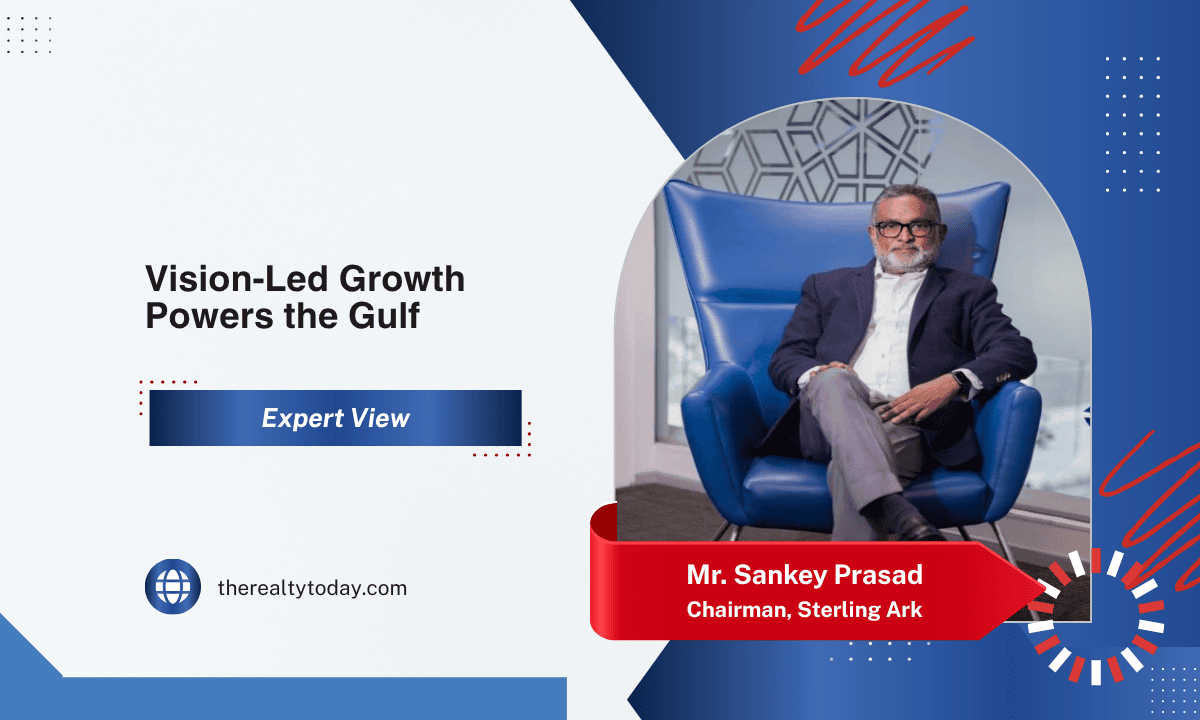
Global real estate is entering a decisive era where influence is defined not by where capital originates, but by who shapes how future cities function. Across the Gulf Cooperation Council, this is not a market cycle but a structural reset of the global urban economy. Vision-led national strategies are elevating real estate from a conventional asset class into a strategic lever of diversification, competitiveness, and economic statecraft. The region is no longer merely supplying liquidity to property markets; it is designing integrated urban systems that anchor long-term growth.
This transformation is driven by policy clarity. National frameworks such as Saudi Arabia’s Vision 2030 place real estate at the centre of economic transformation, linking it directly to tourism, logistics, industry, and modern urbanisation. The logic is simple: nations that build cities capable of attracting talent, enterprise, and capital simultaneously will define the next phase of global leadership. In this paradigm, real estate is not a by-product of growth but a catalyst for it, and the GCC has aligned policy, capital, and execution around that conviction.
The scale and coordination of sovereign and institutional capital give this shift its momentum. State-backed platforms now deploy capital with mandates extending beyond financial return to national value creation. They are funding mixed-use districts, hospitality ecosystems, logistics hubs, and infrastructure-led developments designed to generate lasting economic multipliers. This has institutionalised Gulf real estate markets, delivering depth, resilience, and strategic continuity, rarely seen in traditional development cycles.
Sovereign funds have been instrumental in redefining how development is executed. Investment vehicles such as the Public Investment Fund structure projects as integrated economic ecosystems rather than standalone assets. Urban districts are synchronised with transport networks, tourism infrastructure aligned with aviation expansion, and commercial hubs paired with innovation clusters. This approach turns real estate into national infrastructure that enables new industries, strengthens competitiveness, and supports diversified growth.
Furthermore, The GCC’s new generation of mega-developments reflects a clear move toward ESG-aligned, technology-enabled urban environments. Sustainability, smart mobility, renewable energy integration, and data-driven governance are embedded from the outset. These projects are not just large; they are intelligent, setting new global benchmarks for how cities can operate efficiently, sustainably, and competitively.
The influence of this transformation extends beyond the Gulf. A defining trend is the rise of cross-regional investment corridors linking capital-rich markets with high-growth economies. The expanding real estate partnership between the GCC and India illustrates this shift. India has become central to global corporate location strategy, hosting more than 1,500 Global Capability Centres supporting multinational operations across technology, finance, and engineering. These are mission-critical hubs driving enterprise transformation, not peripheral offices.
Their expansion has generated sustained demand for institutional-grade office space in cities such as Bengaluru and Hyderabad, positioning India as a strategic commercial real estate market. This demand is structural, anchored in long-term corporate commitments rather than market cycles. For global investors seeking scale, demographic momentum, and growth visibility, India represents a compelling destination.
Gulf capital is increasingly participating in Indian commercial, logistics, and infrastructure-linked assets, strengthening a bilateral corridor built on complementary strengths. The GCC brings capital and large-scale development expertise, while India offers rapid urbanisation, corporate expansion, and a deep talent base.
At the same time, regulatory progress has accelerated this convergence. GCC markets have introduced investor-friendly ownership frameworks and transparent governance structures designed to attract institutional capital. India has strengthened market confidence through reforms and a maturing REIT ecosystem that enhances liquidity and transparency. These parallel advances signal markets are stabilising for long-term investment.
With capital is no longer concentrated in a handful of mature markets, it is moving toward regions that combine policy direction, demographic strength, infrastructure investment, and growth potential. The GCC stands at the forefront of this transition, not simply as a capital provider but as a strategic force shaping how real estate markets evolve.
Today, the Gulf leadership understands that real estate is not about constructing buildings but about constructing economic ecosystems. Cities that integrate sustainability, mobility, technology, and liveability will determine where companies expand and where investment concentrates. By designing such environments at scale, the GCC is influencing global economic geography rather than reacting to it.
The future of real estate will belong to markets that align capital with vision and execution with policy. In that emerging order, the GCC stands out as a region that has moved decisively from investment to influence. It is not just participating in the next chapter of global real estate; it is also building it.



.png)