

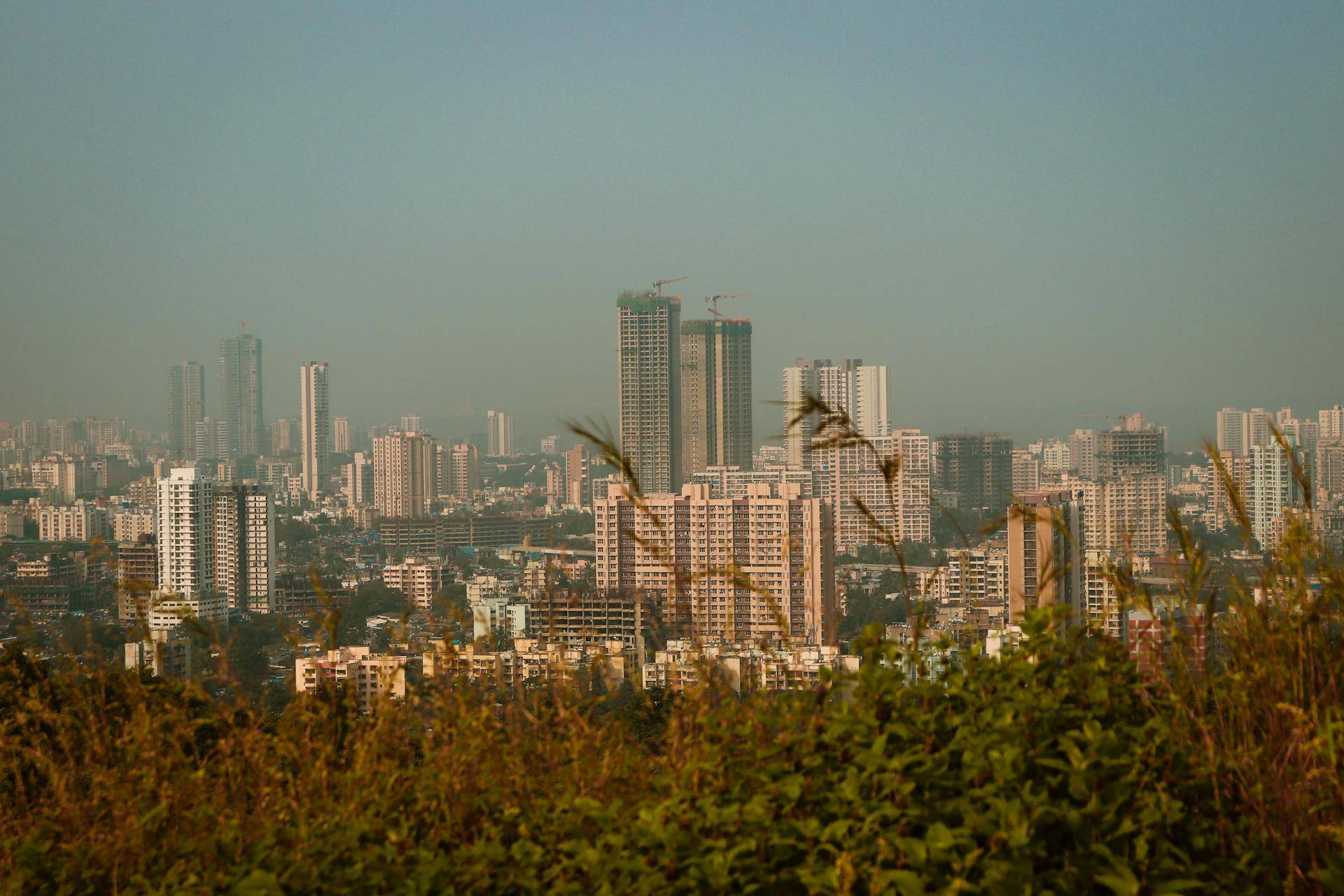
India's technology capital Bengaluru is in the middle of a major transformation. As the world gets closer to using artificial intelligence for almost everything, the country's Silicon Valley and innovation powerhouse is already among the world’s top-10 most densely populated cities, according to a new UN report. Little wonder then that the city is now expanding itself to make room to accommodate more people as population numbers are likely to touch 1.5 crore by 2023.
Under the Revised Master Plan-2041, Bengaluru will cover over 500 sq km of the city and surrounding areas, with plans of building a future ready global city. As the Karnataka capital works to become an innovation hub of international acclaim, the State Budget for 2026-27 has also unveiled a transformative financial roadmap for Bengaluru, aimed at elevating the state capital into a “world-class liveable city”. The city’s peripheries are an integral part of that plan as they progress as mere living spaces to satellite getaway cities of international repute. Large infrastructure projects are key to this suburban shift.
The connectivity net
The government has approved a 40-km tunnel road network to cut through the city’s densest areas, featuring north-south and east-west corridors. The Rs 40,000-crore project will add values to residential clusters in Hebbal, Bellary Road, Yelahanka, Doddaballapur Road, Hennur Road, Thanisandra Road, Sarjapur Road, Outer Ring Road, HSR Layout, Hosur Road, etc.
As India’s second-largest network, Namma Metro will also have an additional 41 km of lines within the current financial year, a move that will push daily ridership to 15 lakh commuters. With a Rs 450-crore to upgrade the Silk Board to KR Puram corridor, the state plans to turn it into a thoroughfare of global standards. In a city where heavy traffic causes major pothole issues, the state also plans to white-top more than 450 km of roads at a cost of Rs 3,000 crore to enhance the urban experience. These road and rail networks will link peripheral hubs with established business districts, creating a wholesome metro.
The quality living
One of the fastest developing cities in the world, Bengaluru is quite high in the list of investors. According to a report by property consultancy Colliers India, institutional investments in the Indian real estate sector surged to an all-time high of $8.47 billion (around Rs 76,000 core) in 2025, registering a 29% year-on-year growth, led by Bengaluru's $2.2 billion inflows.Most of this money is getting pumped into the city’s peripheries to develop Grade-A commercial and residential spaces. That is to say, suburbs are no more spillover markets only in the housing context.
In fact, they are the nervecentre of all new quality homes, echoing the urban growth patterns seen in major global cities. According to property consultant Cushman & Wakefield, areas such as Whitefield, Hoskote, Sarjapur Road, Kanakapura Road, Bannerghatta Road, Electronic City, Devanahalli, Thanisandra Road and Yelahanka accounted for the bulk of new residential supply in the fourth quarter of 2025. The trend shows how Bengaluru’s growth is becoming more and more multi-nodal. As land prices rise in central areas, developers are pushing outward to corridors where easy availability of land parcels allows large, amenity-rich homes, apt for quality living.
For homebuyers, this means access to better homes within planned communities that offer amenities comparable to residential districts in global gateway cities. The result is a gradual rebalancing of Bengaluru’s housing market.
The cultural context
Hosting thousands of start-ups, outsourcing firms and global tech majors from Google to Microsoft, Bengaluru matches any global city with its scale and diversity. But, Maslow’s hierarchy of needs says that people must and nations need culture to sustain themselves and grow in interesting ways. This must be a key concept when planning India's urban sprawl. Bengaluru is already doing it. Bengaluru represents the future, but is has immensely strong ties with the past. At the same time, it is developing a vibrant cultural landscape through public-private collaborations.
The addition of cultural centres such as the Bangalore International Centre, The Museum of Art and Photography, Science Gallery Bengaluru, Indian Music experience Museum, Tech, Start-up and Innovation Museum make this city a global city like San Francisco.






.png)