

Ashoka University campus in Sonipat, Haryana, is known for its food street, which has recently been transformed into a highly interactive architectural environment offering a perfect mix of technology, nature, and a focus on the well being of the people. Lyth Design from Mumbai has named the street The Hungry Caterpillar. By their design, they have converted the typically simple act of eating into an experiential space that is connected with the themes of shelter, exploration, and sustainability. Architect Apoorva Shroff led the design of the food street that deliberately excludes the idea of a traditional canteen providing a comfy and shaded area, especially for kids, which is a natural, fun, and area friendly space.
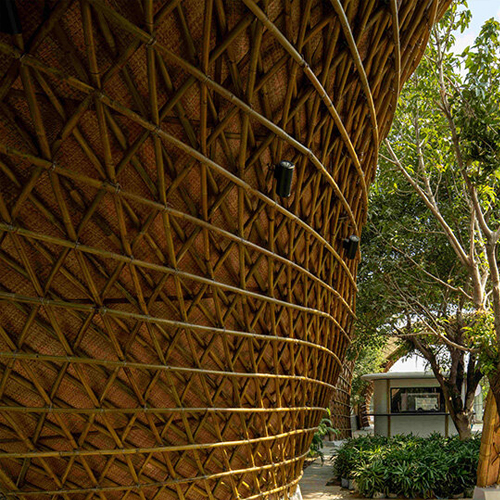
Taking a Caterpillar as a Metaphor
It is a green space flanked by a plethora of existing trees and was made in a way that it hardly stands out. Rather than trying to squeeze a geometric concrete rectangle onto the site, the architecture is like a skin that blends itself with the surroundings and allows the elements of light, air, and movement to come in and interact. The architectural concept has been inspired by an image of a caterpillar happily and naturally eating its environment. The theme seems to have influenced the walk, through and arrangement of the project as well as the defining feature of bamboo as a material.
3D Printed Modular Kitchens for Efficient Construction
At the core of the food street lies a group of modular kitchens that present the concept of food trucks in a campus setting in a new light. These kitchen units are 3D printed in concrete using the additive manufacturing technology of Micob Pvt. Ltd. in Ahmedabad. Whereas traditional construction methods rely heavily on formwork and thus produce a lot of material waste, a 3D, printing technique only deposits concrete where it is structurally necessary and thereby significantly lowers the amount of waste in construction.
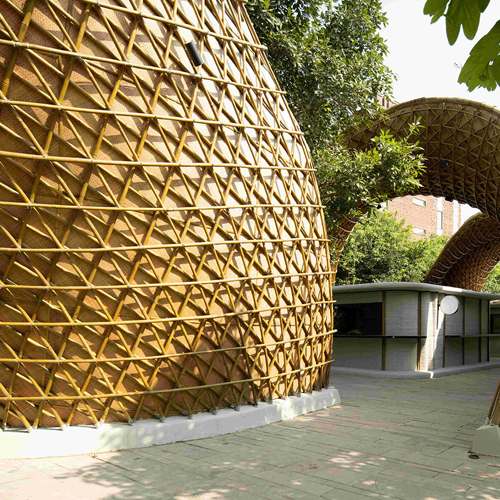
Besides just being efficient, the printed kitchens are also architecturally sound. The spaces between the printed concrete walls serve as thermal insulation, thus minimizing the heat flow and creating a more comfortable environment for the kitchen staff.
Moreover, the modular structure of the units permits changes in the arrangement and future modifications, thereby rendering the scheme expandable not only to similar campus food projects but also to public food projects.
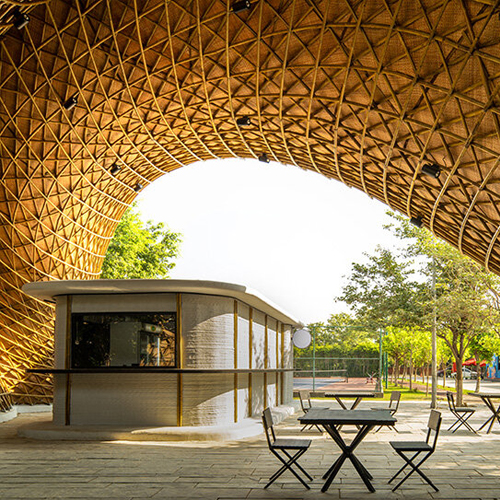
A Bamboo Gridshell Canopy Serving Both as Space Frame and Shelter
Far above the kitchens and the pedestrian paths, the chlost hallmark of the project is the bamboo gridshell canopy, a flexible membrane stretched over the food street, functioning as a protective skin. Created by Lyth Design and structurally analyzed by Atelier One in London, the gridshell derives its architectural stability from geometric configurations rather than material bulk. Its double, curved shape is lengthwise bent and twisted, at the same time it plays spatial rhythm, and manages very effectively to span large lines with minimal material use.
The bamboo canopy's lengthiest portion spans roughly 19 meters and is made up of four layers of thin bamboo sticks, each having a diameter between 30 and 50 millimeters. Positioned at 45, degree angles, the sticks are woven together to form a light yet strong support system. The shell is reinforced with a crushed bamboo mat, also it keeps the environmental footprint down to a minimum.
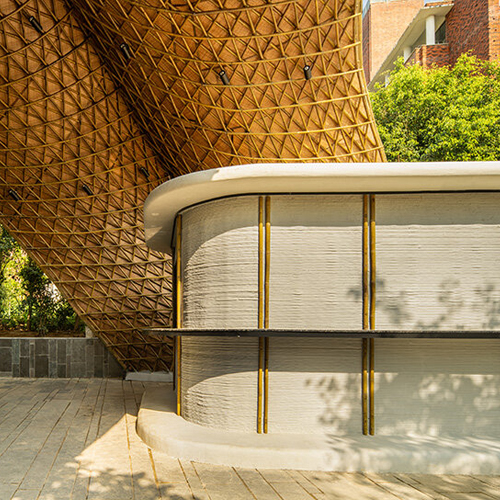
The bamboo grid shell is both aesthetic and climatically responsive. As a shading device for the food street below, it protects the street from solar heating and ensures a favorable microclimate all day. The open shell provides filtered natural light and a framed view of the campus and the tree canopy around it, improving the relationship of architecture with its surroundings.
Design, Engineering and Craft Seamless Working Together
This project is basically a close collaboration of different experts. Jurian Sustainability developed architectural detailing and bamboo construction was performed by Jans Bamboo. The close collaboration between these two players in the field led to a perfect blend of engineering precision and traditional crafts in the realization of the complicated double, curved structure.
Sustainability is also reflected in furniture and other items used daily. Placyle's seating pieces are made of recycled plastic waste, and thus they convert discarded material into strong, weather, proof tables and chairs.
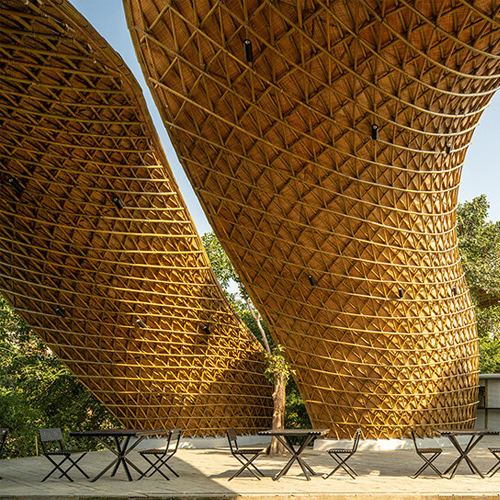
The initiative takes green practices a step further by manufacturing outdoor furnishings from recycled materials and installing them in an extremely busy urban area, thus making the concept of sustainability not only visible but also physically present and a part of daily campus life.
Instead of seeing sustainability as merely a good concept, The Hungry Caterpillar incorporates it at every stage of the design, from digital fabrication, renewable materials to passive cooling and recycled furnishings. The project is a reflection of an ambitious future for campus and public food streets in India, showing how architecture can blend technological innovation, care for the environment, and the human experience.


.png)